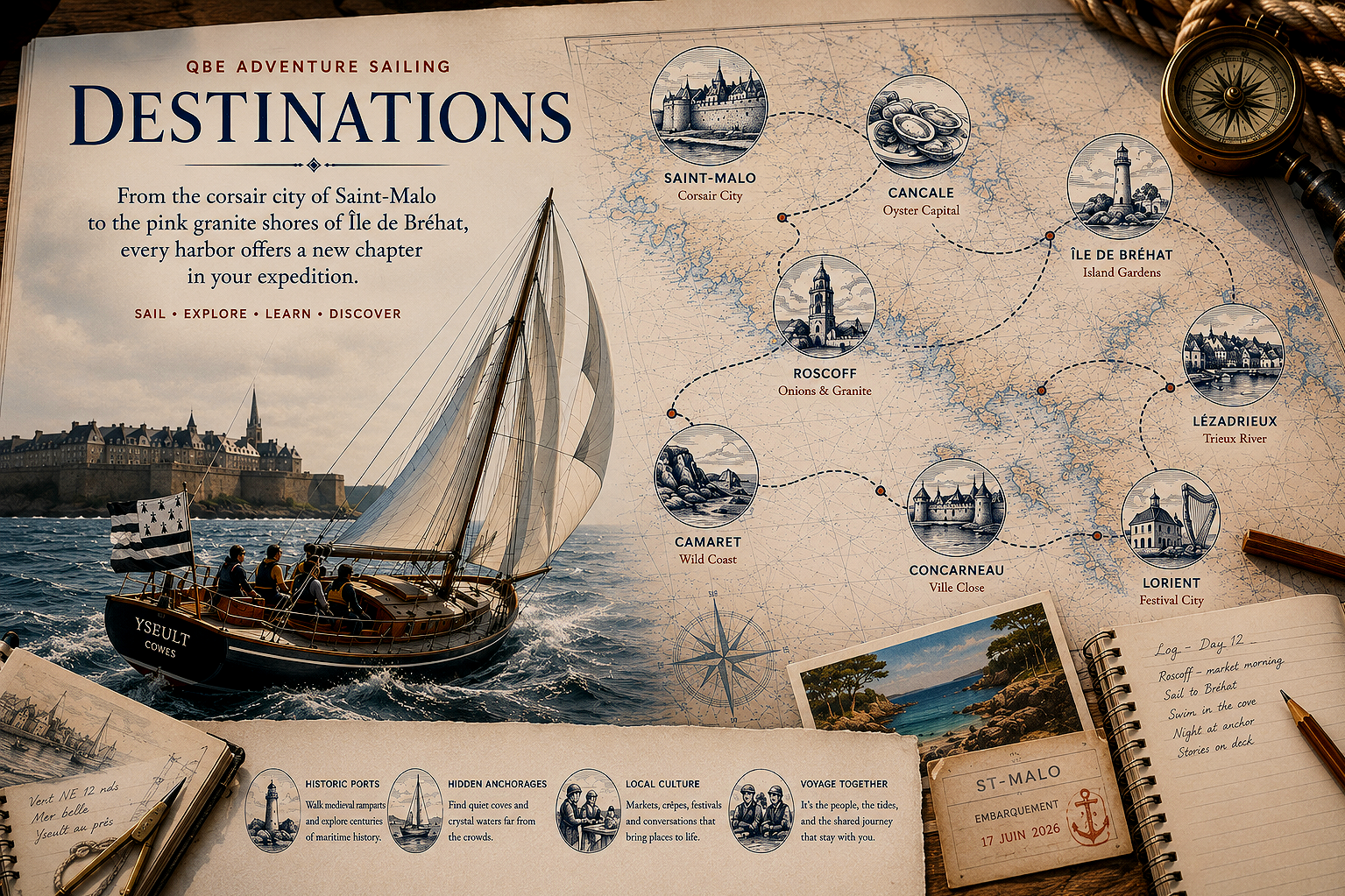
Our itinerary? Well… that depends. Each expedition is a negotiation between Mother Nature, our director, and our crews. We always have a general idea of where we want to go and what we want to do when we get there. But weather, winds, and tides all influence where and when we can sail. So to paraphrase the poet, “the best laid plans o’ mice an’ mariners sometimes go out the window.” Still, there’s an important lesson everyone takes away: Because life can be full of surprises—sometimes good, sometimes bad—it’s important to learn to recalibrate as circumstances dictate in order to achieve objectives. With that caveat, here are some of the places we often visit (in addition to our home port of Saint-Malo):
JERSEY
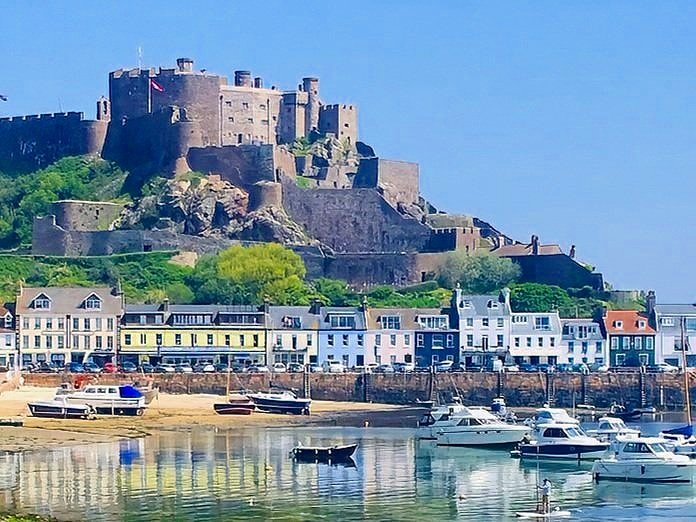
Because of its affluent residents and well-heeled visitors, Jersey, the largest of the Channel Islands, has been called the Monaco of Britain. It's located in the English Channel about 12 nautical miles off the Cotentin Peninsula in Normandy. Among Jersey's principal sights are Mont Orgueil Castle, which has guarded the island for some 600 years, the Maritime and Transport Museum, the Victorian Central Market, the Jersey War Tunnels (constructed by the Germans during their World War II occupation of the island), the yachts in the harbors, and... the people!
Brest/Océanopolis
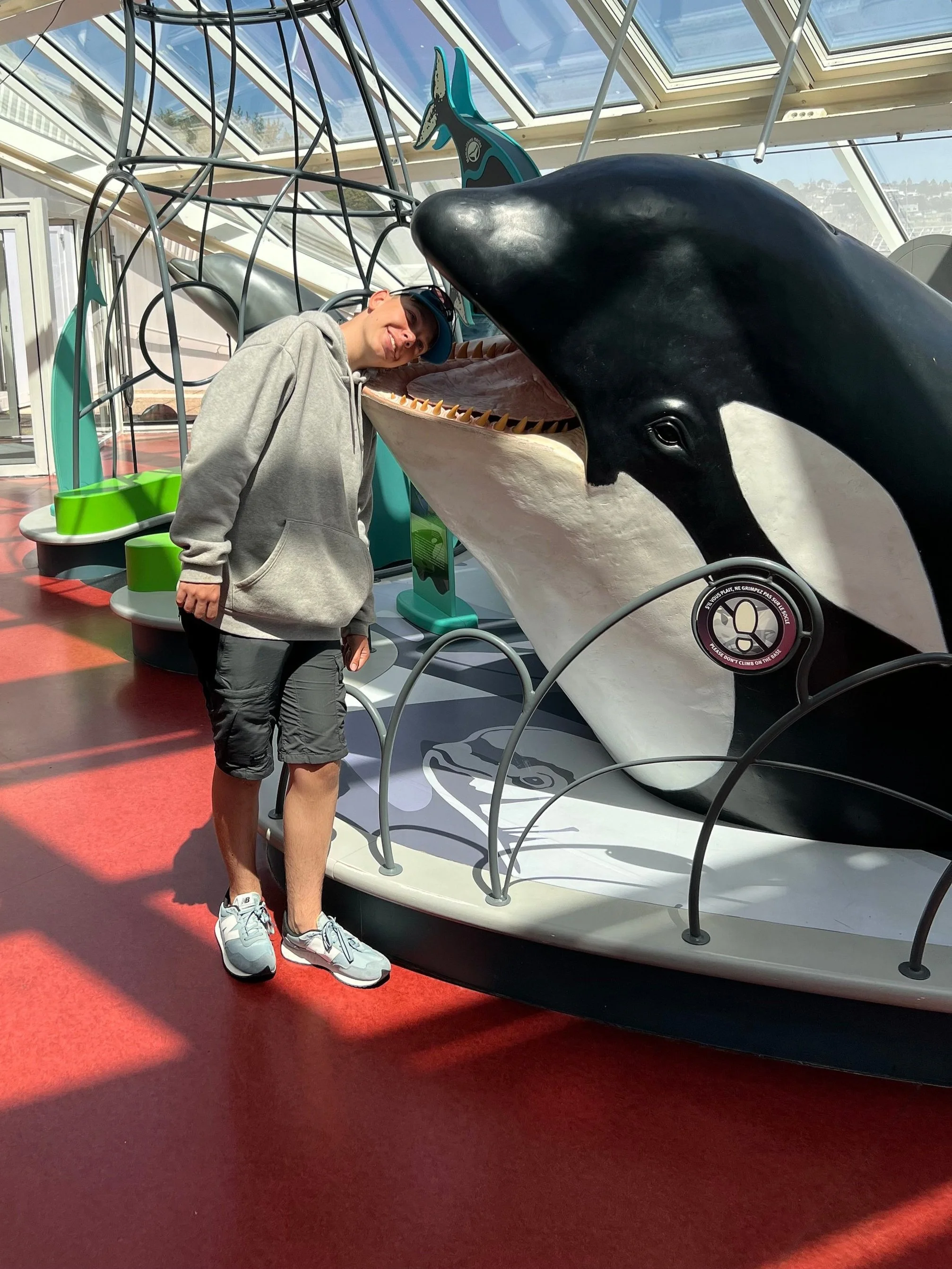
Largely destroyed during WWII, Brest has managed to reinvent itself. It boasts a remarkable botanical conservatory featuring hundreds of unusual plants and exotic flowers as well as an imposing castle with fortifications designed by Vauban. First constructed and occupied by Roman conquerors over 1,700 years ago, the castle is believed to be the oldest in the world still in use. But the most popular attraction for QBE crew members is Océanopolis, a sprawling ocean discovery center with enormous aquariums and world-class oceanographic research facilities.

GUERNSEY
Guernsey, the second-largest of the Channel Islands, was the refuge of the great French writer Victor Hugo during his 15-year exile from France. It was there that he wrote many of his most famous works, including Les Miserables. The author’s home—renovated several years ago— is one of the island’s major attractions. Other popular sites include Castle Cornet, the Bluebell Woods, Moulin Huet (the bay that was painter Pierre-Auguste Renoir’s favorite spot on the island), and the rugged cliffs offering panoramic vistas of the sea.
The Glénan Islands
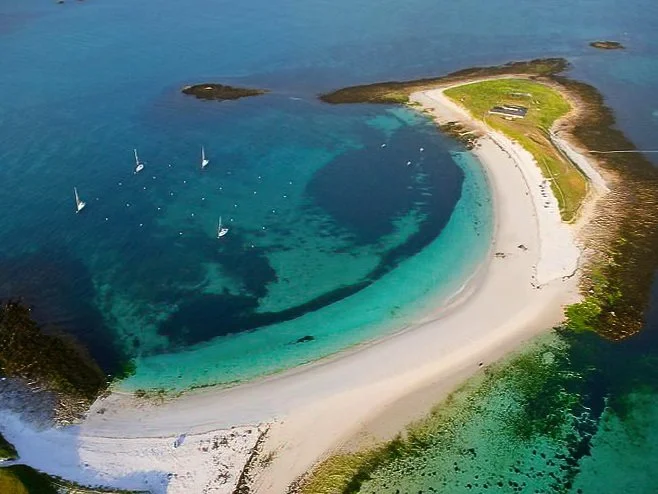
Situated off the south coast of Brittany, the Glénan Islands are a little bit of Tahiti hidden away in the Bay of Biscay. The archipelago comprises nine main islands and numerous islets surrounding a lagoon. You won’t find the Glénans in many guidebooks because the only way to access them is by helicopter or boat—how propitious for our crew members! We use the islands’ fabulous white beaches for picnics and walks and take advantage of the crystal clear water for swimming and snorkeling. It’s a little Breton paradise that few people get to experience.

l’Aber Wrac’h
Tucked into Brittany’s wild northern coast, l’Aber Wrac’h is a haven at the mouth of a long, fjord-like estuary. Surrounded by pine trees, granite outcrops, and constantly shifting tides, it feels both remote and welcoming—an ideal anchorage after a day at sea. Our crews love the quiet coves for reflection and broad horizons for stargazing on clear nights. With its soft light and magical landscapes, l’Aber Wrac’h captures the soul of northern Brittany better than just about anyplace else.
Île de Houat
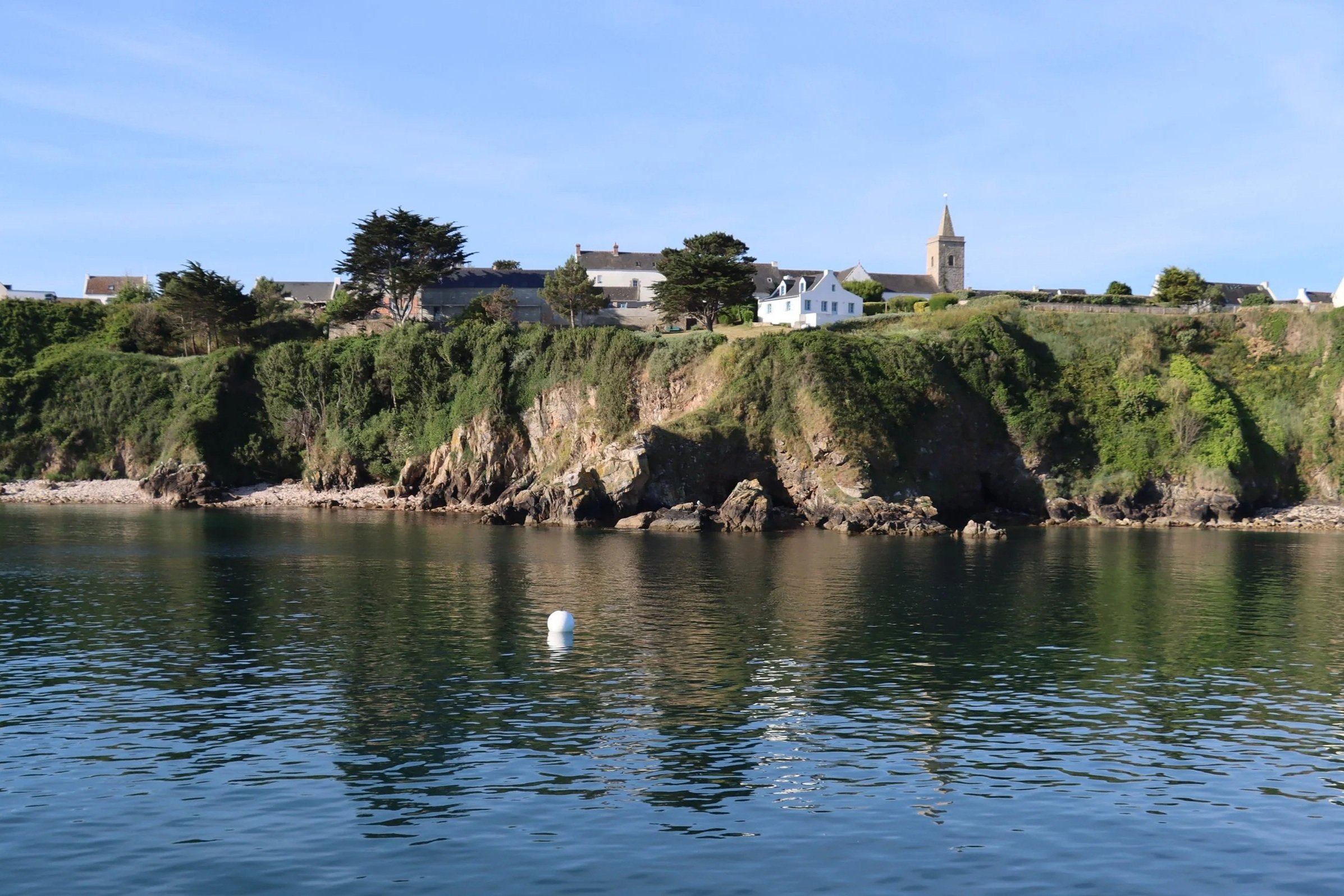
Just a few nautical miles off the Quiberon Peninsula, l’Île de Houat is an unspoiled gem with no cars and few inhabitants. Its long crescent beach—Plage Treac’h er Goured—is an expansive stretch of white sand and turquoise water that looks and feels like something out of a travel magazine. Our crews often spend time swimming, beachcombing, and hiking the windswept trails that lead past heather, gorse, and lighthouses. It’s simplicity, serenity, and natural beauty at its finest.
Lorient’s sailing museum
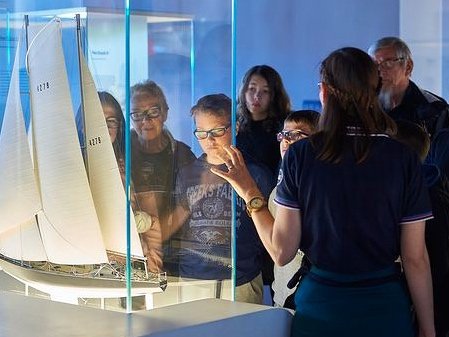
Lorient is home to the Cité de la Voile Éric Tabarly. Named after one of France’s most celebrated sailors and naval architects, the museum houses numerous exhibit spaces that include a “dynamic museographic area” with tactile activities, simulators, a cinema, and more. Exclusive documentaries feature skippers sharing their memories of harrowing drama, as well as reflections on the passage of a mythical cape, shipwrecks, solitude, solidarity, and a passion for open water. Visitors can go virtual racing or experience a round-the-world race in 4D.
Concarneau
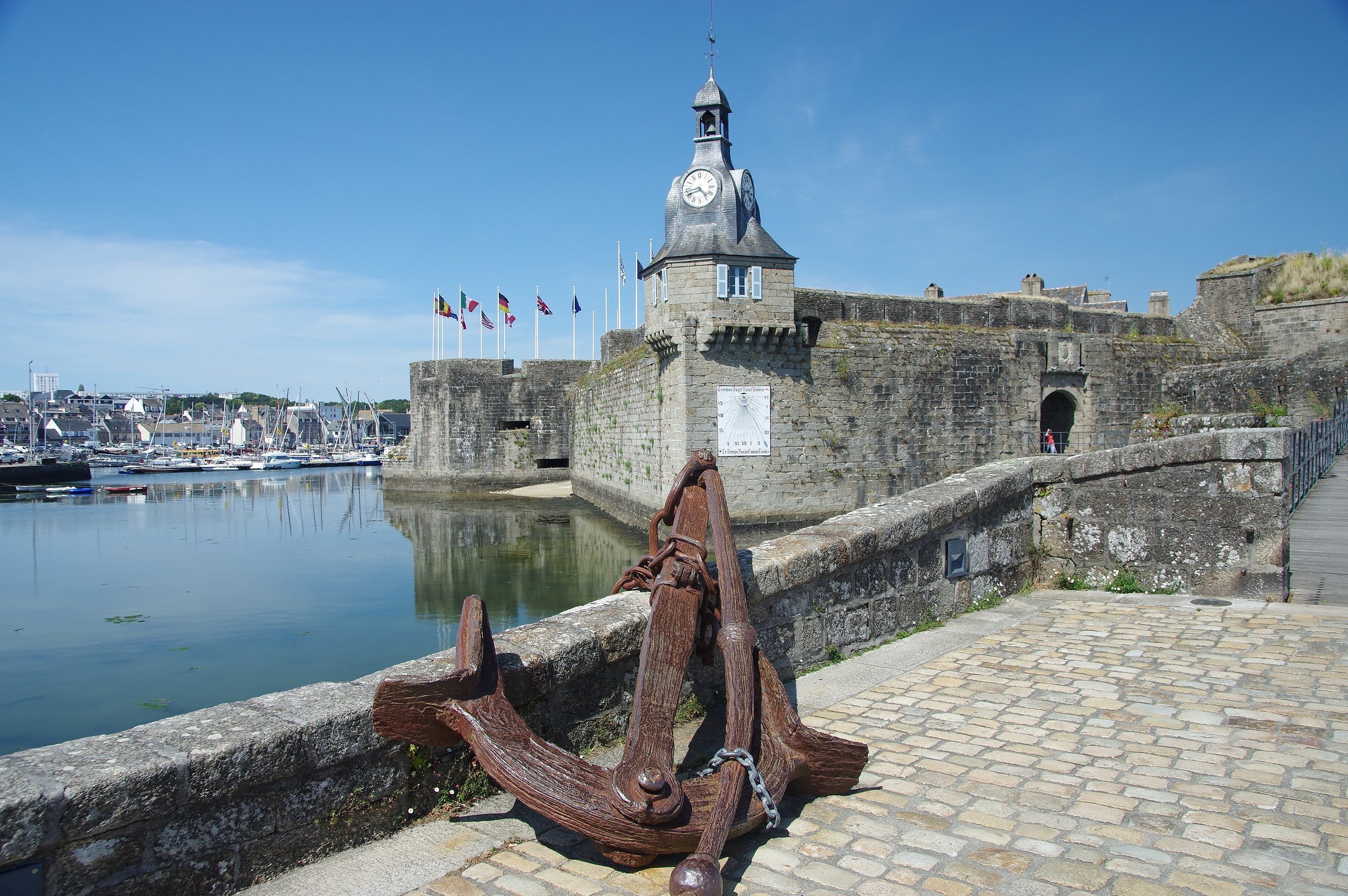
One of Brittany’s largest fishing ports, Concarneau is a vibrant town that blends old-world charm with nautical energy. Its walled old town, the Ville Close, sits on a tiny island and feels like something out of a storybook—with drawbridges, stone ramparts, and a bustling market street. Our crews love dropping anchor here to explore its fortress-like walls and soak up the harbor’s lively atmosphere. Concarneau is where history and the sea meet in a memorable fashion.
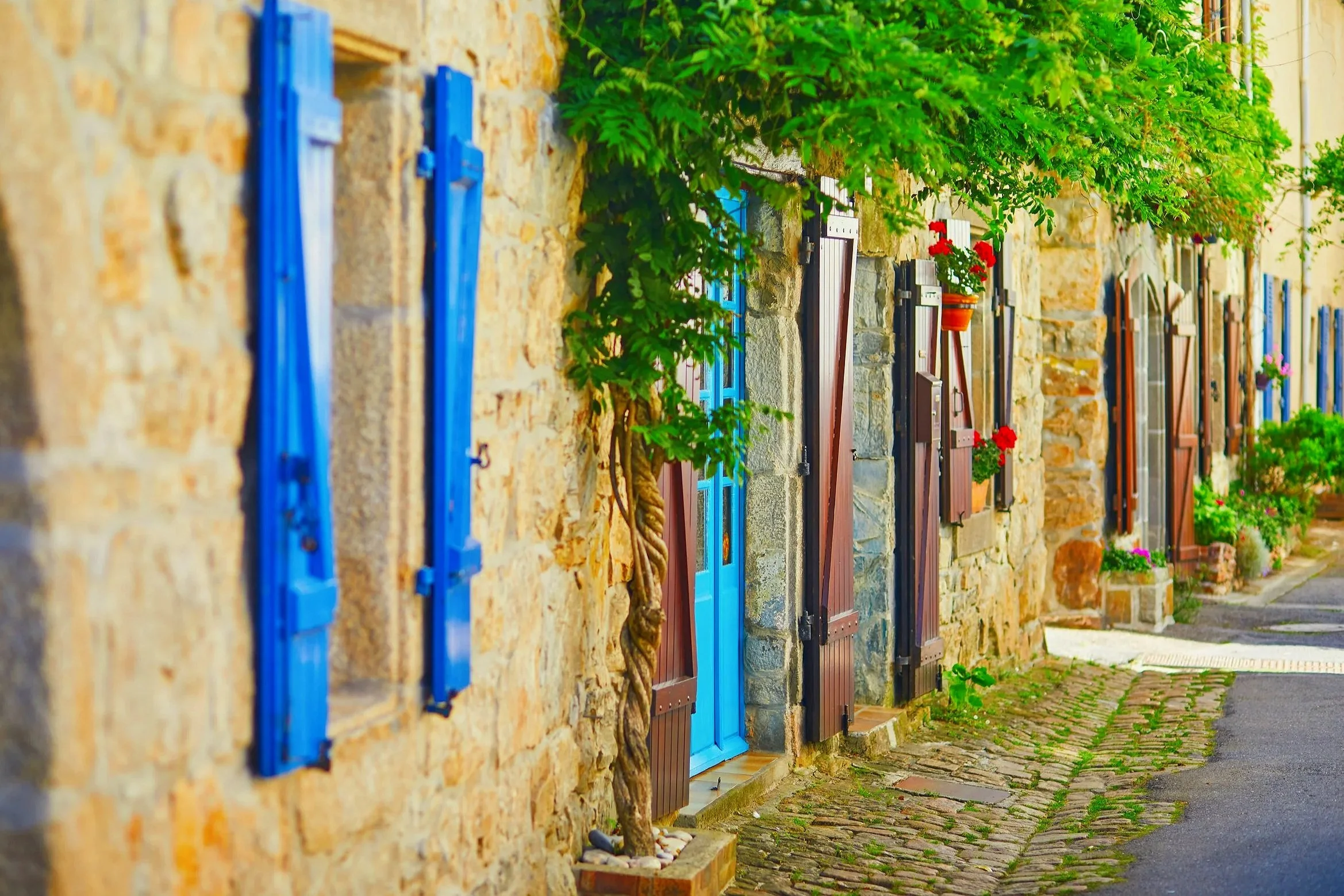
Camaret-sur-Mer
Perched at the tip of the Crozon Peninsula, Camaret-sur-Mer is a small fishing village turned artists’ haven, with its ochre-hued Vauban tower standing sentinel at the harbor entrance. The jumble of waterfront cafés and crêperies provides the perfect spot to kick back after a day at sea. We visit to explore the dramatic cliffs, WWII bunkers, and the haunting “ship graveyard” of retired wooden fishing boats—an unforgettable mix of postcard charm and maritime history.
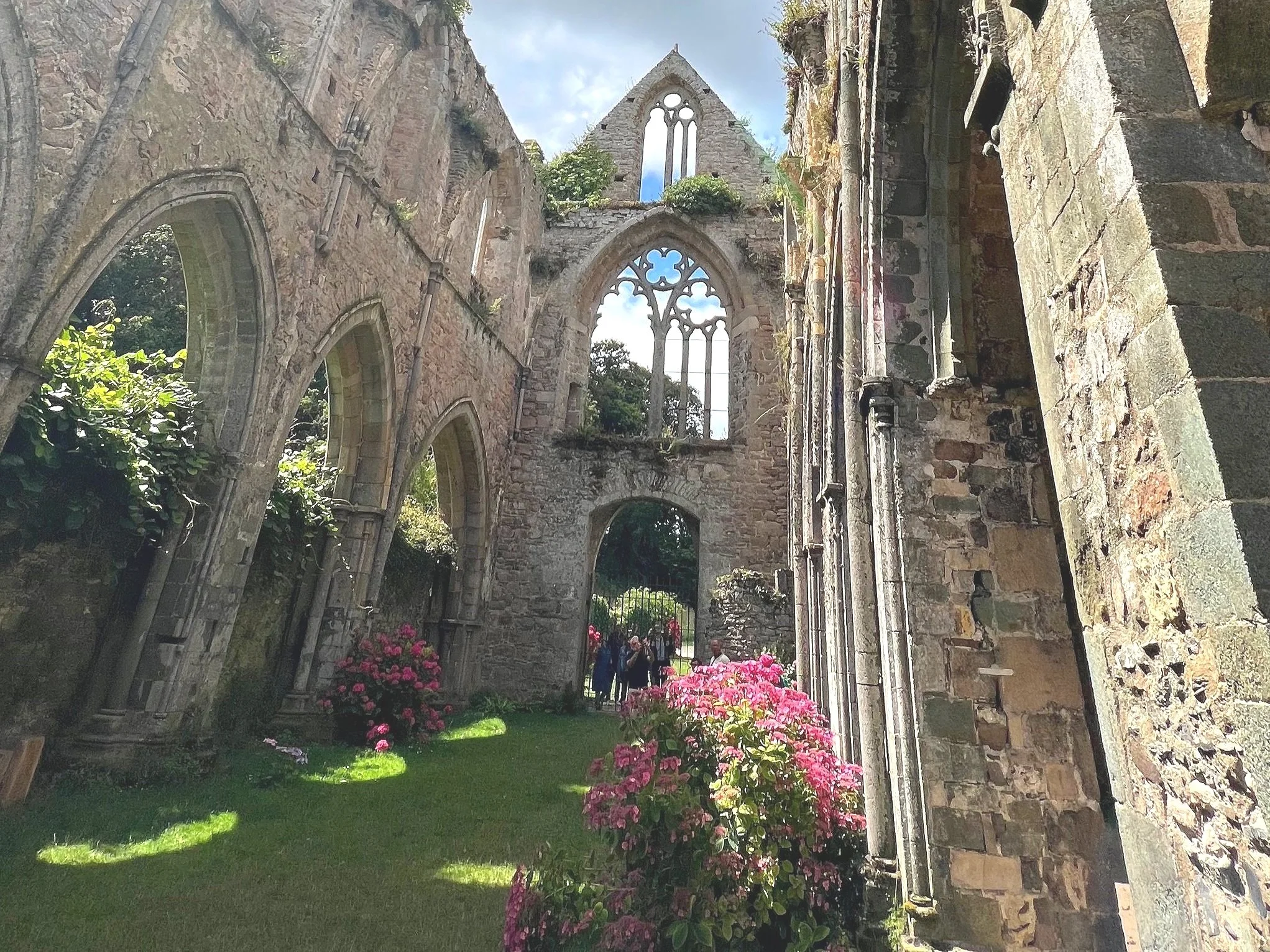
Beauport abbey & Paimpol
Beauport Abbey, in Paimpol, was founded in the XIIIth century by monks from Normandy. The Gothic abbey church now lies in ruins, albeit surrounded by beautiful gardens. Visitors are often surprised to discover that Beauport is one of four official Breton starting points for pilgrims setting out for Santiago de Compostella. Centuries ago, Scandinavian, Irish, and British pilgrims landed in Brittany on their way to Spain. (If you’d be interested in doing part of the Camino on a classic sailboat, as many pilgrims used to do, get in touch.)
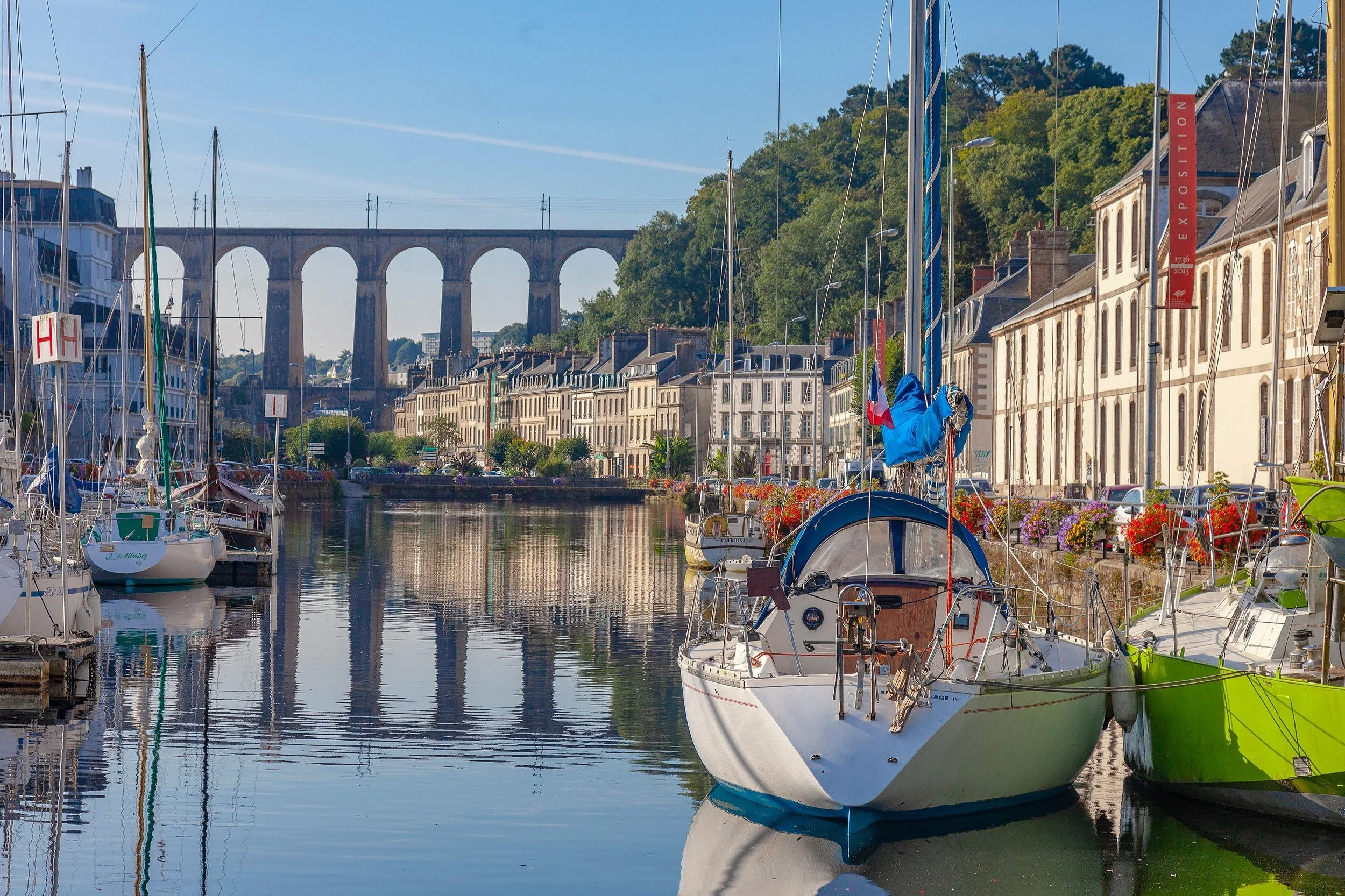
Morlaix
Morlaix is a hidden gem with a dramatic 19th-century viaduct, winding alleyways, and a rich maritime past. The town’s half-timbered houses and steep staircases give it an almost theatrical feel. Arriving by boat and trekking into town makes it all the more magical for our young sailors. Whether we’re browsing a local market or simply stretching our legs, Morlaix offers a welcome taste of inland Brittany—quiet, quirky, and charmingly authentic.
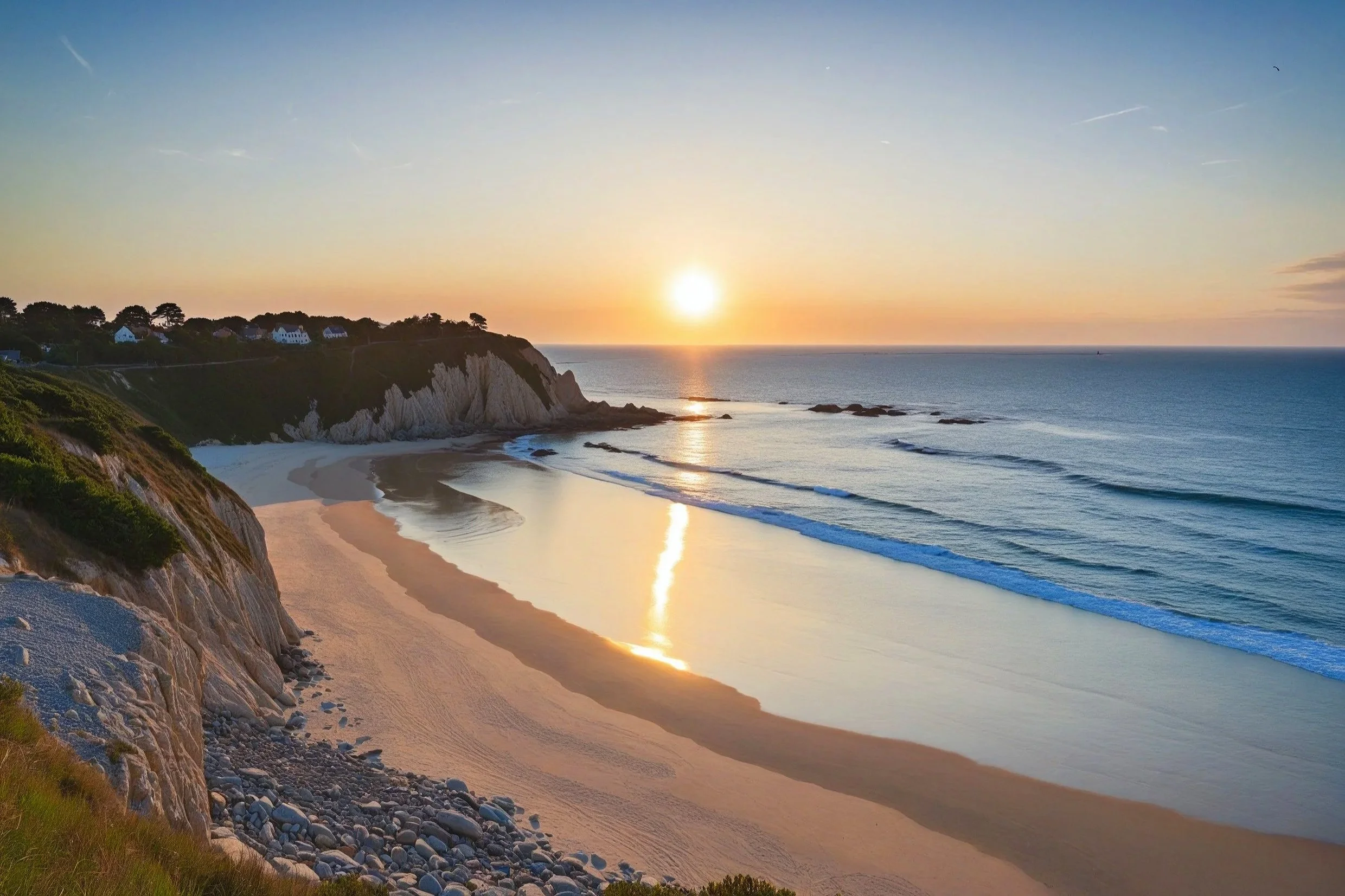
La Trinité-sur-Mer
Known across France as a mecca for offshore racing, La Trinité-sur-Mer is where high-performance meets old-world charm. Superyachts, racing trimarans, and classic wooden boats all share the same legendary harbor. A day or two here allows our crew members the opportunity to experience the buzz of the sailing world, grab some supplies from the excellent market, and enjoy a well-earned crêpe or galette by the water’s edge. For sailing enthusiasts, there’s no better port of call.