Why QBE Is Not Like Other Teen Sailing Programs
(And Why we think That might Matter to You)
A guide for parents who are doing their summer-enrichment homework
You're looking into teen sailing programs for this summer. Maybe your son or daughter has expressed an interest in sailing. Maybe you've heard that adventure-based experiences look good on university applications. Maybe you're simply convinced—as we are—that a largely screen-free summer doing something genuinely demanding in an unfamiliar environment is exactly what your teenager needs right now.
So you've opened a few tabs. You've browsed some program websites. They all look pretty good. The photos are gorgeous. The testimonials are glowing. The brochure language is remarkably similar from one program to the next: leadership, confidence, teamwork, life skills, unforgettable adventure.
Here's the honest question worth asking: are they actually different (apart from price)? And if so—how so?
We think they are different. Quite different. And since we'd rather you make a genuinely informed choice than simply a well-marketed one, here's a frank comparison.
Scale: Sixty participants, or fourteen?
Most of the well-known teen sailing programs—the ones with the big marketing budgets and the glossy brochures—operate at scale. They have to. Multiple boats, dozens of participants per session, a logistical operation that is impressive in its own right.
There's nothing wrong with that model. It works fine for what it is.
But consider what scale actually means for your teenager's experience. In a program of forty or sixty kids, your son or daughter is one among many. They can have a quiet day and nobody particularly notices. They can drift to the edges of the group dynamic. They can be, in the most fundamental sense, a passenger.
A QBE expedition runs two cutters sailing in consort, with 6–7 crew members aboard each — 12 to 14 students in total. That's the entire program. Two boats, two tight-knit crews—sometimes competing against each other—moving through the same waters together, sharing the same ports and festivals and experiences, close enough to feel like a community, small enough that no one ever disappears into the crowd. The smaller the cohort, the faster and stronger the bonding.
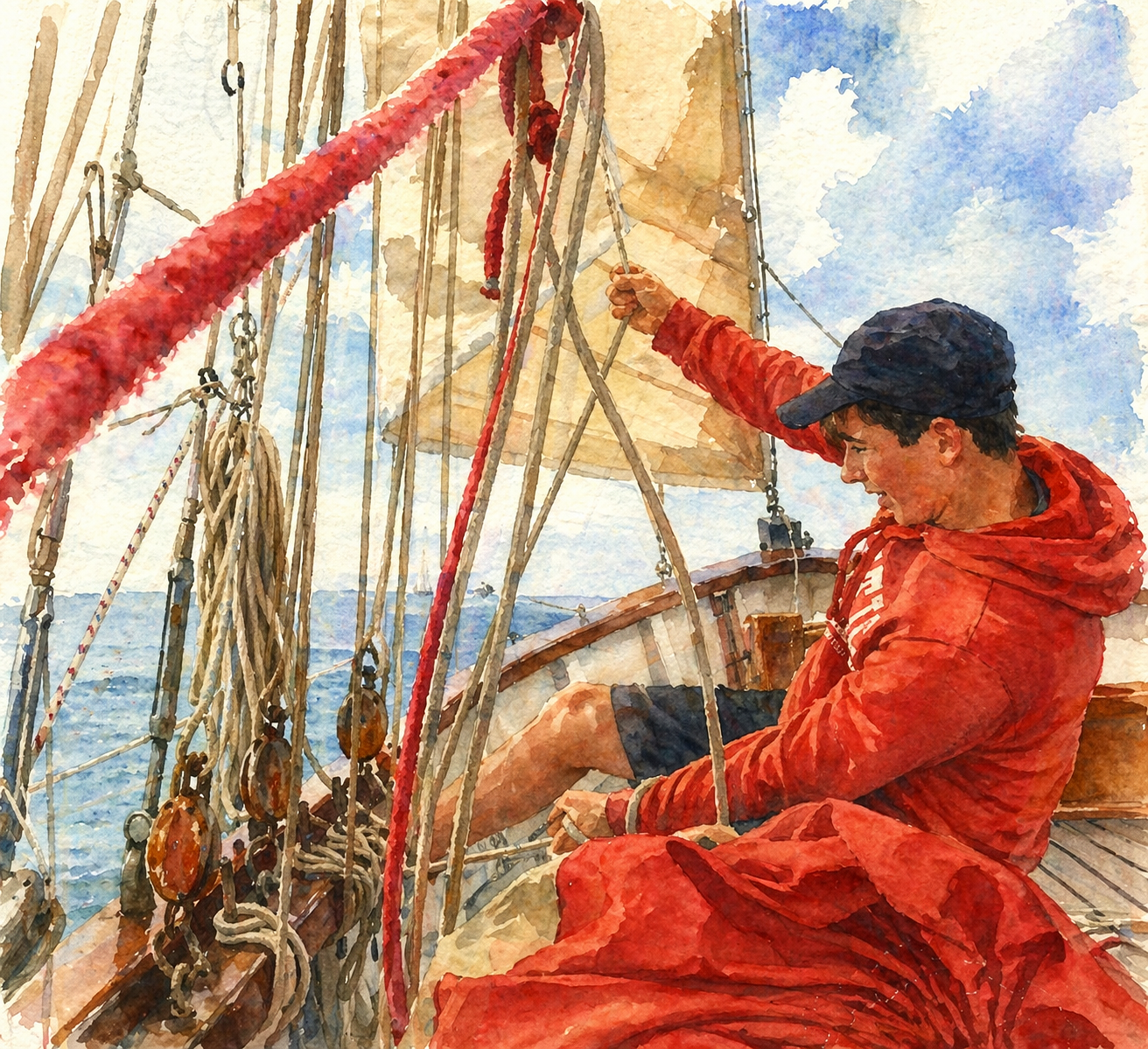
On each individual boat, the dynamic is even more intimate. Six or seven young people, from different countries, sharing a 46-foot traditional sailing vessel for two to three weeks. There is no drifting to the edges. There is no quiet day where your contribution goes unnoticed. Every single crew member is essential to the boat's daily operation—at the helm, in the galley, on the deck.
The two-boat structure also creates something that a single-vessel program cannot: a small, cross-crew social world. Friendships form not just within each boat but between them—at anchor in the same harbor, ashore at the same market, side by side at, say, the Interceltic Festival. Fourteen international teenagers sharing an extraordinary summer. By the end, it feels less like a course and more like a tribe.
Our staff-to-participant ratio is 1:3. That is not a statistic. That is the difference between a teenager who is supervised and a teenager who is genuinely known, mentored, and challenged in a personal way every single day.
Geography: The Caribbean, or Somewhere That Actually Challenges You?
The majority of teen sailing programs operate in the Caribbean or the Mediterranean. These are beautiful places. The sailing is relatively benign. The weather is warm and predictable. The cultural exposure is, let's be honest, fairly limited—a beach bar here, a market there, a snorkeling excursion in between.
QBE sails the coast of Brittany and the Channel Islands.
This is not a compromise. It is a deliberate choice, and it is one of the most significant things that distinguishes what we do.
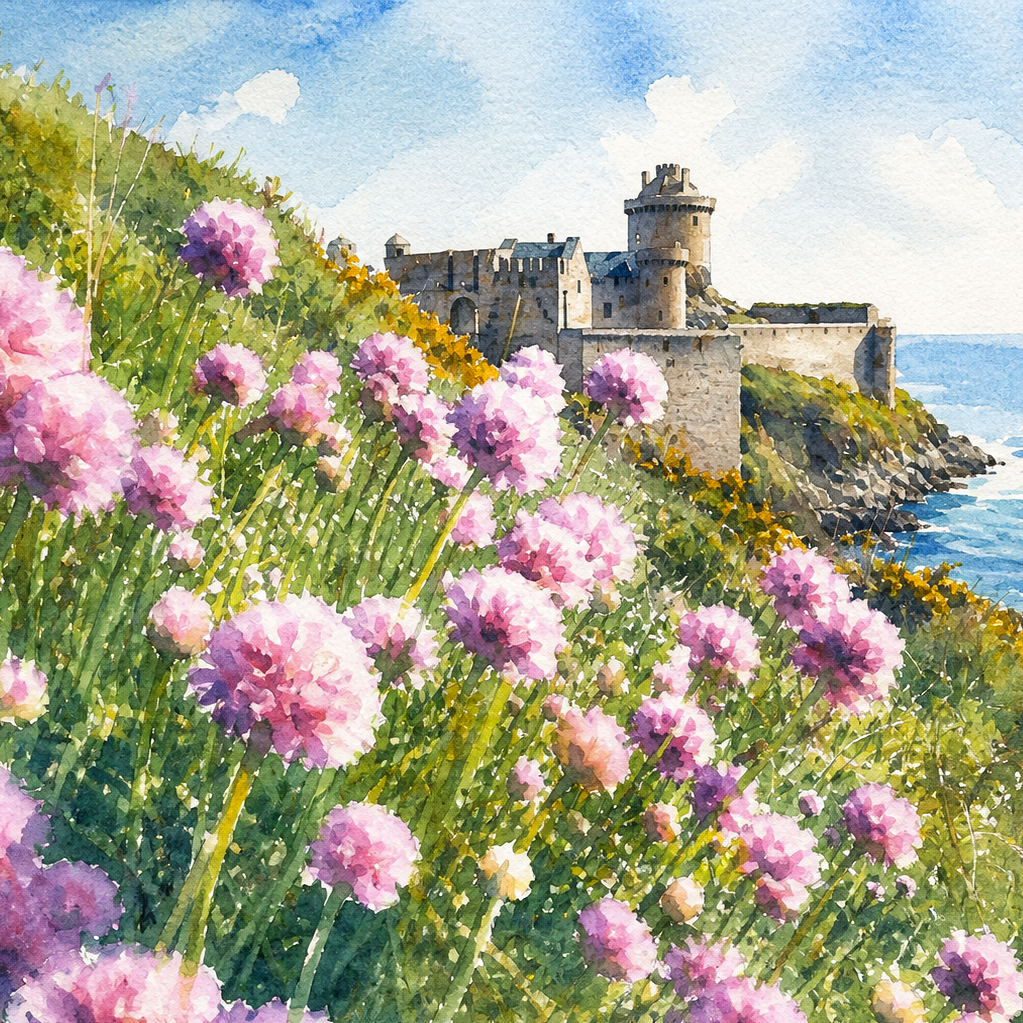
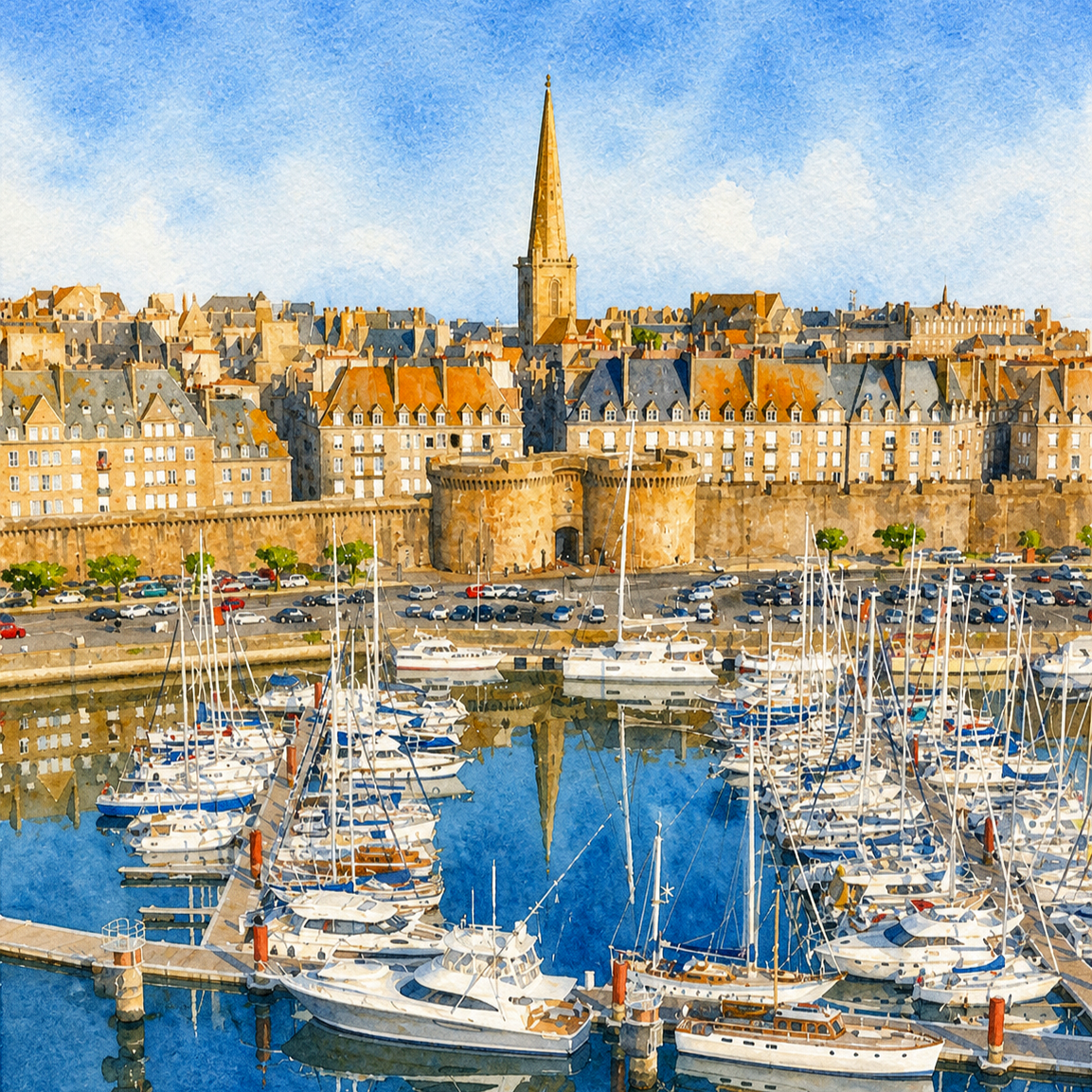
Brittany is navigationally demanding—extreme tidal ranges of up to 14 meters, complex currents, and weather that requires genuine seamanship rather than simply pointing at the horizon and trimming a sail. It is culturally extraordinary—a region with its own Celtic language, its own music and festivals and culinary traditions, its own visible history stretching back over 2,000 years to the megalith builders. It is visually stunning in ways that routinely astonish first-time visitors: turquoise waters off the Glénan Islands, medieval ramparts at Saint-Malo, prehistoric standing stones scattered across Brittany.
And it is authentically European in a way that a week in the British Virgin Islands simply cannot be. Our crew members shop in French markets, navigate French harbors, eat in French restaurants, and forge friendships with French-speaking peers. They come home having absorbed something of another culture—not observed it through glass.
The Channel Islands (when weather and winds allow) add another layer: Jersey, Guernsey, and the remarkable car-free island of Sark, where French and British heritage overlap and the Atlantic tidal environment is among the most dramatic on earth.
No major competitor owns this territory. We do. And it matters.
The Boats: Modern Charter Yacht or Something Altogether Different?
Here's a detail that sounds technical but has profound implications for what your teenager actually learns.
Most teen sailing programs use modern Bermuda-rigged yachts—the kind with furling headsails, electric winches, GPS chartplotters, and autopilots. These are comfortable, safe, and easy to manage. They are also, in a pedagogical sense, fairly forgiving. The boat does much of the thinking for the crew.
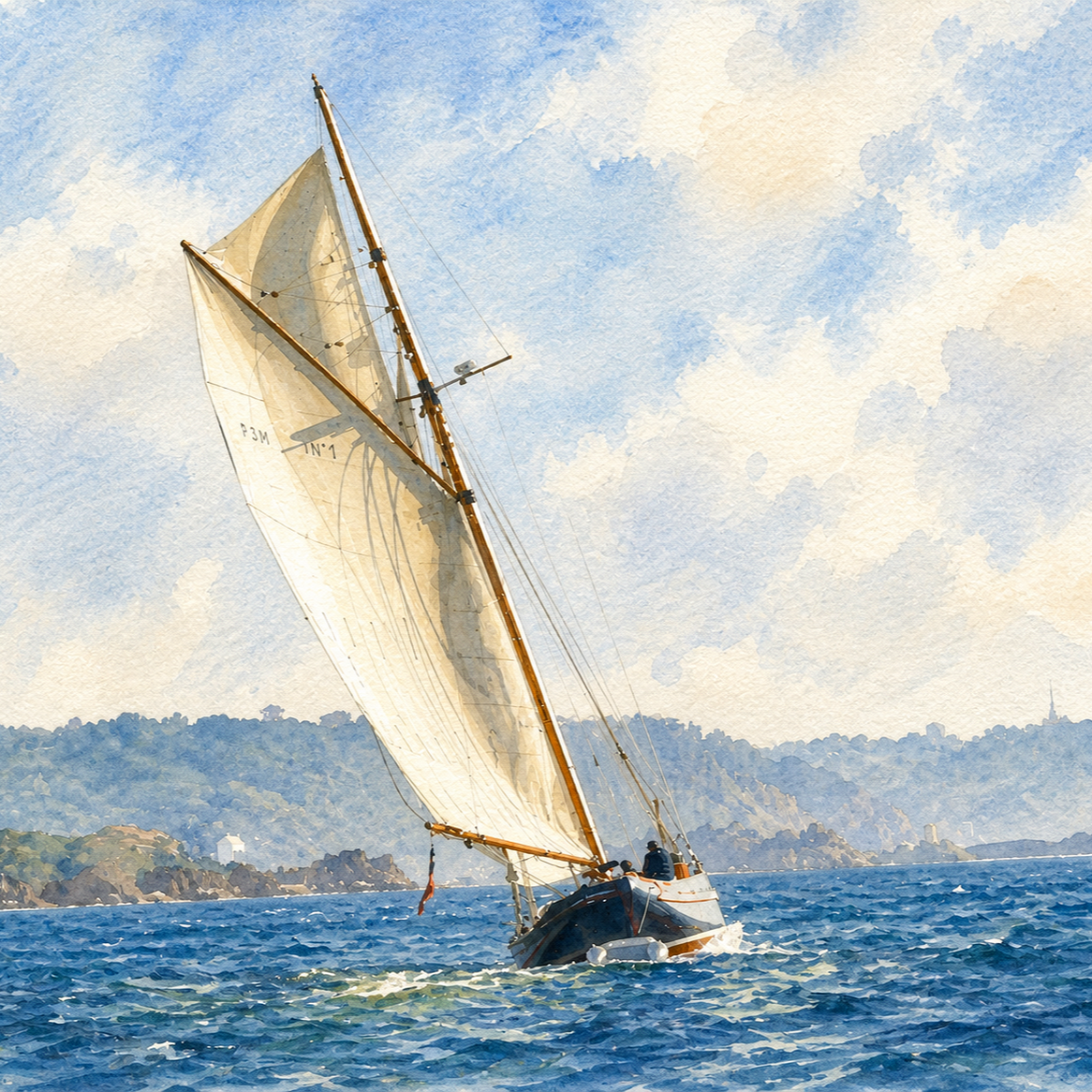
QBE sails two gaff-rig pilot cutters, built by an artisan boatwright using original plans by the celebrated Breton naval architect François Lemarchand, whose restored shipyard near Saint-Malo is classified as a French historic monument. These are working vessels in the tradition of the cutters that served pilotage duties along the French and British coasts for generations. The two boats sail in consort—close enough to support each other, independent enough that each crew develops its own character and cohesion.
Sailing one requires genuine skill and constant attention. Heavy canvas sails are hoisted by hand. The sail plan is more complex. Wind shifts and tidal streams demand active, real-time seamanship. You cannot put it on autopilot and go below for a cup of tea.
The result? Teenagers who come off a QBE expedition have actually sailed. They have used their bodies, their judgment, and their knowledge of the sea in ways that modern charter yachts, for all their virtues, rarely require.
There is also something else. If you have ever seen a gaff-rig yacht cutting through the water—its sails full, bow wave creaming, the whole silhouette evoking two centuries of maritime heritage — you will understand that these boats are beautiful in a way that a modern charter yacht simply is not. Our teenagers sail in style. That matters more than it might sound.
Cultural Immersion: Day Trip or Lived Experience?
Ask a typical teen sailing program about their cultural programming. You'll likely hear about shore excursions—a visit to a local market, a guided tour of a town, perhaps a cooking class.
These are perfectly pleasant. They are not immersion.
QBE crew members live inside a culture for two to three weeks. They arrive by sea into French harbor towns. They navigate French supermarkets and fish markets with their own euros. They encounter French people — shopkeepers, harbour masters, festival-goers — in unscripted, unguided, genuinely spontaneous interactions. Each August, our expeditions coincide with the Interceltic Festival in Lorient, where thousands of performers from the Celtic world—Ireland, Wales, Cornwall, Scotland, Galicia, Brittany—gather for one of Europe's most distinctive cultural events. Our crew members are in the middle of it, not watching it from a tour bus.
The French-speaking members of each crew become de facto cultural ambassadors for their Anglophone shipmates. The Anglophone members return the favor with idiomatic English that no language class has ever quite manages to teach. Language learning happens constantly—not in a classroom, not from a textbook, but from an engine that actually works: the desire to communicate with people you genuinely like.
Teenagers who leave QBE do not feel they have visited France. They feel they have been there, in some deeper sense. That is a distinction that stays with them.
What Competitors Lead With (and What Gets Lost)
Browse the websites of the major teen sailing programs and you'll notice a pattern. The headlines are dominated by certifications: sailing qualifications, scuba licenses, marine biology credits. The framing is almost vocational—here are the specific skills your teenager will acquire and the documents that will prove it.
We offer no objection to qualifications. In fact we award our own certificates of course completion. Practical competency matters. But there is a subtle implication in this framing that we think deserves examination: it positions the experience primarily as a transaction: your teenager invests two weeks and receives a set of certified skills in return.
QBE leads with something different: the formation of character.
Not because we are indifferent to practical skills—our crew members learn to sail, navigate, cook, and manage a working vessel with genuine competence. But because we believe that what a teenager most needs from an experience like this is not a certificate. It is a story. A set of inner resources. A transformed sense of what they are capable of. A friendship forged under real pressure with a peer from a country they had never visited. Perhaps a memory of standing a night watch under a sky full of stars and realising, perhaps for the first time, that they were genuinely responsible for something that mattered.
Certifications are worth something. A QBE experience is worth more.
The Honest Summary
We are not the right program for every teenager or every family. If your priority is warm-water sailing in a well-organized, professionally run program with a large peer group and a set of recognized sailing qualifications at the end— here are excellent programs that deliver exactly that, and we certainly would not discourage you from them.
But if what you are looking for is something closer to the following:
A genuinely small-group program—two boats, 12 to 14 students total—where your teenager cannot hide and cannot coast
Navigationally demanding, historically rich, authentically European sailing territory that no competitor owns
Traditional working vessels that require real seamanship and create real memories
Cultural immersion that goes far beyond a shore excursion
A program explicitly designed around the formation of character, leadership, and life story—not the accumulation of credentials
The kind of experience that, in the words of our parents, produces a teenager who "came home with a new take on life and wanting more for herself"
… then we would very much like to talk to you.
Learn more about QBE Sailing Expeditions at elsleaders.com
Read our white paper for parents
Or simply write to us: ws@qbeglobal.net
QBE European Leadership School, Bassin Vauban, Saint-Malo, France
“—Just wanted to say a huge thank you again for providing such an amazing, unique and absolutely cool experience! I wasn’t sure what to expect when I stumbled upon this program online but decided it looked perfect for my teenage girl. [She] set off on the three-week sailing expedition, but within a week was begging to stay on for a second expedition.
She loved everything about what wound up being seven weeks at sea ... sailing, sleeping and cooking aboard, exploring the marina towns and festivals, the change-over week and especially new friends and mentors from all over the world. To say she enjoyed it and that it was life changing would be an understatement!
I love hearing all the stories that just keep coming! She will definitely be back next year! ...I’m happy to provide references to any parent considering this program for their teenager.
Thank you again!!””

QBE: One of Europe’s best overnight sailing adventures for teenagers. Extremely small groups mean faster team building and more opportunities for leadership mentoring.
You can read an English translation of a recent Bateaux.com article about QBE’s unique “learning by doing” philosophy here.
Get in touch. Or come visit us. We’d love to share more about what makes QBE’s unique maritime expeditions so unforgettable. References available upon request.
“Thank you! Thank you for everything! That was a life-changing trip and he hopes to return next year!”
”
From a Perplexity query (October 2025):

All major credit cards accepted, so you can pay securely and with confidence.
life-elevating adventure • expert sailing instruction • NEW GLOBAL PERSPECTIVES
No sailing experience necessary | Transportation assistance available | Safety record: Impeccable