

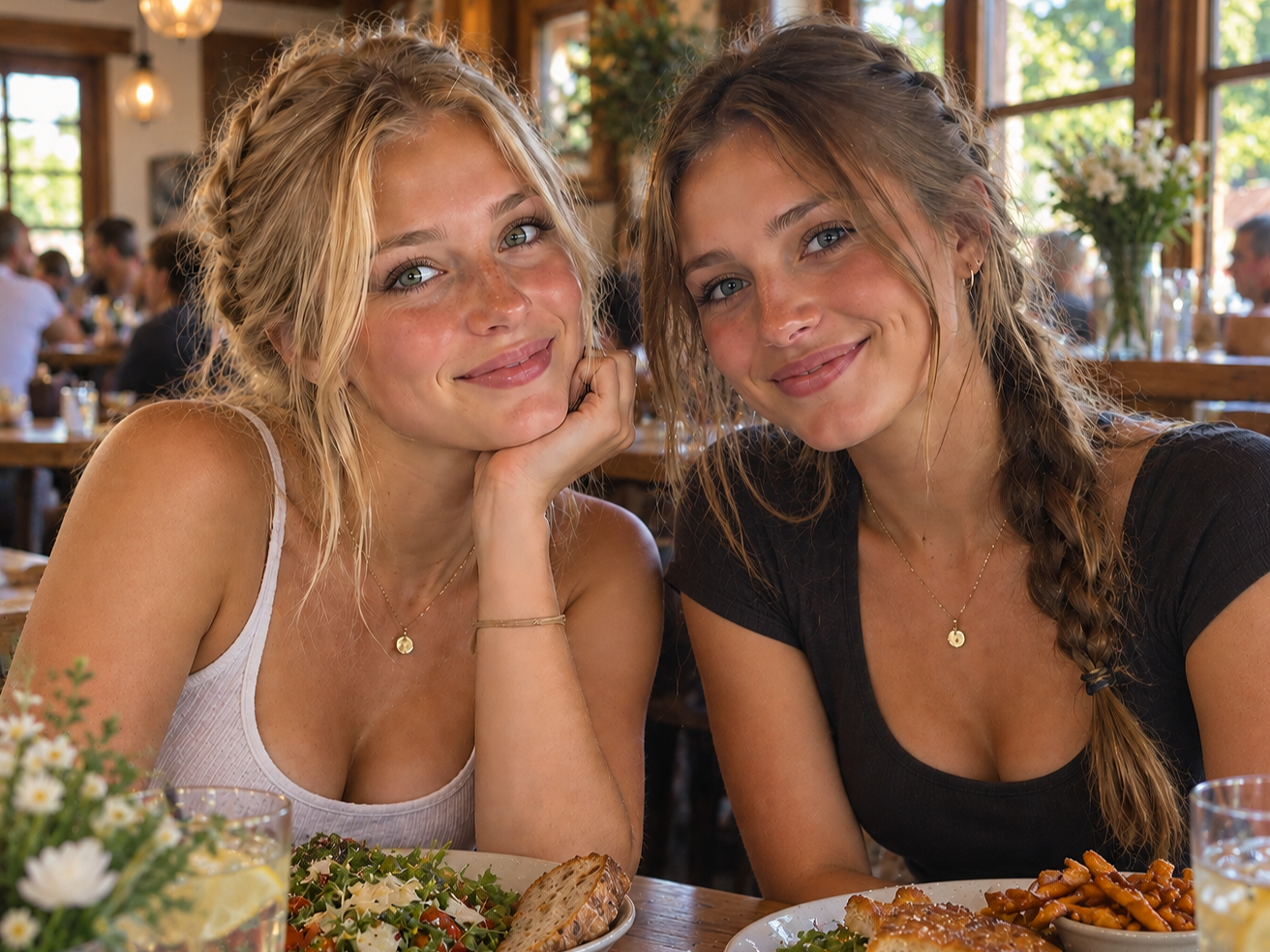
During my last year of high school, I was on a cultural expedition to Munich when I saw her: the most beautiful young woman I had ever laid eyes on, sitting just three tables away in a small restaurant. OMG!
She was speaking German (or maybe Bavarian. Who knows?) to a friend. That was it. That was the whole argument.
My first semester at university, I enrolled in Beginning German.
No teacher had persuaded me. No guidance counselor had sold me on career prospects or cultural enrichment. I simply had encountered someone—and a world—I wanted to know more about.
I call this the Encounter Theory of Language Education. It hasn’t made it into the pedagogical journals yet (as far as I know). But I’d bet you a language textbook it’s true for a lot more people than just your scribe.
We’re Teaching It Backwards
Foreign-language education runs on a tidy, logical sequence: learn the language first, use it later. Who knows? Someday it might come in handy. Maybe it’ll impress somebody?
Alas, most teenagers don’t seem to care about someday.
Tell most 15-year old teens that German will help their careers, and they’ll nod politely. Tell them French will expand their horizons, and they'll nod again—then go back to scrolling on their phones.
Now put one of those teenagers on a boat with other kids from Germany, Italy, Spain, Norway and France, and an imperative to figure life out together for two weeks.
Surprisingly, everything changes.
A language ceases to be a vocabulary list. It’s the song someone plays on deck while you cut through the water as the sun sets. It's the joke you didn’t understand that made three of your friends lose it. It’s the words on a menu you’re determined to decipher. It’s the language spoken by the family you’ve been invited to visit next summer.
Or, once in a while, it’s the language spoken by someone unforgettable in a Bavarian restaurant.
Once that happens, there’s finally a reason to learn.
The World Is a Better Teacher Than Any Classroom
QBE isn’t a language course. English as the lingua franca aboard our boats, and many of our international crew members do practice their English with native speakers. Others like to practice their French. Still, nobody’s conjugating verbs between navigation drills. Nobody's diagramming sentences on some white-sand beach.
Yet interesting dynamics are at work:
Kids who’d otherwise have no reason to think about learning another language spend two or three weeks with a multilingual peer group—sailing, cooking, provisioning, getting lost, problem-solving, exploring unfamiliar ports, and soon… becoming friends.
Voilà. A foreign language stops being foreign the moment it belongs to somebody you actually know and like.
You Can Teach Grammar. You Can’t Teach Curiosity.
Schools are good at vocabulary. They’re good at grammar. The great ones make literature and history come alive.
What no classroom can manufacture on command is curiosity and motivation—the actual, gut-level why do I care about this?
“Why would I ever need another language when just about everybody I know (and roughly 80 percent of the first-world population) already speak mine? Besides, an app on my phone will translate anything for me?”
There are perfectly good intellectual answers to that. But intellectual answers rarely inspire a 15-year old. Experience can… and does.
Meet someone you genuinely like who grew up 4,000 miles away, and the questions start firing on their own: What does your town look like? What do you like to eat? What's actually funny about that? Where do you hang out with your friends? What kind of music do you like? And eventually, inevitably:
How do I say “such and such” in your language?
Motivation comes first. Fluency, or at least competency, follows. Not the other way around.
Maybe They Just Need More Encounters With the World
Foreign-language enrollment in the U.S. has been sliding for years—shifting graduation requirements, the STEM push, take your pick of explanations. Many universities are eliminating their foreign-language departments altogether. In the UK, only about three percent of A-level entries are now for modern languages. The only uptick is for “heritage languages,” second languages that bilingual students already speak at home.
But maybe there’s a simpler explanation hiding in plain sight: we keep asking kids to learn a language before we’ve given them a good reason to want to.
The fix might not be more instruction. It might be the incentive of more encounters.
Put an Anglophone teenager on a boat with a German, an Italian, a Brazilian, and a Norwegian. Give them a few weeks to figure out each other. Let them discover that people from wildly different places can be funny, infuriating, impressive, and genuinely great company.
Then watch what happens.
One comes home wanting to study marine biology. Another gets hooked on European history. Another signs up for a semester abroad. Another develops a sudden interest in French cooking.
And somewhere, a kid originally from, say, Des Moines, or Melbourne, or Derby flips open a course catalog(ue) and thinks:
Hey, I'm gonna learn some German.
I know exactly how that feels. It happened to me.