Kurt Hahn

AI Can Answer Questions. But Can It Raise Capable Young Adults?

Parents have always worried about the future.

Will my children be happy? Will they find meaningful work? Will they become independent? Will they be able to navigate an increasingly complicated, challenging world?

Today's parents face a new wrinkle: artificial intelligence.

For the first time in history, a teenager can carry around a device capable of answering nearly any factual question, writing essays, solving equations, translating languages, generating images, and offering advice on almost any subject imaginable. AI promises to make many tasks easier, faster, and more efficient.

But its rise raises a more profound question:

What happens when young people become accustomed to outsourcing not only information, but initiative?

The challenge facing today's teenagers is not a shortage of knowledge. If anything, they’re drowning in it. What many lack is something harder to acquire: agency.

Agency is the conviction that you can act on the world rather than simply consume it. It is the habit of taking responsibility, making decisions, solving problems, and learning through experience. It is the quiet confidence that comes from discovering, again and again, that you are capable of much more than you imagined.

No technology can provide that. It has to be earned.

Writer and educator Kurt Hahn, founder of Outward Bound® and one of the great pioneers of experiential education, worried that modern life was depriving young people of opportunities to develop resilience, initiative, craftsmanship, and compassion. He argued that character is not formed through comfort or passive observation, but through meaningful responsibility.

His insights seem remarkably relevant today.

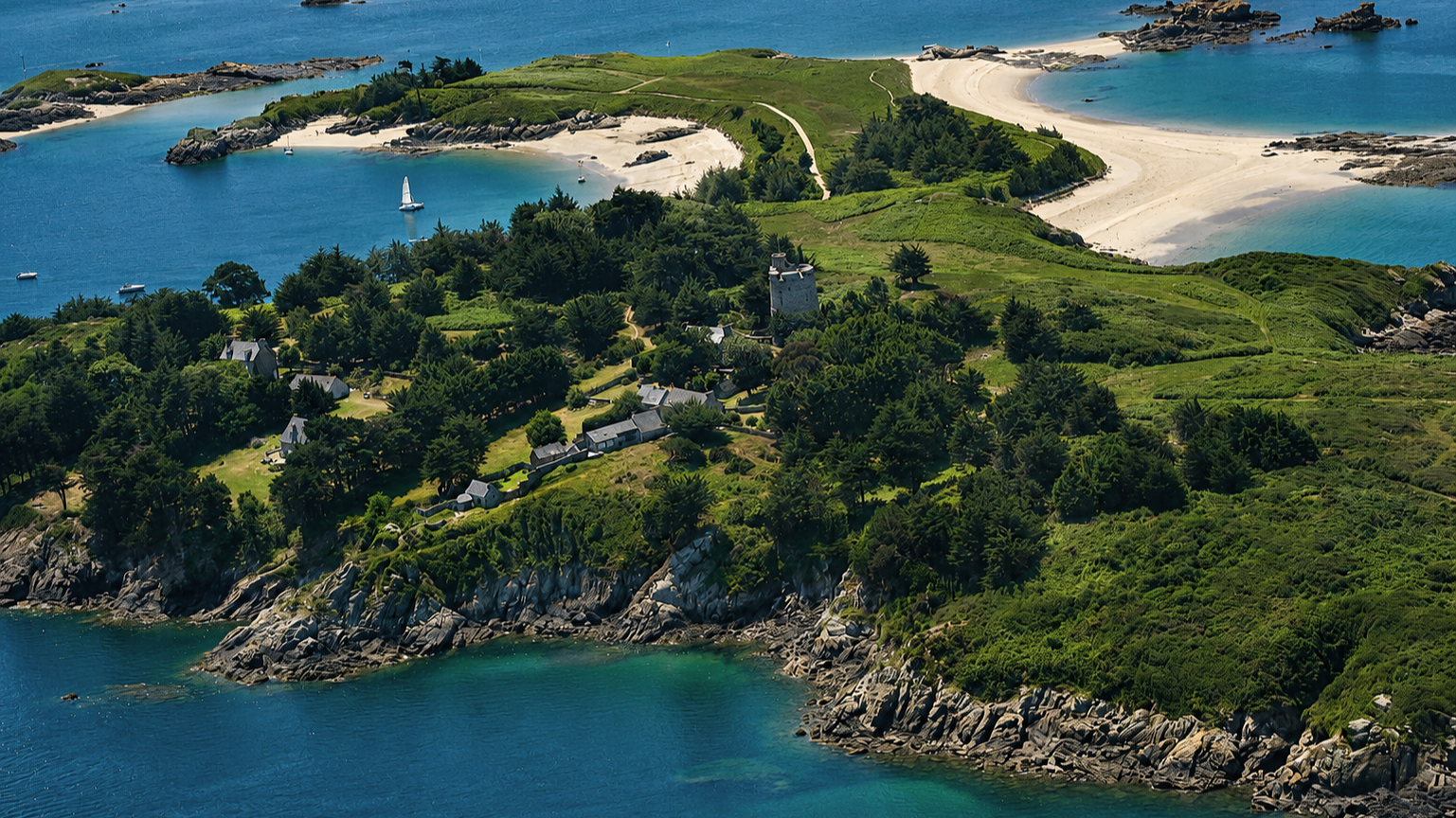
Artificial intelligence can explain how to navigate a coastline. But it can’t navigate one for you.

It can describe the dynamics of effective teamwork. But it can’t teach you how to work efficiently with six other people sharing a small space for three weeks.

It can generate a recipe for just about anything. But it can’t prepare dinner for hungry friends waiting below deck after a long day on the water.

It can explain leadership. But it can’t place you in a situation where others depend upon your judgment.

Real growth still happens when you engage the real world in situations that present challenges.

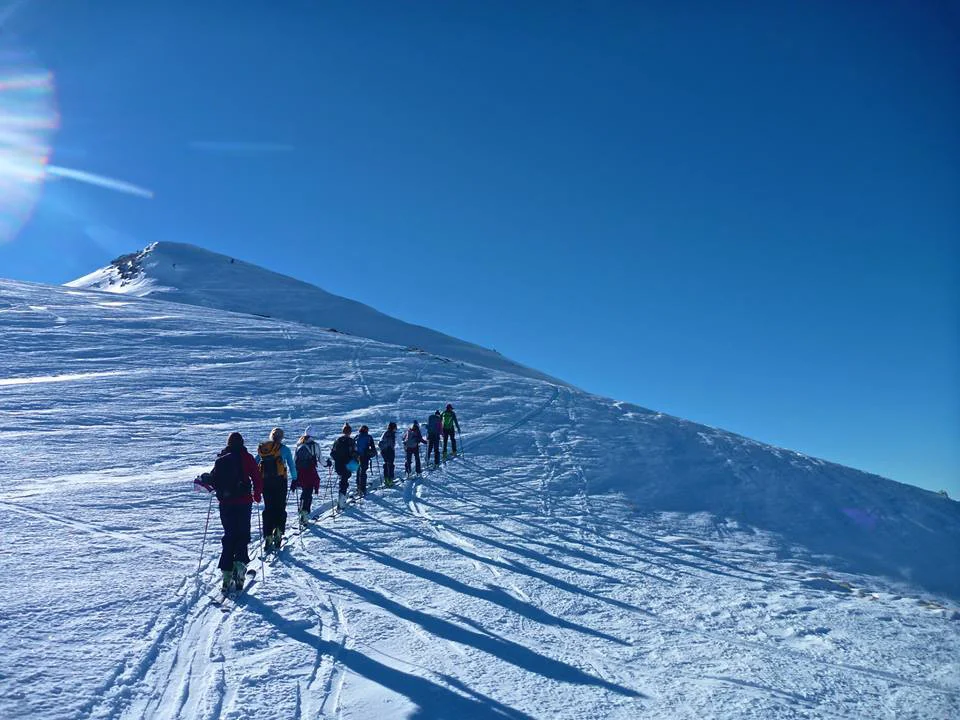
That’s one reason why many parents are increasingly drawn to experiences that place young people in unfamiliar environments where they have to adapt, contribute, and take responsibility. Whether hiking through mountains, traveling abroad, or serving as part of a sailing crew, these experiences require young people to develop skills that no algorithm or video game can supply.

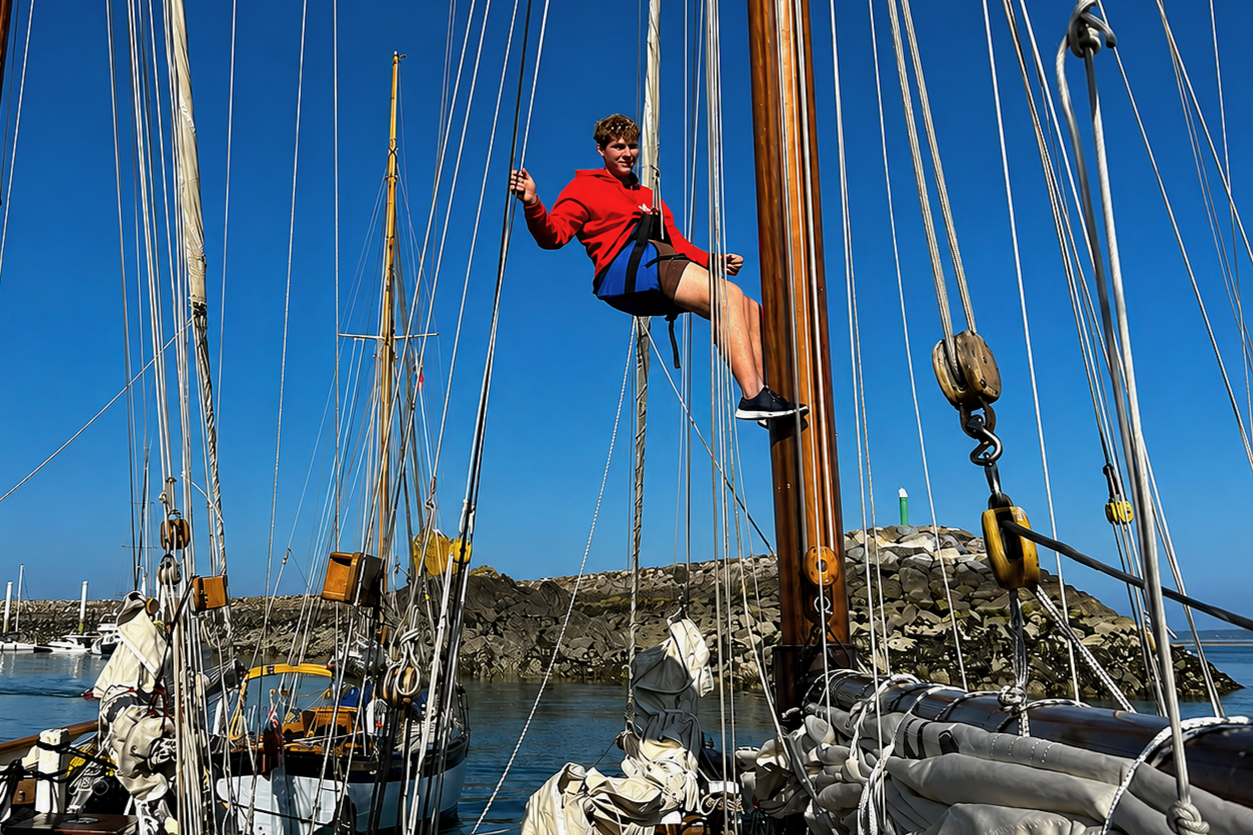
On a traditional sailing vessel, there’s no substitute for paying attention. Weather changes. Conditions evolve. Decisions matter. Every member of the crew has a role to play. Young people quickly discover that their actions have consequences—not in theory, but in practice.

And lo and behold…

The teenager who hesitated to speak up begins offering ideas.

The teenager who relied on adults or a smart phone for every answer starts solving problems independently.

The teenager who doubted his or her abilities discovers reserves of previously unsurfaced competence and confidence.

These lessons extend far beyond sailing. Universities, employers, and communities continue to value such qualities as initiative, adaptability, teamwork, judgment, and leadership. Ironically, as artificial intelligence becomes more capable, these deeply human qualities take on a new urgency.

The future will belong not only to those who know how to use technology, but to those who know how to think independently, collaborate effectively, and act decisively when no one is holding their hand. (Or when a battery dies.)

AI can provide information. Experience provides wisdom.

AI can generate many answers. Experience develops judgment.

AI can help us do many things, but it cannot build character.

That essential task still belongs to life itself and the challenges we embrace.

Winston Churchill, Bricklayer

The man who helped save Britain spent his spare time learning how to lay bricks.

Most people know Winston Churchill as the British Prime Minister who led Britain through World War II.

What they don’t know is he spent much of his life battling what he called "the black dog,” his term for bouts of depression and melancholy.

His solution wasn't what you might expect.

At Chartwell, his home in Kent, Churchill laid thousands of bricks by hand (earning membership in the bricklayers’ union). He built walls, garden structures, and terraces. He painted. He gardened. He immersed himself in physical projects.

Years later, psychologists would discover something Churchill seemed to understand instinctively:

Action often comes before motivation.

Today, psychologists use the term Behavioral Activation to describe a surprisingly effective approach to depression and low mood. The principle is simple: meaningful activity can interrupt destructive mental loops. Instead of waiting to feel better before doing something, you do something—and often begin to feel better afterward.

Churchill discovered the idea long before science gave it a name.

That insight has implications far beyond mental health.

It may also help explain why so many teenagers seem different after a QBE expedition.

The Problem With Living Inside Your Head

Many young people spend enormous amounts of time thinking, scrolling, worrying, comparing, and consuming.

School creates pressure.

Social media creates comparison.

The future creates uncertainty.

The result isn't necessarily depression. More often it's a feeling of drift. A loss of momentum. A sense that life is happening somewhere else.

Parents often describe it as a lack of confidence.

But confidence is a funny thing. It rarely appears because someone hears a pep talk. More often, it emerges because someone does something difficult and discovers that… they can!

Why Sailing Is Different

Sailboats are wonderfully indifferent to moods: The wind changes. The tide turns. A sail needs trimming. A harbor entrance needs identifying. Dinner needs cooking. Someone has to take the helm. Like the wind, reality keeps hitting you in the face.

On a traditional boat, teenagers quickly discover that participation isn't optional. The boat only moves because people make it move. And that's where something interesting happens.

The focus shifts away from How do I feel? and toward What needs doing next?

For many teenagers, that can be surprisingly liberating.

Researchers studying Behavioral Activation have found that meaningful engagement in purposeful activities can help people break cycles of withdrawal and passivity. QBE expeditions are seen primarily as world-class sailing courses, but they’re also extremely effective as experiential mental therapy. They place teenagers in an environment where purposeful action is unavoidable. Every day presents new challenges, new responsibilities, and new opportunities to contribute.

The Therapeutic Power of Responsibility

Kurt Hahn, the founder of Outward Bound® believed young people grow through responsibility, challenge, and service. Not because challenge is pleasant. But because challenge reveals capability.

Teenagers who arrive unsure of themselves often leave having navigated a boat through fog, cooked for a crew, or handled difficult weather.

The confidence comes afterward. Not before.

The Sea As A Way Back Into The World

Churchill didn't solve every problem by laying bricks. But he understood something important. Meaning is often found through engagement. Through doing. Through becoming part of something larger than yourself. The sea has always been a powerful teacher of that lesson.

Sometimes what a teenager needs isn't another pep talk about resilience. Sometimes they need a sail to hoist, a course to steer, a crew depending on them, and the chance to discover—through action rather than theory—what they're actually capable of.

Expeditionary learning. It works. And here’s the evidence:

This is a tale of two schools: an ocean apart geographically and demographically, but with the same noteworthy co-curricular requirement for every student. One school, St. Benedict’s Prep in Newark, New Jersey (USA), costs US$13,000 (about 11,500€/£9,700) a year to attend, though most students receive financial aid. The campus is surrounded by urban blight. The other school, Aiglon|Switzerland, costs close to ten times that much. It is situated in the idyllic Alpine ski resort of Chesières-Villars, high above the Rhône Valley and nearby Lake Geneva. Interestingly, as dissimilar as the schools are in many respects, both have a common challenge: helping their students build character, resilience, and self-esteem. In that regard, it turns out that kids who come from extremely “advantaged” backgrounds can struggle as much as kids who come from “disadvantaged” backgrounds. (It can be dispiriting, even emotionally debilitating, to grow up in the long shadow of an extremely successful and/or famous parent, trying to find your own identity and path in life, just as it’s hard to overcome the many day-to-day challenges of growing up poor.) To address the character/resilience/self-esteem issue, both schools rely on a time-tested pedagogical strategy to get impressive results: EXPEDITIONS.

Two entirely different schools. yet their Small-group expedition dynamics and results are almost exactly the same.

Your scribe met QBE director Will Sutherland years ago at Aiglon, when it was much less expensive. Will was a mathematics teacher and sports master. I was a student. Challenging outdoor expeditions were one of the pillars of the school’s co-curriculum—and ethos. (The founding headmaster, John Corlette, spent some time at Gordonstoun, in Scotland, with expeditionary-learning advocate and Outward Bound® founder Kurt Hahn. Consequently, “JC” became a believer in the benefits of outdoor adventure early in his teaching career.) As much as anything else, the expedition component of an Aiglon education defined our unique boarding school experience. And apparently it still does. Here’s a recent Aiglon video of a rock climbing sortie:

FYI: A via ferrata (Italian for “iron route/path”) is a climbing route that employs steel cables, rungs, and or ladders, fixed to the rock to which climbers attach harnesses to secure themselves and mitigate the danger of any potential fall. Vie ferrate eliminate the obvious risks of unprotected scrambling and climbing or the need for sophisticated climbing equipment; in other words, they facilitate mountain climbing for beginners.

*QBE is not affiliated with Aiglon|Switzerland and the presence of this video on our blog is in no way an endorsement of QBE Outdoor Education by Aiglon or vice versa. It is intended only to make a point about the profound impact of outdoor adventure on high school students.

Below is another video, a short documentary, about an annual trekking expedition that is required for graduation from St. Benedict’s Prep. Many Newark schools are what Americans call “challenged”; their achievement test scores are embarrassingly low. But St. Benedict’s, an inner-city Catholic school, is a remarkable outlier—it graduates 98% of its students and 85% go on to earn undergraduate degrees! The school believes that a five-day trek every first-year high-school student is required to join is a large contributor, if not THE key, to its remarkable academic results.

“It is probably THE most important thing we do…above and beyond the academics…. Every school in the country should find some way to get their kids out in nature to realize there’s something bigger than you.”

—Ivan Lamourt, St. Benedict’s Director of Counseling

The school’s regular expedition route is a 55-mile stretch of the Appalachian Trail, the famous woodland path that stretches across 14 states, from Maine to Georgia, through the ridges and valleys of the Appalachian Mountains. The school has been such an amazing success story that it and its Trail expedition were featured on the popular U.S. television news magazine “60 Minutes.” (QBE did its first post about St. Benedict’s a few years ago.)

What is striking are the comments of students from both Aiglon and St. Benedict’s; they are all on the same page. They come away from their outdoor adventures with similar revelations. They learn the same life lessons. And those lessons stick.

*QBE is not affiliated with St. Benedict’s Prep and the presence of this video on our blog is in no way an endorsement of QBE Outdoor Education by St. Benedict’s or vice versa. It is intended only to make a point about the profound impact of outdoor adventure on high school students.

So there you have it: the magic that happens when you undertake a strenuous exploit, outside your comfort zone, to achieve an ambitious goal.

Sailing expeditions are a variation on the trekking/mountaineering theme, just in a different register (You’re on the water, not land; and you use your arms and hands more than your legs). Participants learn teamwork, resilience, and leadership along with sailing skills and something about our area’s local cultures and history. They form strong bonds with new friends—their fellow crew members. And, like other young expeditioners, many of them come away with experiences and new insights they can use to help craft winning university admission essays.

Service projects are laudable and enormously satisfying moral imperatives. Challenging small-group expeditions, organized and supervised in large part by the participants themselves, are a different breed of endeavor—consequential investments in motivation, character, and confidence that also pay surprisingly high academic dividends. Who would have thought? Testing your limits outdoors usually translates into higher academic achievement in the classroom. It seems a stretch. But there’s ample evidence it’s true. Ambitious expeditions can be life-changers in many different ways, and we enthusiastically commend them to parents and teens looking for transformative summer enrichment.

Our Lives Are What We Make Of Them

Photo: Patrick Roberts

Photo: Patrick Roberts

Many of the ELS's enthusiastic supporters and generous patrons attended boarding school at Aiglon College, a British international school in Chesières-Villars, Switzerland. The ELS's founder once taught there. Aiglon was established in 1949 by an Englishman named John Corlette, who, while teaching at Gordonstoun in Scotland, met Kurt Hahn and was introduced to his ideas about the importance of challenging students with various demanding experiences. Convinced that Hahn was right, Corlette integrated rigorous hiking and skiing expeditions into his own school's basic curriculum. He also required all students and faculty to gather every morning for a meditation—an inspirational message followed by several minutes of reflection. The following is an excerpt from a meditation he personally delivered:

"... an awful lot of so-called grown-ups, many of whom are really only children with grown-up bodies—an awful lot of these grown-ups spend an awful lot of time complaining about their own lives, how uninteresting their lives are, how they never meet any interesting people, how dull their jobs are, how small their pay is, how silly their [partners] are, how idiotic their children, how unreliable their cars, how tasteless their food.

Well, all this may be true and a lot more, but if they are complaining to other people, and invariably they do, they are complaining to the wrong person. They should be complaining to themselves, for they are themselves to blame.

Our lives are what we make of them, and if they are dull and uninteresting, frustrated, colourless and unsatisfying, it is because we make them so.

[...] it is no good blaming those mysterious people 'they' at whose door we like to lay so many of our misfortunes. It is no good blaming God [...] As Shakespeare says in Julius Caesar, 'the fault, dear Brutus, is not in our stars, but in ourselves, that we are underlings.'"

He then went on to prescribe three remedies:

1) Accept responsibility for your own life.

2) Spend the time to know yourself.

3) Have the courage and self-confidence to be yourself.

That philosophy is in our DNA. And that is why, year after year, we do what we do.