
Teen Confidence

AI Can Answer Questions. But Can It Raise Capable Young Adults?

Parents have always worried about the future.

Will my children be happy? Will they find meaningful work? Will they become independent? Will they be able to navigate an increasingly complicated, challenging world?

Today's parents face a new wrinkle: artificial intelligence.

For the first time in history, a teenager can carry around a device capable of answering nearly any factual question, writing essays, solving equations, translating languages, generating images, and offering advice on almost any subject imaginable. AI promises to make many tasks easier, faster, and more efficient.

But its rise raises a more profound question:

What happens when young people become accustomed to outsourcing not only information, but initiative?

The challenge facing today's teenagers is not a shortage of knowledge. If anything, they’re drowning in it. What many lack is something harder to acquire: agency.

Agency is the conviction that you can act on the world rather than simply consume it. It is the habit of taking responsibility, making decisions, solving problems, and learning through experience. It is the quiet confidence that comes from discovering, again and again, that you are capable of much more than you imagined.

No technology can provide that. It has to be earned.

Writer and educator Kurt Hahn, founder of Outward Bound® and one of the great pioneers of experiential education, worried that modern life was depriving young people of opportunities to develop resilience, initiative, craftsmanship, and compassion. He argued that character is not formed through comfort or passive observation, but through meaningful responsibility.

His insights seem remarkably relevant today.

Artificial intelligence can explain how to navigate a coastline. But it can’t navigate one for you.

It can describe the dynamics of effective teamwork. But it can’t teach you how to work efficiently with six other people sharing a small space for three weeks.

It can generate a recipe for just about anything. But it can’t prepare dinner for hungry friends waiting below deck after a long day on the water.

It can explain leadership. But it can’t place you in a situation where others depend upon your judgment.

Real growth still happens when you engage the real world in situations that present challenges.

That’s one reason why many parents are increasingly drawn to experiences that place young people in unfamiliar environments where they have to adapt, contribute, and take responsibility. Whether hiking through mountains, traveling abroad, or serving as part of a sailing crew, these experiences require young people to develop skills that no algorithm or video game can supply.

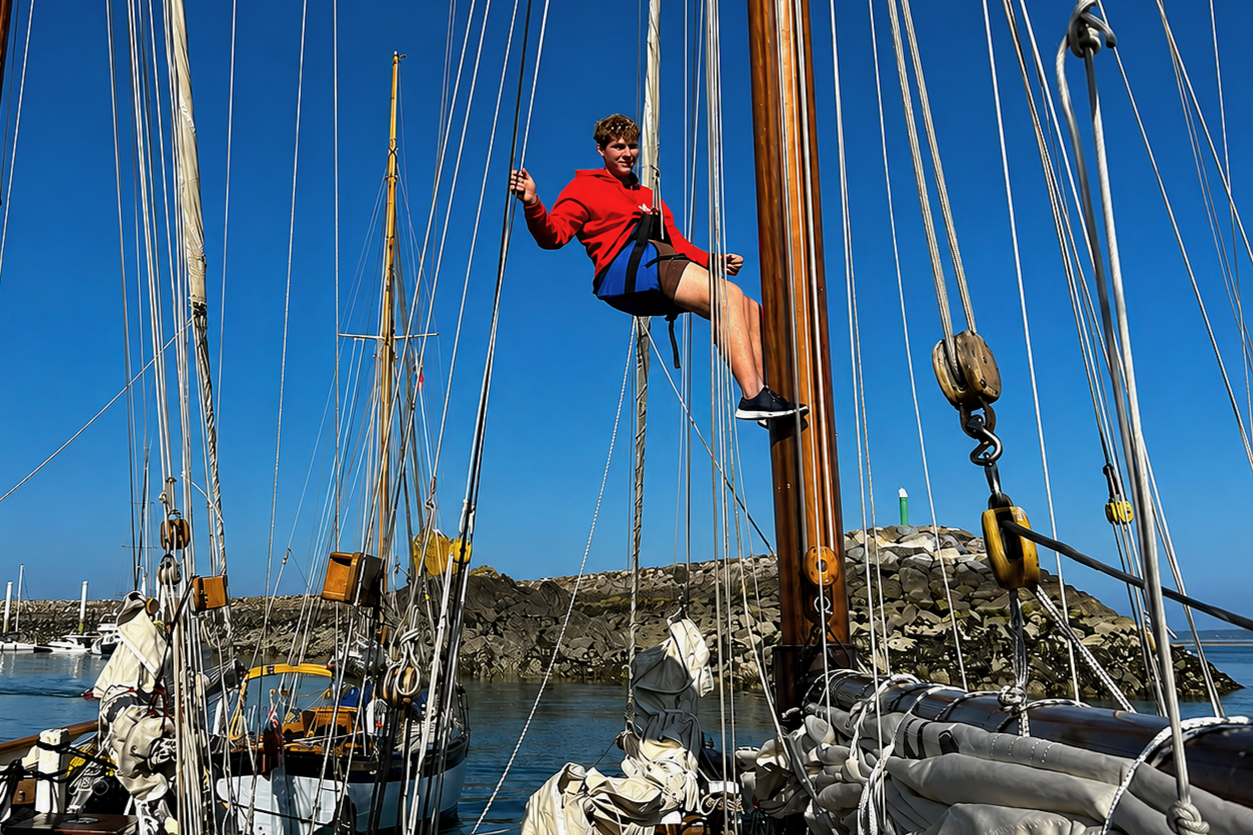
On a traditional sailing vessel, there’s no substitute for paying attention. Weather changes. Conditions evolve. Decisions matter. Every member of the crew has a role to play. Young people quickly discover that their actions have consequences—not in theory, but in practice.

And lo and behold…

The teenager who hesitated to speak up begins offering ideas.

The teenager who relied on adults or a smart phone for every answer starts solving problems independently.

The teenager who doubted his or her abilities discovers reserves of previously unsurfaced competence and confidence.

These lessons extend far beyond sailing. Universities, employers, and communities continue to value such qualities as initiative, adaptability, teamwork, judgment, and leadership. Ironically, as artificial intelligence becomes more capable, these deeply human qualities take on a new urgency.

The future will belong not only to those who know how to use technology, but to those who know how to think independently, collaborate effectively, and act decisively when no one is holding their hand. (Or when a battery dies.)

AI can provide information. Experience provides wisdom.

AI can generate many answers. Experience develops judgment.

AI can help us do many things, but it cannot build character.

That essential task still belongs to life itself and the challenges we embrace.
Why Sailing Is The Ultimate Teen Leadership Course

WHEN PARENTS THINK ABOUT SUMMER LEADERSHIP COURSES for their teens, they often imagine lectures coupled with workshops and/or simulations. But what if the best way to develop confidence, collaboration, and poise under pressure isn’t found in a traditional classroom—but outside, on the deck of a traditional yacht under sail?

At QBE, we believe sailing is the most most transformative—and natural—environment there is for instilling teenage leadership qualities. Here's why:

1. Real-World Leadership, Not Just Practice

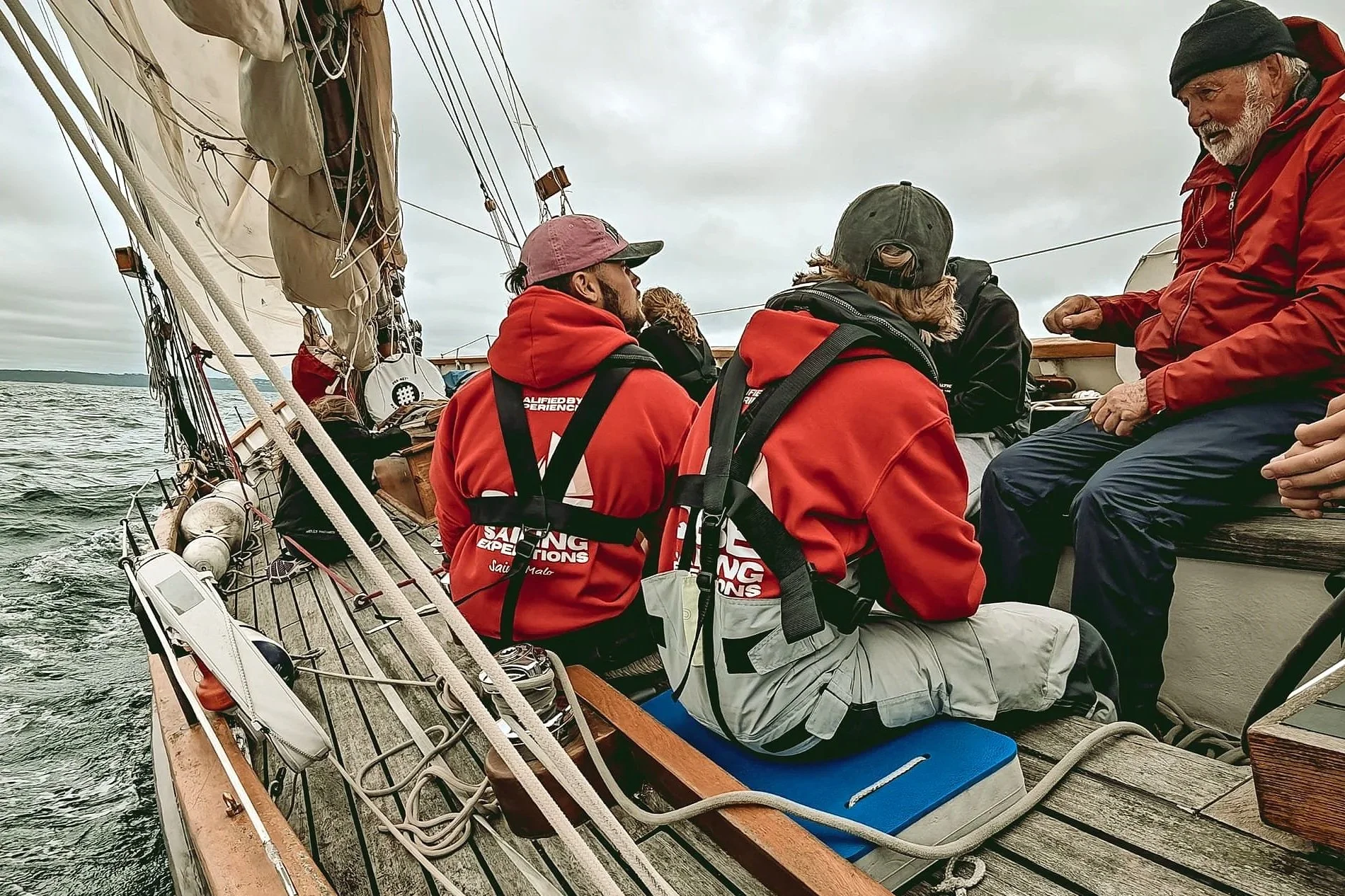
On a small sailing yacht, there’s no such thing as a passive bystander. Every crew member plays a role—from setting sails and trimming lines to helming, cooking, and tidying up. Leadership is baked into the rhythm of every day.

Teens take on rotating leadership roles, making decisions that affect the whole crew. They learn to:

• Give clear instructions
• Stay poised under pressure
• Adjust plans based on changing circumstances

This type of experiential learning aligns with research reported in the Journal of Experiential Education, which found that teens in adventure-based programs develop a stronger leadership identity and better interpersonal skills [3].

2. Adapting to the Wind (and the Unexpected)

Leadership isn’t just about having a plan—it’s about making sound decisions when the plan suddenly changes. On the water, anything can happen: Weather rapidly deteriorates. Tides turn. Equipment fails. Sailing demands adaptability, which The Harvard Business Review names as one of the top emerging leadership skills in Gen Z [1].

At sea, teens can’t wait for someone else to solve problems—they have to react, regroup, and lead. This kind of resilience is difficult, if not really impossible, to learn in a classroom or simulation, but sailing makes it second nature.

3. Communication When It Counts

Good leaders know how to listen and speak with clarity. How to net it out! Onboard a sailboat, teens learn to communicate in high-stakes situations—whether calling sail changes, navigating tricky coastlines, or debriefing after a mistake.

These soft skills translate directly to school, university interviews, and beyond.

4. Exposure to the World, Not Just Theories

QBE expeditioners don’t spend all their time on boats—they explore historic towns, browse local markets, and hike breathtakingly beautiful islands and coastal paths. These moments spark:

• Cultural curiosity
• Confidence in unfamiliar settings
• Cross-cultural communication

Global awareness is a cornerstone of modern leadership. A McKinsey report found that cultural intelligence is now one of the top competencies in hiring future leaders [4]. Most other teen sailing options can’t compete with QBE in that department.

5. Small Teams = Big Growth

In a crew of six, no one hides. Every student is needed and accountable. We’ve found that small-group dynamics are the fastest way to unlock leadership in even the most introverted teens.

Compare this to larger camps or lecture-style courses, where teens may drift through unnoticed. Onboard a QBE vessel, every voice matters—and every leadership win is celebrated.

An Indelible Experience

We’ve had parents write to us:

• “My daughter’s three weeks with QBE in August 2023 has been the single most remarkable experience of her life. She was lucky to have this opportunity as a teenager… She came home with a new take on life and wanting more for herself.”

• “… a trip of a lifetime—one of those defining moments in life that is never forgotten. [...]We truly appreciate the phenomenal opportunity he was given, teaching [him] not only sailing but life skills along the way.“

• “The 2023 July expedition was an unforgettable and life-changing experience for our 15 year old. He greatly developed his autonomy and ability to work in a team. But, most importantly, he had great fun and made a lot of new friendships: the most exciting holiday ever!”

Many other parents echo this transformation, describing their teens as more mature, focused, and independent upon returning home.

Final Thoughts

Sailing is leadership—not in theory, but in practice. It asks teens to take charge, take risks, and take care of each other—all while exploring the world and discovering their own previously hidden strengths.

If you're looking for a teen summer experience that’s not just adventurous, but culturally revelatory and transformative, QBE Sailing may just be the option your family has been searching for.

Sources:
[1] Harvard Business Review. "The Top Leadership Traits of Gen Z," 2022.
[2] Outward Bound USA. “Leadership Through Challenge,” 2021.
[3] Journal of Experiential Education, 2019. “Sailing as a Context for Adolescent Leadership Development.”
[4] McKinsey & Company. “The Value of Cultural Intelligence in Leadership,” 2020.