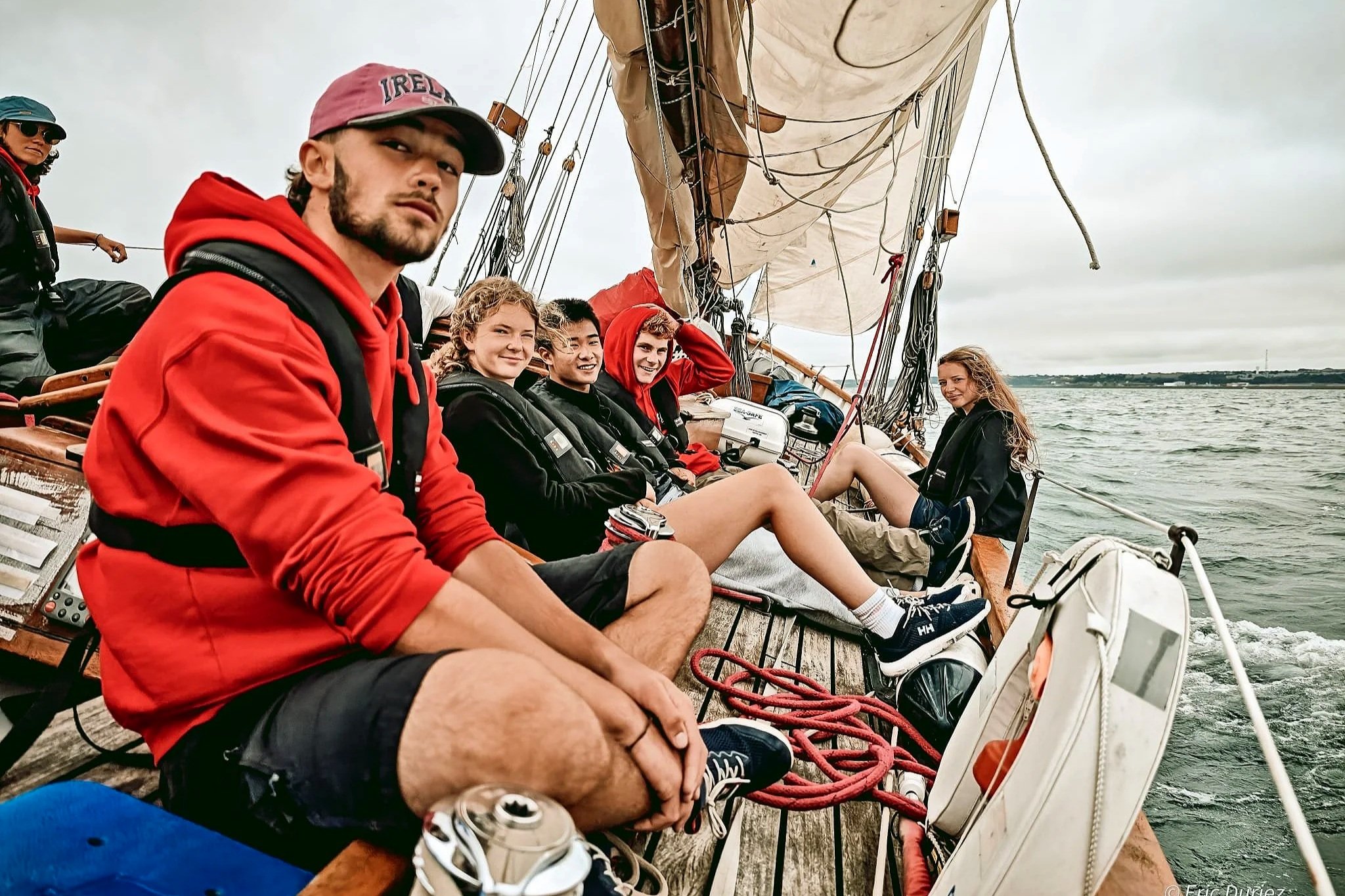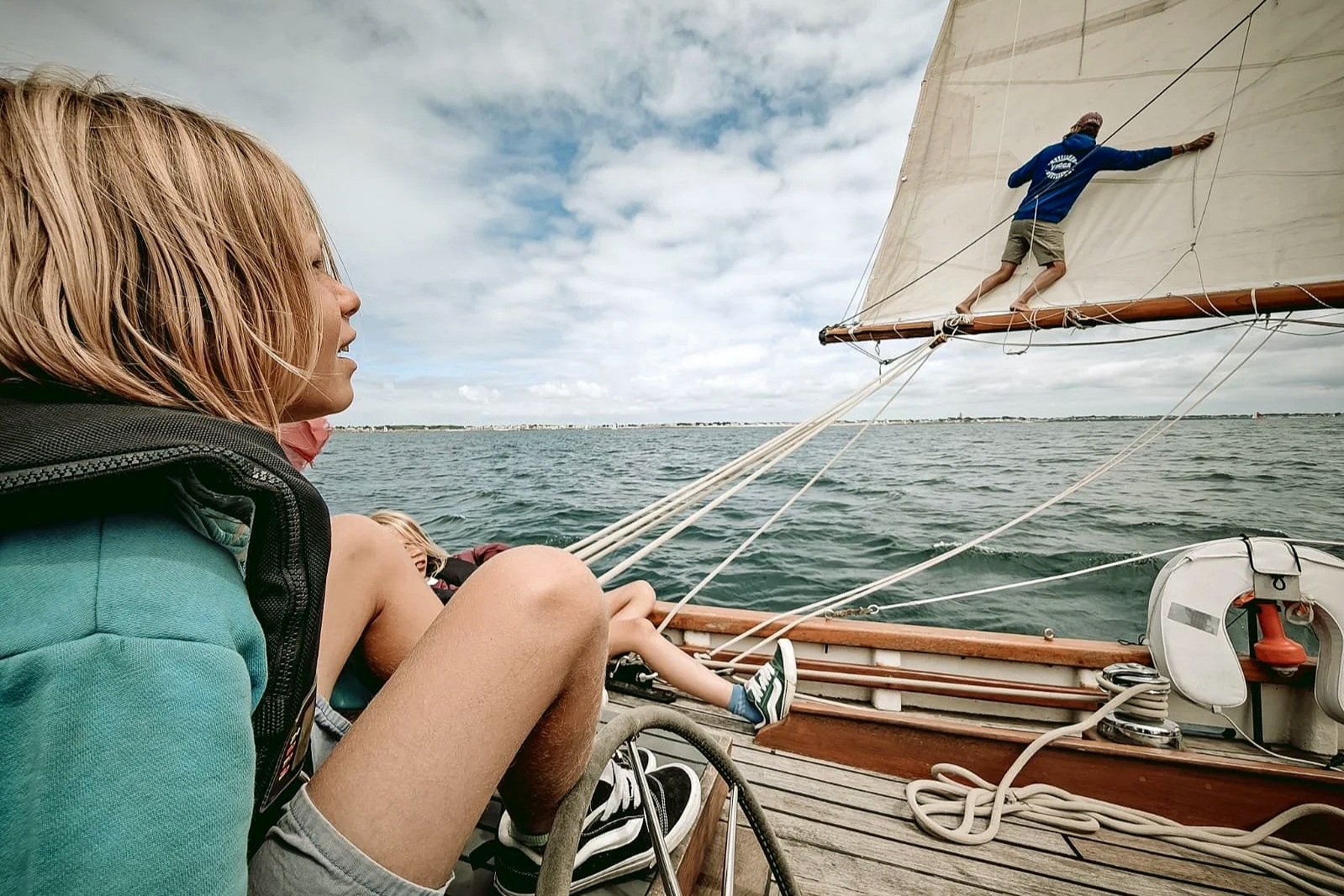
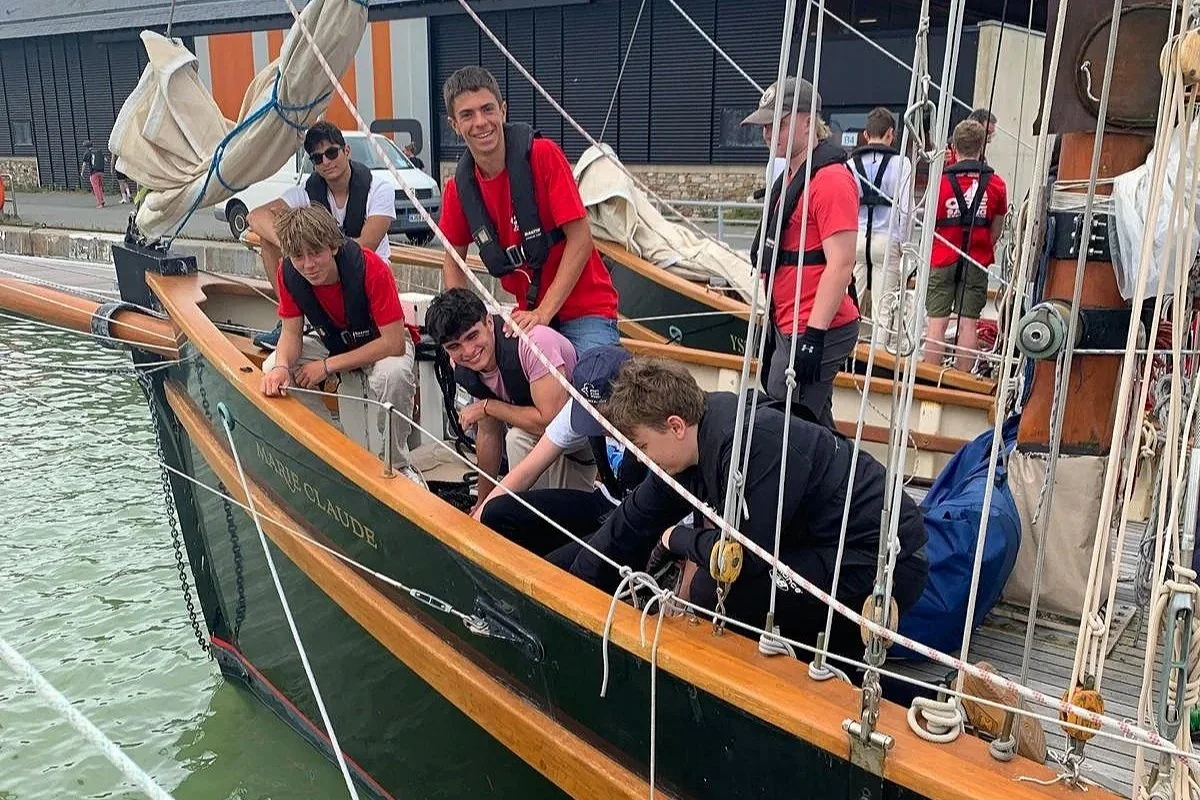
Why Expeditionary Learning Works: The Power of doing

We’ve all heard the phrase “learning by doing”—but what happens when teens learn by navigating, leading, cooking, problem-solving, collaborating… and blue-water sailing?
That’s expeditionary learning. And at QBE, it’s not just a teaching method—it’s a life-elevating experience and probably a once-in-a-lifetime opportunity.

What Is Expeditionary Learning, Exactly?

Expeditionary learning puts students in real-world situations where they don’t just absorb information—they apply it, live it, and grow from it.
It’s active, immersive, and occasionally uncomfortable—but in an impactful way.

Instead of passively absorbing information, QBE crew members:

• Learn how to plot actual courses on nautical charts
• Cook for each other to build camaraderie and trust
• Take turns at the helm of a 46ft gaff-rig yacht
• Make daily decisions as part of a working crew
• Collaborate with peers from different countries and cultures
• Explore new environments, languages, and histories firsthand

This isn’t “class trip learning.” This is learning that asks something of you—and never fails to give something back.

Why It Works (and Why It Sticks)

Because it’s predicated on challenges
When teens stretch beyond their comfort zones—physically, emotionally, socially—they build confidence, grit, and self-esteem. Expeditionary learning challenges them in a way that spurs impressive emotional growth.

Because it’s intensively collaborative
There’s no “individual project” in the middle of, say, the English Channel. Every crew member is essential. Whether it’s hoisting sails, cooking for the team, or making sure everything is tidy and in order, students experience shared leadership and real teamwork—not simulated group work.

Because it’s extremely memorable
Teens don’t forget the time they were in charge of bringing their boat alongside a quai, or a night they read the stars to help chart their position. These are the sort of moments that become emblazoned in the memory.

Because it respects their potential
Expeditionary learning helps teens discover they’re capable of meaningful contributions. Afterwards, they consistently rise to meet high expectations. They're not passengers on their learning journey. They're the crew.

What Teens Really Take Away

After a QBE expedition, teens don’t just come home with sea legs. They come home with:

• Increased confidence and independence
• Better decision-making and communication skills
• More resilience and adaptability
• A broader global perspective and higher cultural IQ
• A deeper connection to the natural world
• Real-world leadership experience

These aren’t just nice extras. They’re requisite life skills that prepare them for university, careers, and relationships—far more than any test prep ever could.

Expeditionary Learning Is More Than a Method—It’s Now a Movement

Top schools and universities around the world now integrate expeditionary learning into their curriculum, and for good reason:

It works
• It transforms
• It’s not ever forgotten

And at QBE, we don’t just believe in the transformative power of expeditionary learning—our entire model is predicated on it.
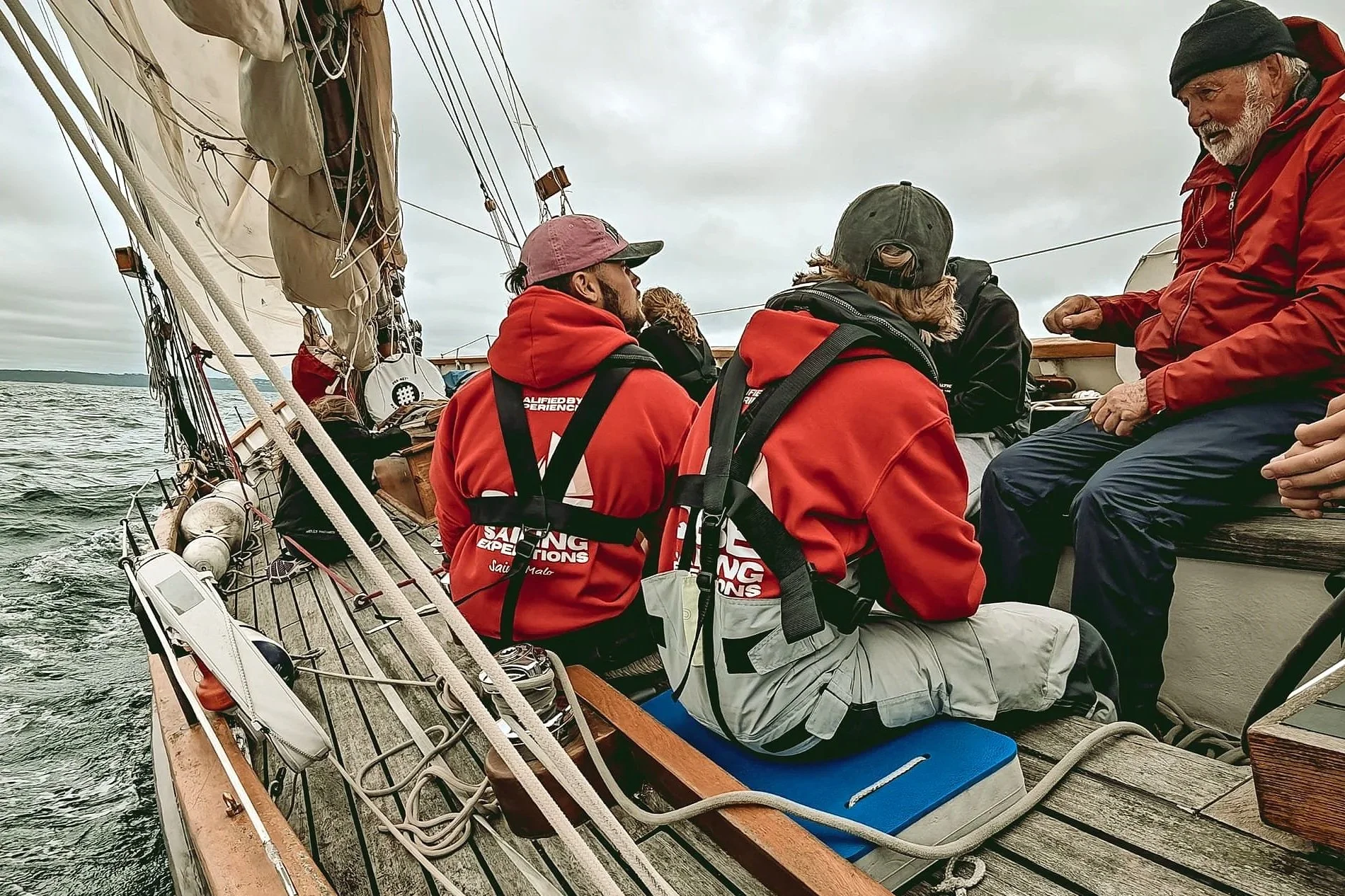
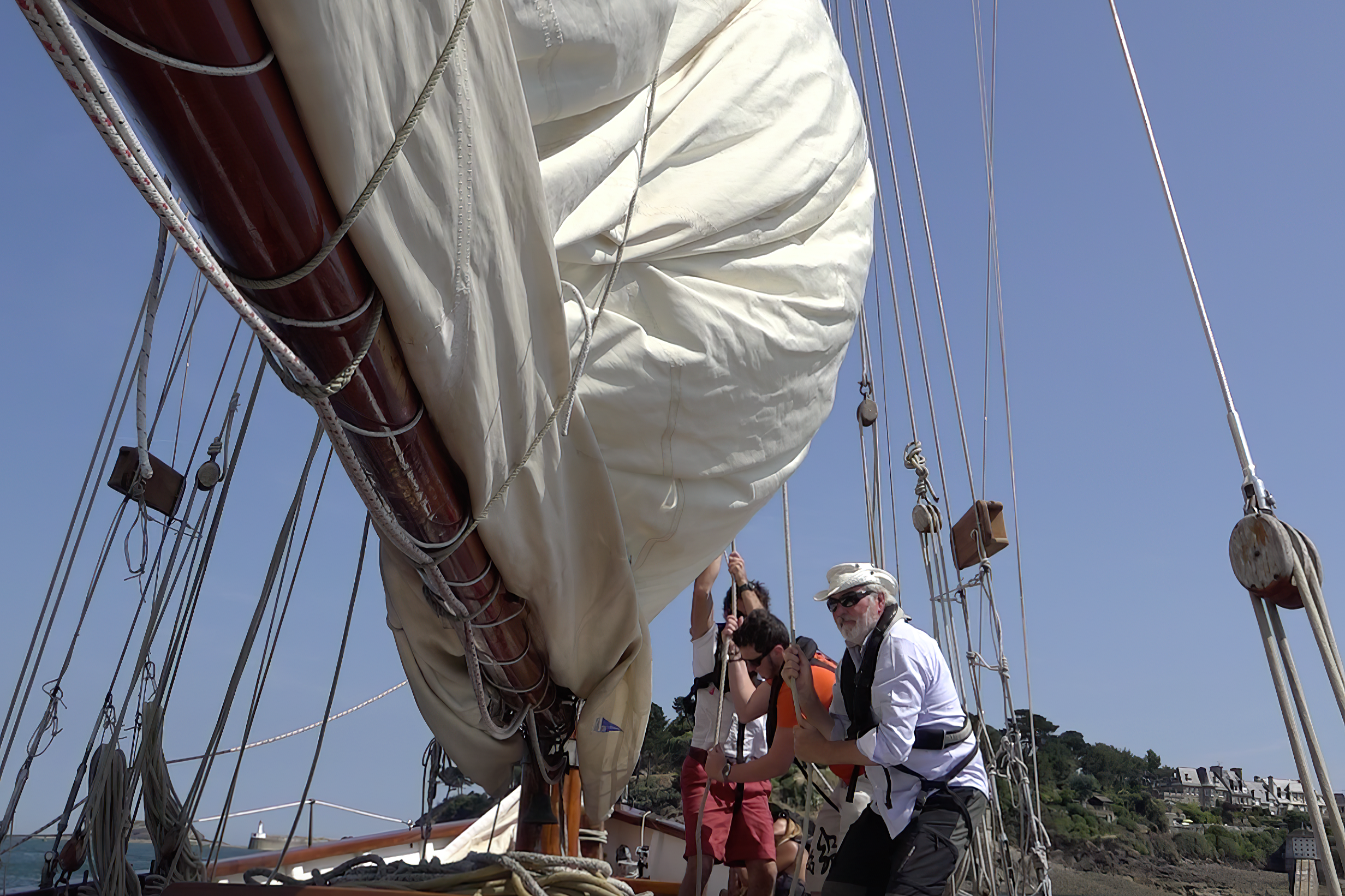
Why Sailing Is the Ultimate Teen Leadership Course

WHEN PARENTS THINK ABOUT SUMMER LEADERSHIP COURSES for their teens, they often imagine lectures coupled with workshops and/or simulations. But what if the best way to develop confidence, collaboration, and poise under pressure isn’t found in a traditional classroom—but outside, on the deck of a traditional yacht under sail?

At QBE, we believe sailing is the most most transformative—and natural—environment there is for instilling teenage leadership qualities. Here's why:

1. Real-World Leadership, Not Just Practice

On a small sailing yacht, there’s no such thing as a passive bystander. Every crew member plays a role—from setting sails and trimming lines to helming, cooking, and tidying up. Leadership is baked into the rhythm of every day.

Teens take on rotating leadership roles, making decisions that affect the whole crew. They learn to:

• Give clear instructions
• Stay poised under pressure
• Adjust plans based on changing circumstances

This type of experiential learning aligns with research reported in the Journal of Experiential Education, which found that teens in adventure-based programs develop a stronger leadership identity and better interpersonal skills [3].

2. Adapting to the Wind (and the Unexpected)

Leadership isn’t just about having a plan—it’s about making sound decisions when the plan suddenly changes. On the water, anything can happen: Weather rapidly deteriorates. Tides turn. Equipment fails. Sailing demands adaptability, which The Harvard Business Review names as one of the top emerging leadership skills in Gen Z [1].

At sea, teens can’t wait for someone else to solve problems—they have to react, regroup, and lead. This kind of resilience is difficult, if not really impossible, to learn in a classroom or simulation, but sailing makes it second nature.

3. Communication When It Counts

Good leaders know how to listen and speak with clarity. How to net it out! Onboard a sailboat, teens learn to communicate in high-stakes situations—whether calling sail changes, navigating tricky coastlines, or debriefing after a mistake.

These soft skills translate directly to school, university interviews, and beyond.

4. Exposure to the World, Not Just Theories

QBE expeditioners don’t spend all their time on boats—they explore historic towns, browse local markets, and hike breathtakingly beautiful islands and coastal paths. These moments spark:

• Cultural curiosity
• Confidence in unfamiliar settings
• Cross-cultural communication

Global awareness is a cornerstone of modern leadership. A McKinsey report found that cultural intelligence is now one of the top competencies in hiring future leaders [4]. Most other teen sailing options can’t compete with QBE in that department.

5. Small Teams = Big Growth

In a crew of six, no one hides. Every student is needed and accountable. We’ve found that small-group dynamics are the fastest way to unlock leadership in even the most introverted teens.

Compare this to larger camps or lecture-style courses, where teens may drift through unnoticed. Onboard a QBE vessel, every voice matters—and every leadership win is celebrated.

An Indelible Experience

We’ve had parents write to us:

• “My daughter’s three weeks with QBE in August 2023 has been the single most remarkable experience of her life. She was lucky to have this opportunity as a teenager… She came home with a new take on life and wanting more for herself.”

• “… a trip of a lifetime—one of those defining moments in life that is never forgotten. [...]We truly appreciate the phenomenal opportunity he was given, teaching [him] not only sailing but life skills along the way.“

• “The 2023 July expedition was an unforgettable and life-changing experience for our 15 year old. He greatly developed his autonomy and ability to work in a team. But, most importantly, he had great fun and made a lot of new friendships: the most exciting holiday ever!”

Many other parents echo this transformation, describing their teens as more mature, focused, and independent upon returning home.

Final Thoughts

Sailing is leadership—not in theory, but in practice. It asks teens to take charge, take risks, and take care of each other—all while exploring the world and discovering their own previously hidden strengths.

If you're looking for a teen summer experience that’s not just adventurous, but culturally revelatory and transformative, QBE Sailing may just be the option your family has been searching for.

Sources:
[1] Harvard Business Review. "The Top Leadership Traits of Gen Z," 2022.
[2] Outward Bound USA. “Leadership Through Challenge,” 2021.
[3] Journal of Experiential Education, 2019. “Sailing as a Context for Adolescent Leadership Development.”
[4] McKinsey & Company. “The Value of Cultural Intelligence in Leadership,” 2020.

One Of The Safest Ways for Teens to Explore Authentic Europe

How QBE Melds Challenging Adventure With Safety

You want your teens to have an unforgettable summer. But let’s be honest—most of all, you also want them safe.

At QBE, we understand that sending a teenager abroad, especially on a small boat, can feel like a leap of faith. That’s why our expeditions are built around years of experience, expert supervision, and an impeccable safety record. We don’t just promise life-elevating adventure—we promise to use well-established yachting safety protocols to return your teen home safe and sound.

Adventure Without the Chaos

Spontaneity can lead to serendipity and surprising discovery. So it’s not surprising that many travel operators subscribe to a policy of setting some time aside to “make it up as you go along.” We agree—but with a caveat: At QBE, every expedition is planned with intention and monitored by a professional team with decades of experience in sailing, outdoor education, and youth development. Teens still get all the thrills—navigating blue water, exploring coastal towns, learning new skills—but within carefully calibrated protocols designed to keep them secure.

From checklists and constant weather monitoring to continuous supervision and pre-scouted destinations, little is left to chance. And when our crew members go out to explore a port of call, they always explore in groups.

Too, we’re typically not fighting huge crowds, and certainly not in major cities, where bad actors—often members of gangs—look to prey on unsuspecting tourists.

Small Groups Mean Lots of Personal Support

Our crews are intentionally small—typically six or seven student participants on each boat with a highly qualified adult skipper and an experienced first mate—so that every crew member is seen, heard, and supported. This small-team approach allows for:

• Personalized attention
• Close monitoring of physical and emotional well-being
• Real relationship-building between youngsters and adults

Importantly, no one gets lost in the crowd. Everyone is an integral part of the team.

Leaders Who Really Know What They’re Doing

QBE is run by one of Europe’s most experienced coaches, an expert in both traditional sailing and in life-skills development. All adult crew members are trained in first aid, maritime safety, and teen mentorship. All are bilingual. All are selected for their calm, clear judgment; expertise in gaff-rig sailing; deep knowledge of our maritime neighborhood; and genuine care for the youngsters in their charge.

Safety Isn’t Just a Policy—It’s a Mindset

We take frequent proactive steps to prevent problems before they arise. That includes:

• Regular Coast Guard boat inspections
• Pre-expedition safety briefings and gear checks
• Daily risk and weather assessments during the expedition
• Clearly defined protocols for every scenario, from sailing hazards to health concerns
• A strict no-bullying policy

And just in case: every participant is required to carry medical insurance that covers care in Europe. Parents can opt for (inexpensive) policies that include air ambulance repatriation, if desired.

A World to Discover, With a Net Below

Yes, we’re sailing some occasionally challenging coastlines. Yes, your teen will explore historic ports, taste new foods, and helm a classic yacht through open water. But none of that happens without a comprehensive net of support beneath them—a safety-first philosophy meant to protect without stifling.

So when your teen says, “Hey, I sailed an amazing 46-foot yacht in France!”, you’ll know they did it with the best-possible safety support—and came back stronger, more independent, and inspired to meet new life challenges.

You Don’t Have to Choose Between Safety and Challenging Adventure—With QBE, Your Teen Gets Both!


Contact us to learn how we’ve earned the trust of families from Europe, North America, and around the world.

Give Your Teen A Story Worth Telling

Want to supercharge your teen’s high school résumé?
QBE can help it stand out in the stack.

Grades matter—but they’re not enough.
Increasingly, top universities and future employers are looking beyond transcripts. They want to see what makes their applicants tick: how they think, how they lead, how they handle challenge and uncertainty. That’s exactly where a QBE expedition can make a real difference. Because spending two or three weeks at sea on a traditional sailboat isn’t just “nice” experience—it’s transformative.

Why Experience Matters to Universities and Employers

When admissions officers sift through thousands of applications, they’re looking for something real. Something that shows initiative, curiosity, and resilience. Sailing as a member of an international crew through the English Channel and along French coastlines shows all of that—and more.

A QBE expedition gives teenagers stories they can tell in essays, interviews, and future networking conversations. It demonstrates:

  • Teamwork under pressure

  • Leadership in a real-world context

  • Global and cultural awareness

  • Hands-on problem solving

  • Time management and self-reliance

These are not abstract “soft skills.” They’re the foundation of success in higher education—and in life.

From a Pilot Cutter Under Sail to the Personal Statement

When young crew members write a university application essay after a QBE expedition, they won’t have to invent some story about overcoming a challenge or discovering something new. They will have lived it. Whether it’s leading their crews while navigating a tricky coastline, reassuring a seasick crewmate, or embracing the constant imperative of good order on the deck of a sailboat, they’ll have internalized experiences that will demonstrate maturity and personal growth.

A Unique Edge in a Competitive World

Let’s be honest: many teens go to the same camps, do the same volunteer hours, or list the same leadership roles. A sailing expedition with QBE? That’s something completely different. It’s not just out of the ordinary—it’s deeply meaningful. It shows a willingness to try something challenging, to commit, to grow in an unfamiliar environment.

For students interested in international relations, leadership, environmental studies—or just becoming a more capable adult—QBE offers difference-making experiences behind their résumés.

The Impact Lasts Long After the Summer

Parents often tell us their teens come home more confident, more curious, less parochial. They’re not just better prepared for university—they’re better prepared for life.

In a world where young people are expected to show maturity early, QBE gives them the tools—and the self-esteem—to step into the future with a stronger sense of self, as well as a new-found purpose and even a cosmopolitan polish.

The Confidence Curve: How Three Weeks on a Pilot Cutter Can Transform Your Teen’s Life

“He came back standing taller.”

We hear this time and again from parents after a QBE expedition—and it’s not about posture. Something happens when teenagers leave the comfort of home, trade dry land for a special sailboat, and learn to make real decisions as part of a tight-knit crew. A youngster’s sense of confidence doesn’t just grow—it blossoms.

Confidence Isn’t Taught—It’s Built

Unlike in school, where success is often measured by test scores, on a QBE expedition teens are measured by their willingness to step up. They take turns at the helm. They learn to navigate. They help plan meals and lead their teams. They’re trusted, listened to, and expected to contribute. The result? They rise to meet the moment—over and over again.

Real Responsibilities, Real Growth

On board, there’s no hiding. Everyone plays an important role. That sense of accountability may be unfamiliar—if not a bit disorienting!—at first—but it’s incredibly empowering. Whether it’s hauling lines in rough weather or calming nerves when coming up beside the quai, every challenge a teen overcomes at sea becomes a quiet internal win. And those wins add up.

From Quiet Kids to Emerging Leaders

We’ve seen the shyest crew members become go-to navigators. We’ve seen teens who doubted themselves become poised team leaders. This isn’t confidence for show—it’s the earned kind that doesn’t wilt under pressure. And that stays with them long after they step off the boat.

Three Weeks. A Lifetime Effect.

Parents tell us their teens come home changed: more mature, more self-assured, more resilient. A QBE expedition isn’t a vacation—it’s a challenge to be met and conquered. And the confidence that inspires? That just may be the best souvenir your teen brings home.

The case for acting first and then thinking

Conventional wisdom holds that parents should make several early life decisions for their children. Kids should start taking violin lessons at age three, tennis lessons at four. The earlier children start doing whatever it is their parent/s want them to do, the bigger head start they’ll have and therefore a more robust competitive advantage down the road. David Epstein, author of Range, dissents. Range is a book about the value of being a generalist rather than a lifelong specialist and points out that many of the most successful people in elite professional fields (sports, the arts, scientific research, etc.) succeed not despite the fact but because they were late to the party.

“For too long, we’ve believed in a single path to excellence. Start early, specialize soon, narrow your focus, aim for efficiency. But in this groundbreaking book, David Epstein shows that in most domains, the way to excel is something altogether different. Sample widely, gain a breadth of experiences, take detours, and experiment relentlessly. ‘Range' is an urgent and important book, an essential read for bosses, parents, coaches, and anyone who cares about improving performance.”

— Daniel H. Pink, author of the bestselling “When” and “Drive”

Epstein argues that parents should encourage their kids to try as many different things as possible—fill children’s lives with a wide variety of experiences. Then let them find their own way. Most of the time, big head starts don’t turn out to be difference makers. A wealth of diverse experiences can be.

A tip

QBE leadership school_seizing opportunities.jpg

Why would a high school student not want to seize the opportunity to spend several weeks abroad on a great adventure? The surprising frequent answer: he or she doesn’t want to spend time away from a sweetheart. Now, we have no statistics on this, but we’ve heard it more than a few times. Here’s a bit of advice: don’t let any great opportunity slip through your fingers—grab it! You don’t want to look the word “regret” up in a dictionary one day only to see your picture. A few weeks apart is not a disaster.

News Flash

preparing+to+sail.jpg

Dateline QBE: The old world that many people say no longer exists… still exists. At least in many instances and places.

We are told that technology has changed everything. Well, yes and no. For example, we may use Skype to conduct a conference call, but we still prefer to go to birthday parties where people actually congregate. “A Skype party” just isn’t the same thing—no cake, no candles to blow out, no hugs. Sometimes technology is better than nothing, but love operates most powerfully face to face, the old-fashioned way.

Similarly, the foundation of a great education is still built —in large part—on the pillar of experiences. Online team sports can never replace the playing field. Online chemistry lessons can never adequately substitute for experiments in a chemistry lab. Nor can a virtual climb up a mountain ever take the place of the physical and logistical challenges (and final exhilaration) of a real ascent. Authentic achievements always convey a grace that virtual accomplishments cannot. Whether it’s building a boat, rebuilding a car, or sailing around the world, powerful emotional benefits flow from the actual doing.

At QBE, we’re all about the power of authentic physical and emotional challenges to transform young lives. There’s a time to put the smart phones down. Conquering real challenges brings a personal equilibrium and sense of self worth that, to be honest, you can’t find on the couch with some gadget in your hands. Sometimes the old ways are the best ways. If you want us to prove it, you know how to get in touch.

Agency & "Failure to Launch"

…kids sprawled out on the floor or couch, their facial expressions blank; attempts to engage them are met with only vague recognition that a conversation is taking place. Even their physical bearing seems to have been altered during these times—normally alert and engaged, they now seem tired, listless, enervated. —Senator Ben Sasse on the effects of technology and video games on youngsters.

Living an Interesting Life

The Week recently posted an article by Eric Barker, the well-known blogger ("Barking Up The Wrong Tree").  The title: Seven ways to be the most interesting person in the room. Now, "interesting" need not imply narcissism or snobbery. It simply helps people avoid being a bore, which apart from anything else is an essential ingredient in the stew we call good manners. And, of course, it includes the imperative to be interested in others, as well. Eric concludes his piece:

And most importantly: Live an interesting life.
Remember the theme of Don Quixote: If you want to be a knight, act like a knight. If you don't read, watch, and think about generic things, generic things are less likely to come out of your mouth. This doesn't need to be expensive or difficult. Hang out more often with the most interesting people you know. The friends you spend time with dramatically affect your behavior — whether you like it or not. The Longevity Project, which studied over 1000 people from youth to death had this to say: The groups you associate with often determine the type of person you become. In The Start-up of You, Reid Hoffman and Ben Casnocha talk about how the best way to improve particular qualities in yourself is to spend time with people who are already like that. The best and most reliable way to appear interesting is to live an interesting life. [Emphasis ours] And to pursue that ends up being far more rewarding than merely making a good impression on others. [Though being somewhat impressive can give a major boost to your self-image and confidence.]

Hmmm. Sometime in your late teens sounds like a good time to start embarking on great adventures in interesting places with interesting people—adventures that will shape your character for the rest of your life.

Youth and Self-Confidence

In mid-January (2017), The Telegraph, a daily newspaper in the UK, ran an article under the headline "Half of young people have so many 'emotional problems' they cannot focus at school, study finds".

The following is an excerpt:

Professor Louise Arseneault, ESRC Mental Health Leadership Fellow at the Institute of Psychiatry, Psychology and Neuroscience, King’s College London, said: "Given the profound uncertainty surrounding recent political events and the fact that young people face the worst job prospects in decades, it's not surprising to read that one in four young people aged 16 to 25 don’t feel in control of their lives.

Professor Arseneault continued: “Although it’s obviously alarming that these concerns play on young minds, it’s encouraging to see that young people have an interest in actively shaping their own future.”

 Of those who do not feel they are in control of their lives, 61 per cent said they felt this was because they lack self-confidence [emphasis ours], and that this holds them back.

Sixty-one percent? Wow!

This blog is full of other posts, including links to news articles, that help identify the challenges of growing up in the modern world. Just scroll down. If you're looking for tried-and-true solutions, you have our coordinates.


Parents weigh in on purchases that are "worth the money"

In January 2017, Business Insider published the results of a parents' poll. They asked a group [size undisclosed] of adults with children of various ages "to weigh in on the financial side of having kids" and specifically, to list the parenting splurges they thought were well worth the money.

Sixteen expenses came out on top; among them: "summer camp," "educational resources," and "studying abroad."

You can read the article here.