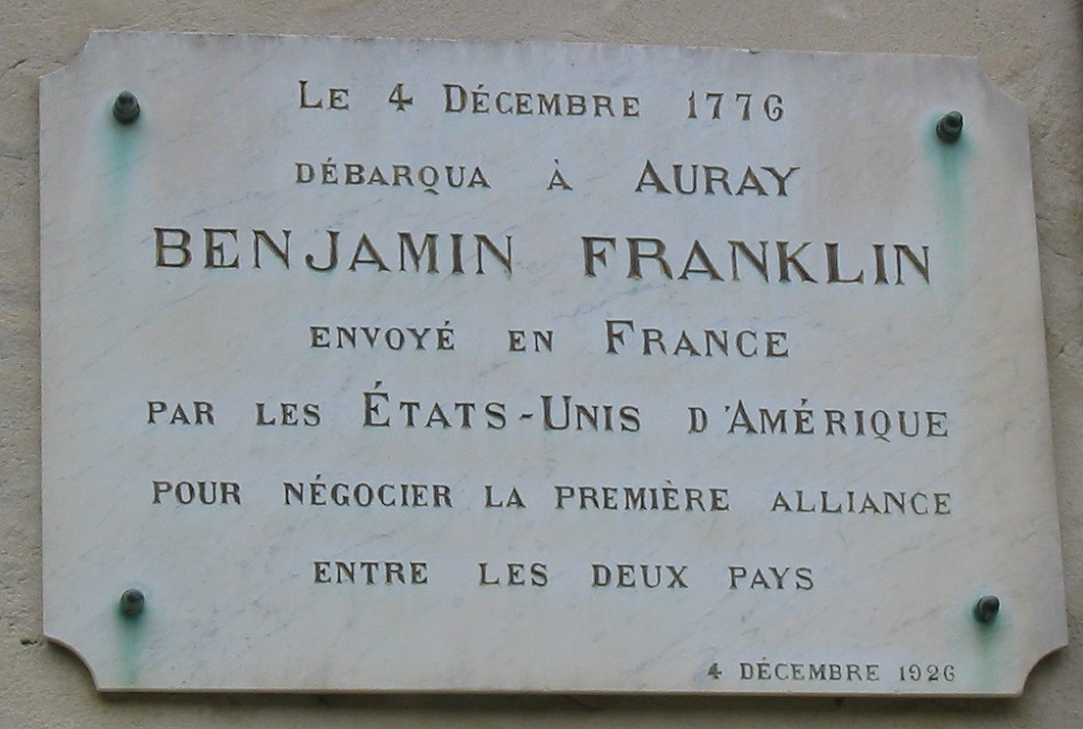
“On December 4, 1776, Benjamin Franklin, envoy of The United States Of America to France, disembarked at Auray to negotiate the first alliance between the two countries.”
On December 4, 1776, the most famous American in the world stumbled off a fishing boat onto the quay in a small Breton port and changed the course of history.
There's a crêperie on the Quai Benjamin Franklin in Auray, in southern Brittany, not too far from Brest, where we’ll be picking up our July crew in just a few days. On the wall of that crêperie you’ll find a plaque that most visitors walk right past. It commemorates something that happened on that exact spot 250 years ago—something that, without much exaggeration, determined whether a fledgling United States of America would survive its first year of existence.
A Desperate Mission
By the fall of 1776, George Washington’s Continental Army was in serious trouble. The British had driven it out of New York, routed it on Long Island, and were pushing south through New Jersey. Thomas Paine famously wrote that these were “the times that try men’s souls.” The rosy optimism of the Declaration of Independence, signed just four months earlier, was giving way to the panic of possible defeat.
Congress knew that the Revolution could not survive without outside help—specifically, French money, French weapons, French ships, and ideally French soldiers. There was only one American alive with the celebrity, the charm, the scientific reputation, and the diplomatic gifts to walk into the court of Louis XVI and make that case persuasively. So in September 1776, Congress voted to send 70-year-old Benjamin Franklin to France.
When the vote was announced, Franklin—who was genuinely old, genuinely tired, and suffering from gout and various skin complaints—turned to a colleague and said: "I am old and good for nothing, but, as the storekeepers say of their remnants of cloth, 'I am but a fag end, you may have me for what you please.'"
Thirty Days of Misery at Sea
On October 26, 1776, Franklin boarded the Continental sloop-of-war Reprisal in Philadelphia and set sail for France. He took with him two grandsons—Temple, 16, and Benny, 7—and essentially nothing else. His appointment had been kept secret from Congress and there was no advance notice sent to the French court. Franklin was sailing into the unknown, on a leaky warship, in the perilous North Atlantic in late autumn, at the age of 70.
The crossing was brutal. The Reprisal was a fast ship—she actually captured two British prizes on the way over, arriving in Quiberon Bay with them in tow—but comfort was not among her attributes. Franklin had a small, damp cabin. The food was mostly salt beef, which gave him boils and rashes. The other provisions were too tough for his aging teeth. The ship pitched so violently in Atlantic swells that he barely slept. He later recalled that the crossing had “almost demolished” him.
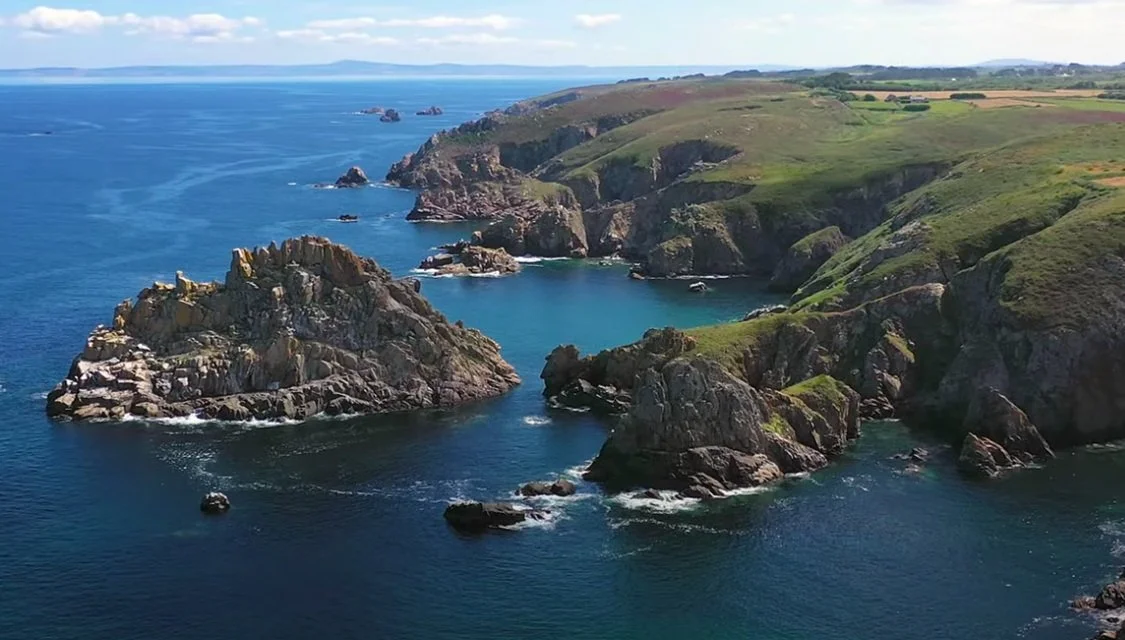
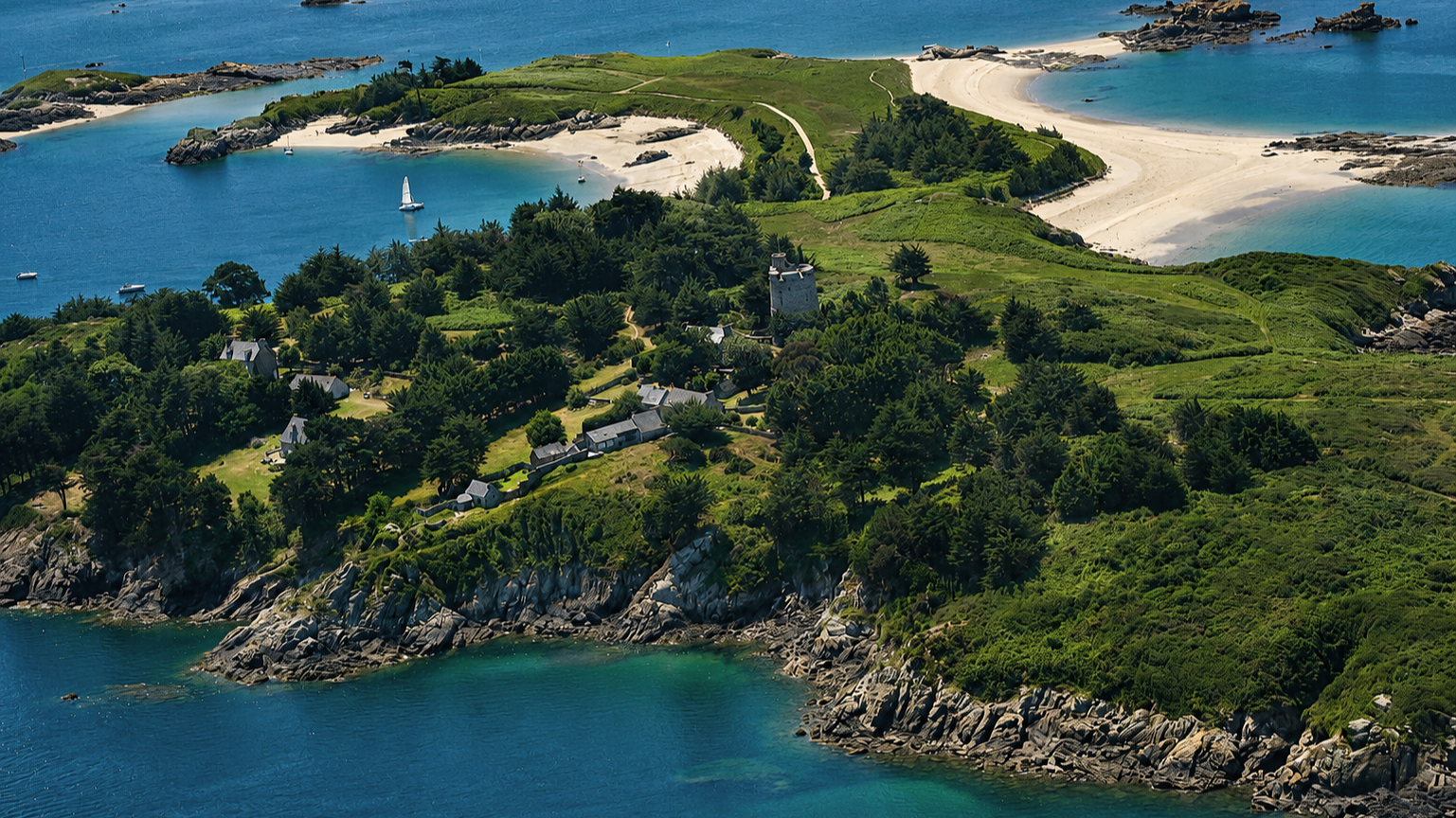
After thirty days at sea, the Reprisal reached Quiberon Bay, off the southern coast of Brittany. She had intended to proceed up the Loire to Nantes, her intended destination. But the wind was contrary, the captain couldn’t make headway, and Franklin—exhausted, sore, and quite possibly just done with the whole experience of being tossed about at sea—was not willing to wait.
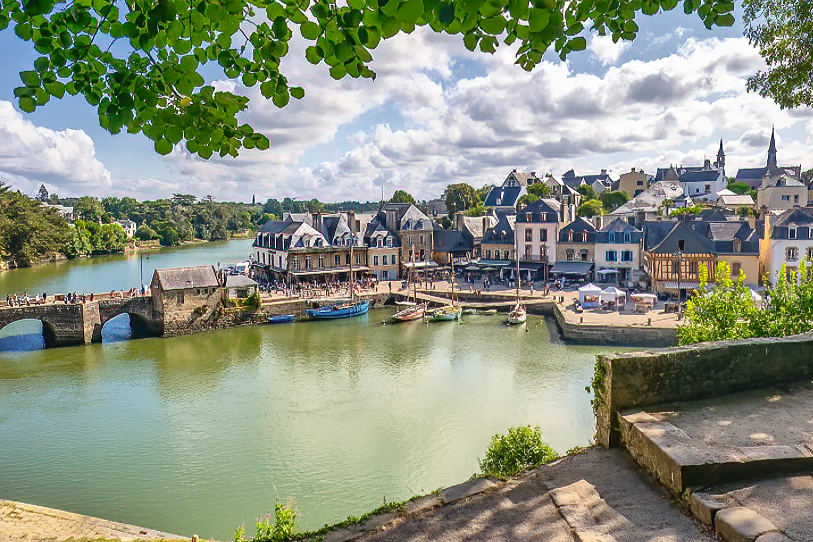
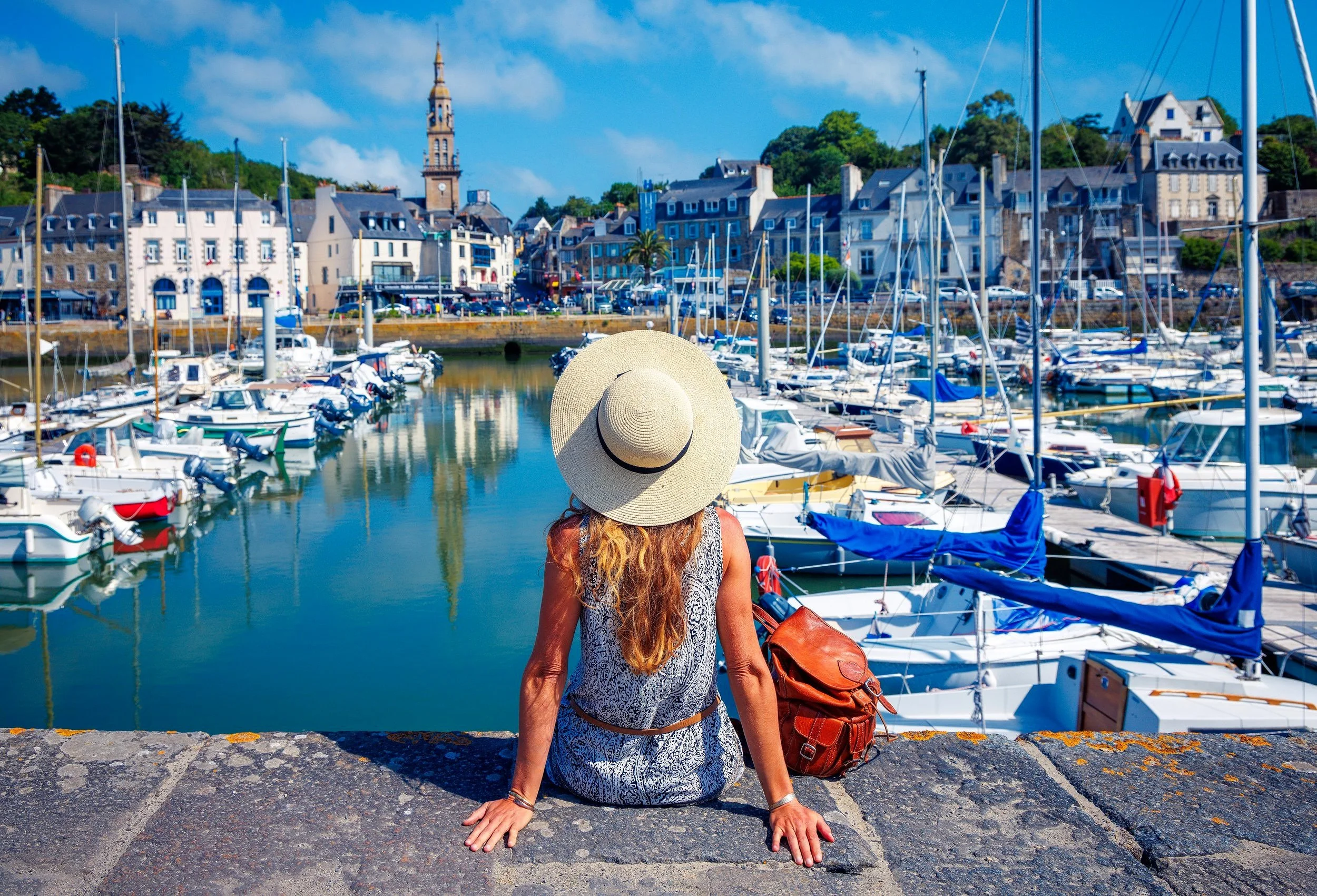
St.-Goustan, the little Breton harbor at Auray where Benjamin Franklin arrived in France, in 1776
The Fishing Boat, the Peasants, and the Plaque
What happened next is one of the more charming, little-known chapters in American diplomatic history.
Rather than remain aboard while the ship waited for favorable winds, an exhausted Franklin, unwilling to wait for wind to take him closer to Paris, had a fishing boat ferry him and his two bewildered grandchildren to the tiny Breton village of Auray.
Specifically, he landed at St.-Goustan, the medieval harbor district of Auray—the same quayside where the crêperie and its plaque stand today. It was December 4, 1776. The date is recorded on the historical plaque.
The scene that greeted Franklin on arrival was not quite what he might have expected. On arrival Franklin saw a group of peasants and approached them. They had long hair, wide-brimmed black hats, short jackets, bloomers, and tight gaiters. When trying to speak to them he quickly discovered they didn’t understand his English or French. Franklin later noted that he recognized them as Bretons—a people, he observed, who seemed older than the English.
He was not entirely wrong about that. Brittany's Celtic language and culture do predate the English-speaking world by several centuries. But it was certainly not the most auspicious beginning to a diplomatic mission. The world's most famous scientist and statesman had just arrived in France by fishing boat, couldn’t communicate with the locals, and was standing on a quay in the rain having crossed the Atlantic on what amounted to a brine-soaked wooden crate provisioned with salt beef. From Auray, Franklin traveled by road to Vannes and then on to Nantes, a journey of roughly seventy miles by coach, on roads that were—by his own account—”deeply unpleasant,” with tired horses and uncomfortable carriages. His driver helpfully informed him that two weeks earlier, a gang of robbers had plundered and murdered some travelers on the same road. Undaunted, Franklin arrived in Nantes on December 7, three days after landing. He reached Paris on December 21.
What Happened Next
The Paris that greeted Franklin was extraordinary. French aristocrats and intellectuals embraced Franklin as the personification of the New World Enlightenment. His likeness appeared on medallions, rings, watches, and snuffboxes, and fashionable ladies adopted the “coiffure à la Franklin” in imitation of the fur cap he wore instead of a wig.
That fur cap was a deliberate choice. French fashion dictated powdered wigs and makeup. Franklin wore neither. He understood, with remarkable prescience, the image that French aristocrats wanted to project onto Americans: the noble simplicity of the New World philosopher-frontiersman. He played the part brilliantly.
What followed was ten months of patient, brilliant, but frustrating diplomacy. The French were sympathetic but cautious. They had been secretly supplying the Americans with gunpowder, weapons, and money since spring 1776, but an open alliance was another matter entirely. Louis XVI's finance ministers were worried about France's treasury (for good reason). Some in the cabinet opposed the war. The king himself came to it reluctantly.
Franklin waited. He charmed. He networked. He played the British and French off against each other, occasionally leaking to the press that British negotiators were in town and might reach a separate deal with the Americans—implying that France had better move quickly or be left out. And then, in October 1777, the news arrived that changed everything: the Americans had won a decisive battle at Saratoga, capturing an entire British army. Suddenly, an American victory seemed, well, not impossible.
The treaties were signed on February 6, 1778—a military alliance and a treaty of friendship and trade—formalizing France’s entry into the war on the American side. When Washington received the news at Valley Forge, he assembled the entire Continental Army and ordered them to shout, in unison: "Long Live the King of France!”
It had taken fourteen months from the day Franklin stepped off a fishing boat in Brittany to the moment France committed to the American cause. Without that commitment—the money, the troops, the indispensable naval power, and above all the psychological boost that came with knowing France stood behind them—the American Revolution almost certainly would have failed.
Why This Matters for Anyone Sailing These Waters
The quay at Auray looks today much as it must have looked in 1776: medieval stone buildings, a tidal harbor, fishing boats, the unhurried pace of a Breton port town. The crêperie is excellent. The plaque is easy to miss.
But for anyone sailing the coast of Brittany (as our crew members do each summer) this small harbor carries a weight that’s worth pausing over. The same waters that carried Franklin’s fishing boat to the quay at St.-Goustan, the same Atlantic coastline that seemed to him the edge of the world as he arrived exhausted and bewildered after thirty days at sea, are the same waters our teenagers learn to navigate today. History has a way of sitting lightly on this coastline. You just have to know where to look for it.
The plaque commemorating Benjamin Franklin's arrival on December 4, 1776, can be found at the Quai Benjamin Franklin in St.-Goustan, Auray, Morbihan, Brittany.