There’s a reason sailors will tell you Brittany is one of Europe’s most rewarding yachting areas, even though occasional downpours and unpredictable winds can spoil an otherwise pleasant day on the water. The Breton coast doesn’t offer the easy glamour of the Mediterranean or the Margaritaville vibe of the Caribbean. What it offers is something more textured: untamed beauty; a rich, storied history; and the kind of unique adventure that lingers in your memory. Enduring a few rainy days, though sometimes dispiriting, is simply a rite of passage.
Yes, the weather in Brittany is famously fickle. One hour you’re enjoying bright summer sunshine glistening on the water and illuminating the impressive granite cliffs rising from the sea; the next, you’re stranded in a thick fog akin to something out of Celtic myth. But for those willing to lean into the constant uncertainty—including getting chilly and wet on occasion—a sailing expedition along Brittany’s jagged coastlines is nothing short of magical.
The Wild Beauty of the Coastline
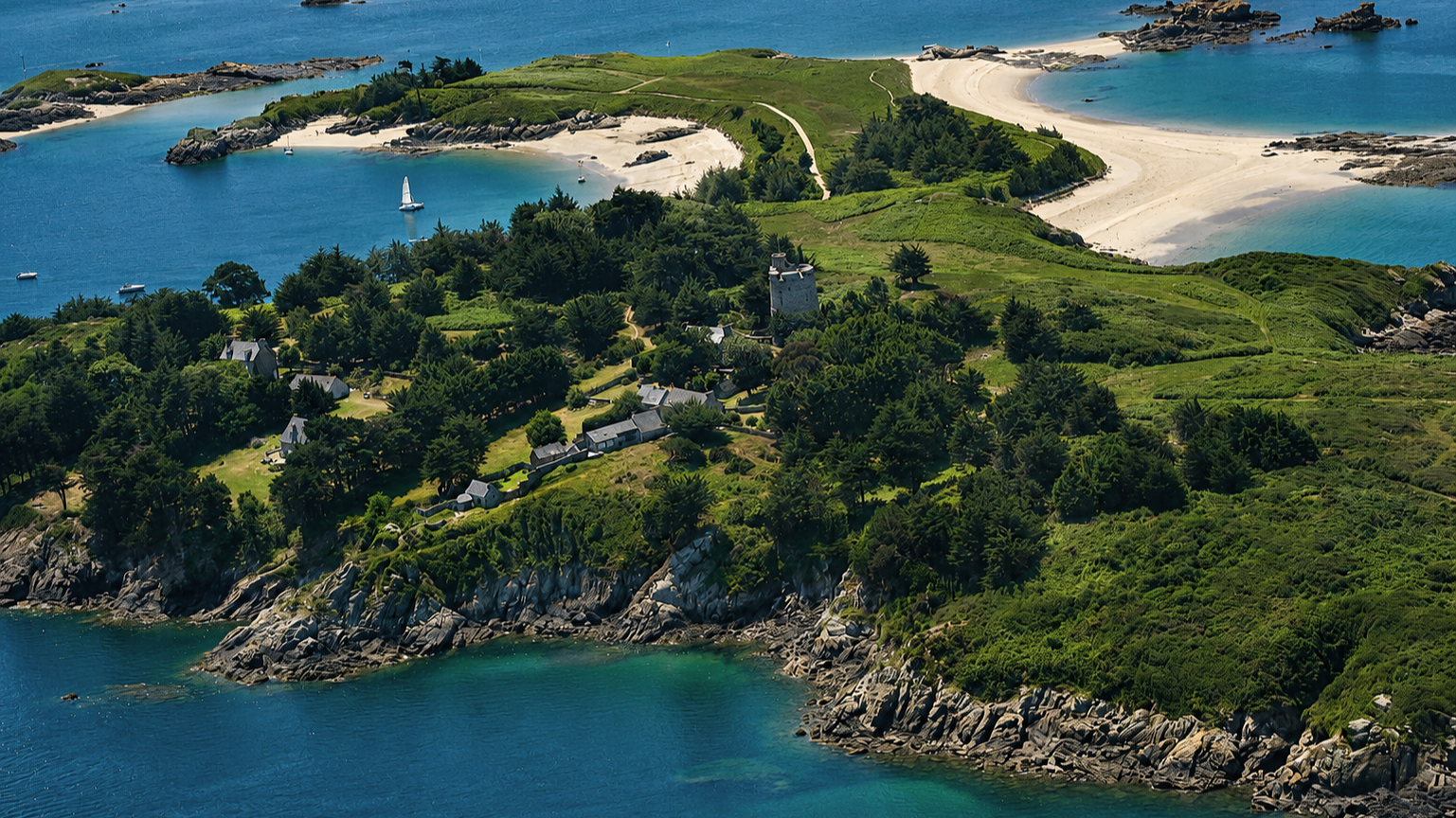
Brittany is a world of extraordinary contrasts. Its coastline is riddled with hidden coves, dramatic rock formations, and historic fishing villages. The pink Granite Coast along the northern part of the peninsula can glow at sunset. And the Gulf of Morbihan feels like a secret inland sea with its surprisingly beautiful islands featuring South Pacific-like white sand beaches accessible only by boat. Meanwhile, the tides are among the most extreme in Europe, shifting the seascape from hour to hour and making navigation often challenging.
A Cultural Legacy Like few Others
This is a region where seafaring runs in the blood. Every port has a story. In Concarneau and Saint-Malo, the old town walls reverberate with the echoes of corsairs. Douarnenez still smells faintly of sardine oil and revolution. Locals speak Breton (a Celtic language akin to Cornish, Welsh, Irish, Manx, and Scottish Gaelic) as well as French, and maritime festivals—complete with traditional tall ships, gaff-rig boats, and bagpipes—are common in summer months. In fact, QBE usually shows up for the famous Interceltic [cultural] Festival held every August in Lorient. Two years ago, our cutters were chosen to feature in a TV documentary about the annual event.
Learning to Trust the Sea
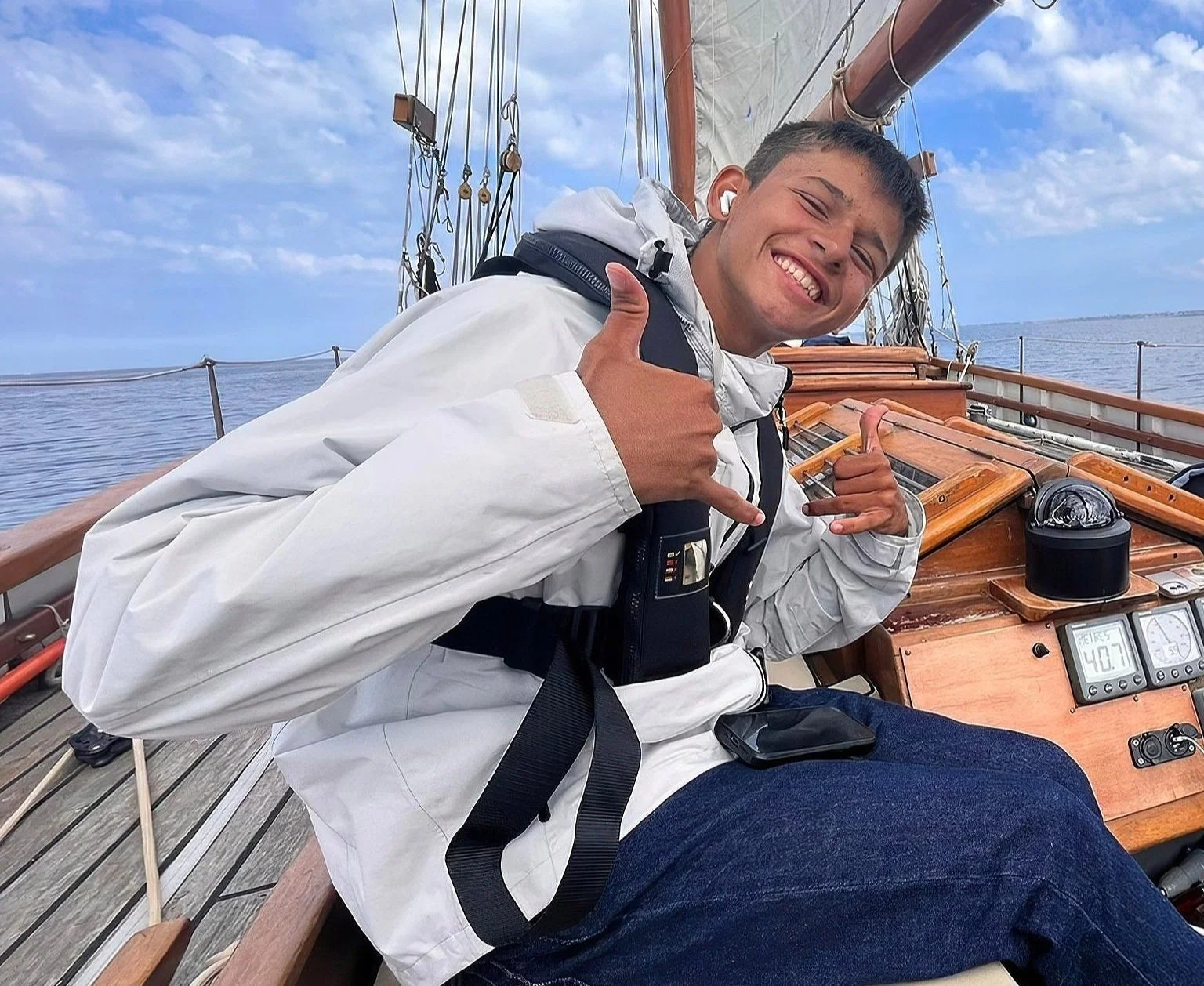
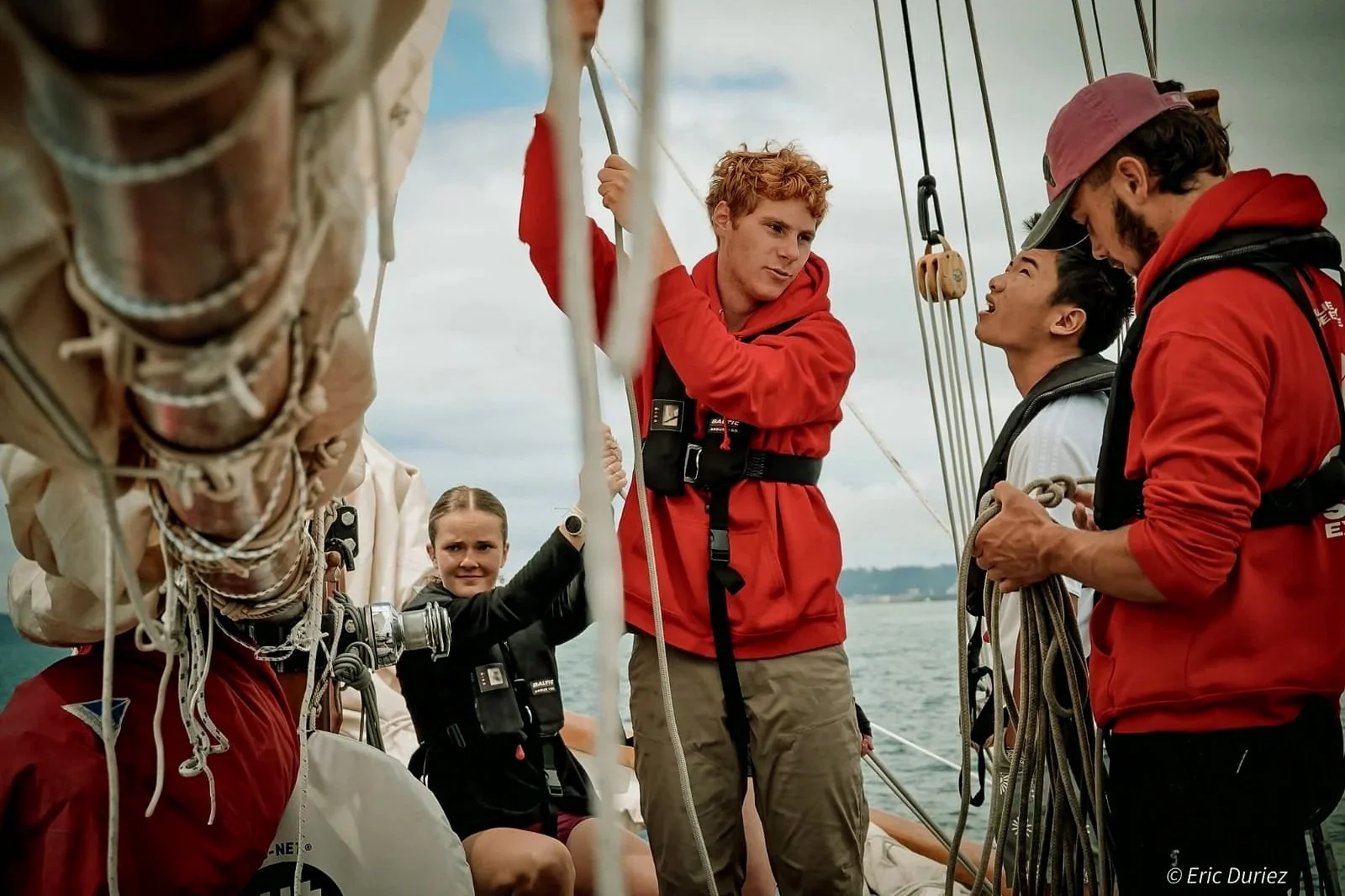
There’s no better classroom for seamanship than the always-changeable Channel and Bay of Biscay off the Breton coast. You learn to read the sky, the swell, and the wind. You learn to respect the power of nature and to take satisfaction in small triumphs—perfect sail trim, a clean tack, or simply the warmth of a galley meal after a rainy watch.
This isn’t a relaxing holiday cruise—it’s an exhilarating experience. And with every challenge comes the thrill of having met it.
When the Sun Does Come Out…
When the clouds part, Brittany is absolutely radiant. The light is clear, the sea turns a painter’s palette of greens and blues, and the lighthouses seem especially welcoming. You’ll eat crêpes in seaside cafés, discover the area’s authentic patrimony, and sleep at anchor under starlit skies where the only sound is the creak of the rigging and the soft slap of waves on the hull.
Worth the Risk?
We say “Absolutely!” Sailing Brittany is not for the faint of heart—but that’s exactly the point. In the end, it’s the rain that makes the sun shine brighter, the challenges that make the rewards richer. One thing’s for sure—when you get home, you’ll have earned the right to call yourself a bona fide sailor.