
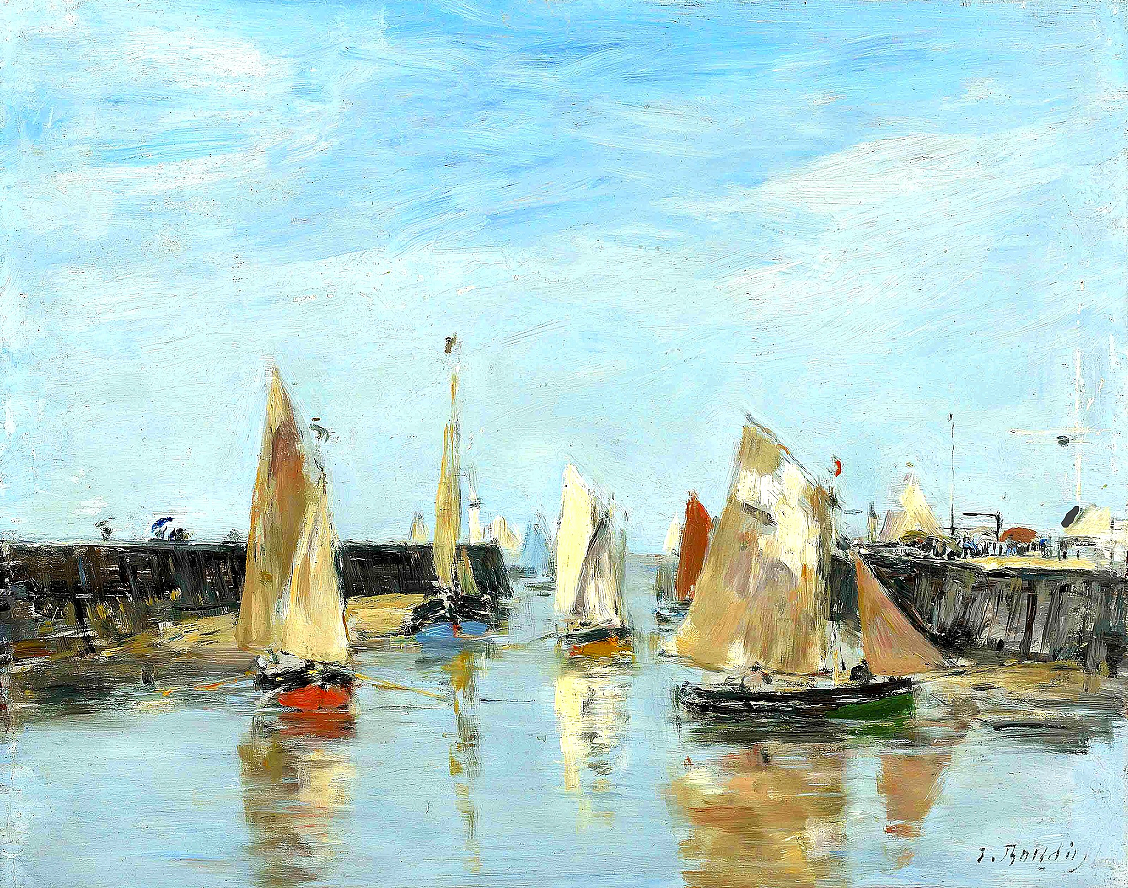
Eugène Boudin, Trouville, the Jetties, Low Tide (1883–’87)
When people picture pilot cutters today, most minds drift to the classic lines of the Bristol pilot cutters—sleek, single-masted vessels that served British ports through the 19th and early 20th centuries. But the story of the cutter doesn’t belong to Britain alone.
Thanks to the work of Eugène Louis Boudin (1824–1898)—Impressionist precursor, friend of Monet, and painter of skies, sails, and posh coastal resorts—we have rich visual evidence of France’s own cutter tradition, particularly along the Channel coastline. His scenes of Trouville, Deauville, Honfleur, and other nearby harbors feature dozens of working vessels. Among them are numerous gaff-rig cutters: long bowsprits, single masts, and hulls built for speed, agility, and endurance.
Cutters: Not Just British
Pilot cutters were essential in many coastal regions of Europe, including northern France, where bustling ports and tidal hazards required the skill of seasoned harbor pilots. These nimble, sea-kindly vessels would race out to meet incoming ships, their speed and maneuverability helping their pilots board first—earning the job and the pay.
French versions of the cutter shared the essential rig of their British cousins: single mast, similar fore-and-aft sail plan, and long bowsprit—though often with regional variations in hull shape and trim. In Boudin’s paintings, of course, they appear as working boats, not romanticized yachts.
Boudin’s Normandy: A Working Coastline
Though best known for capturing fashionable beach scenes and elegant parasols, Boudin was, himself, the son of a mariner, and his heart never strayed far from the working harbors that dotted the Norman coastline.
Examples include:
• “Trouville, the Jetties, Low Tide”
• “The Port of Deauville”
• “Le Bac de Deauville”
• “Yacht Basin at Trouville”
In Boudin’s work you see a blend of summer resort culture and maritime labor. Elegant visitors in white linen stroll the promenades while, behind them, pilot cutters sit at their moorings, their masts and sails forming rhythmic counterpoints to the shifting sky.
These vessels were not props—they were symbols of local identity, lifelines for trade, and testaments to accomplished regional seamanship.
The Artist as Nautical Documentarian
In the same way that Boudin captured the moods of the sea and sky, he also preserved the vanishing world of small working sailboats—before steam and leisure transformed the shoreline forever.
His paintings, depicting harbors at different times of day, at low tide and high tide, are also quiet records of coastal heritage: the rigs, the hull forms, the port activity. For those who study maritime history, they offer special glimpses into the largely unsung French cutter tradition—a tradition often overlooked in Anglophone accounts of sail-powered pilotage.
Legacy at Sea
Today, when traditional vessels are reconstructed or revived—especially in educational programs or heritage sailing initiatives—Bristol gets the spotlight, and perhaps understandably so. But Brittany and Normandy both share a claim to the same maritime legacy, and Boudin’s brush preserved it before anyone thought to catalogue such things.
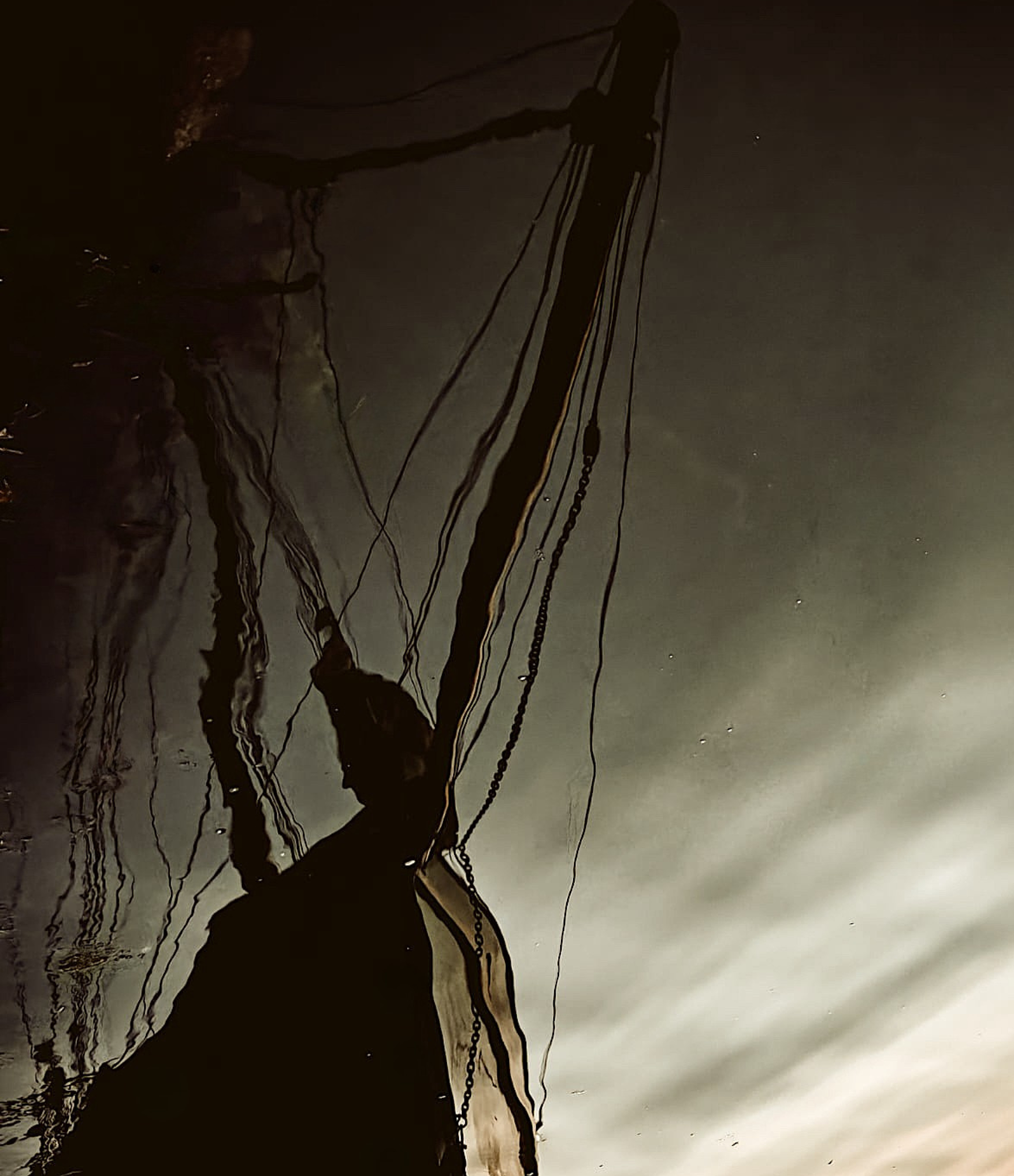
The reflection of a QBE pilot cutter in Brittany
So the next time you see a cutter under sail—or step aboard one—you might think not only of Cornwall or Wales, but also of dappled reflections at St-Malo or in the Trouville-Deauville Yacht Basin and a French artist who knew the sea and its moods intimately—as well as the fishermen and other mariners who made a living on small traditional boats.
* QBE’s cutters were built using original plans of famous Breton ship captain, dry-dock owner, and naval architect François Lemarchand. (His restored shipyard, near Saint-Malo, was listed as a historic monument in 1996.)