

There is a useful French word that has no perfect English equivalent: dépaysement.
Literally, it means something like “being removed from one’s country or habitual comfort zone.” But emotionally, the word carries a richer meaning: the strange, invigorating sensation of being pleasantly disoriented by unfamiliar places, languages, customs, landscapes, and rhythms of life.
You step off a train or ferry on the west coast of France. It’s a whole new world.
The tide rises and falls fifty feet in just a few hours.
Church bells ring across a centuries-old harbor.
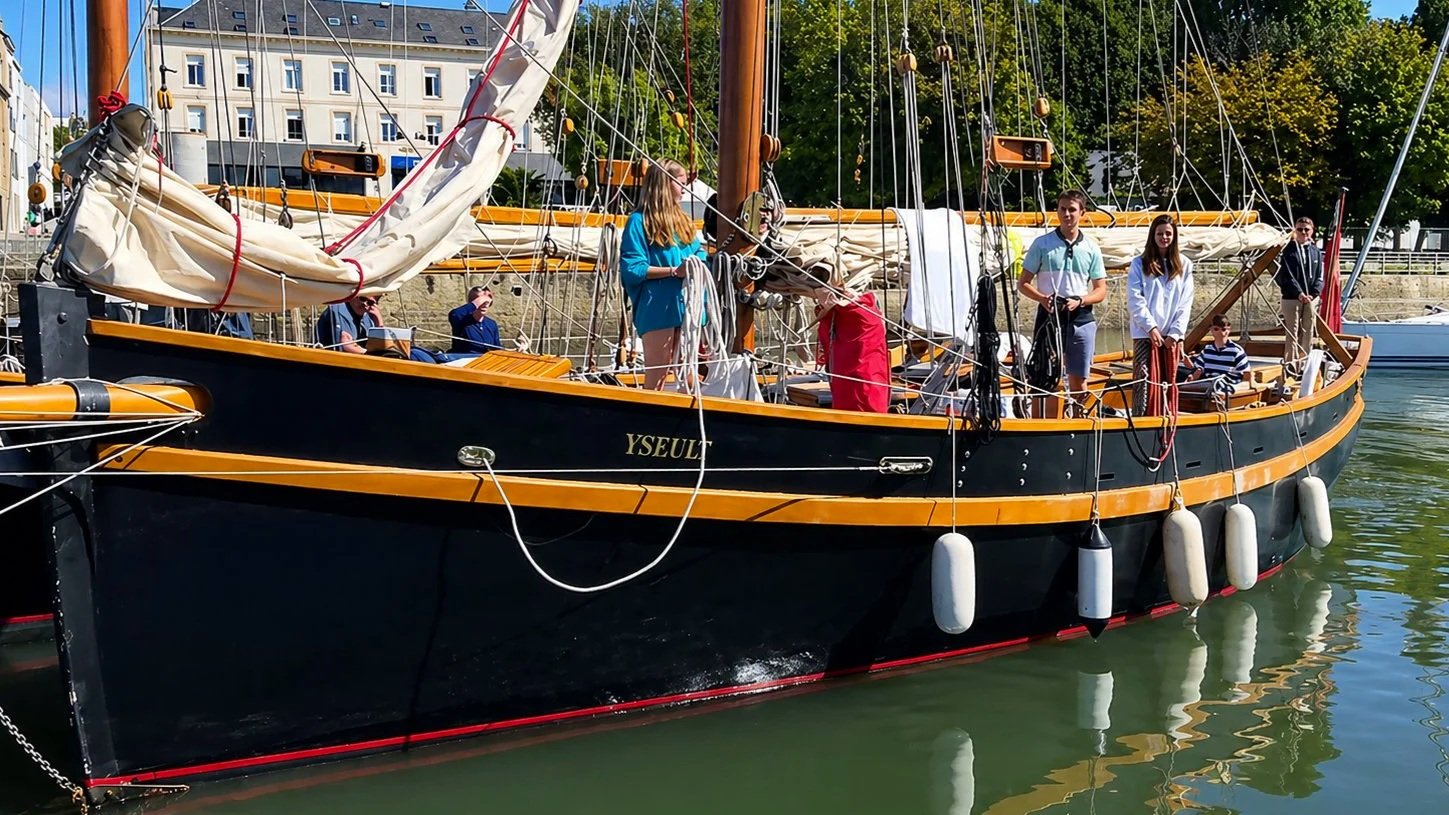
Teenagers from numerous countries—your fellow crew members, soon to be new friends—are speaking different languages on the quay beside a classic sailing vessel.
For a moment, your normal mental map is thrown into complete chaos. “Toto, I don’t think we’re in Kansas anymore.” —Dorothy in The Wizard Of Oz (*see below)
As it turns out, some freaking out is very good for the brain.
The Hidden Value of Environmental Novelty
Modern neuroscience increasingly suggests that novelty—particularly environmental novelty—plays a major role in cognitive flexibility, learning, memory formation, and even emotional resilience.
Researchers studying neuroplasticity have shown that the brain is not fixed or static. It continuously reorganizes itself in response to new experiences, environments, and challenges. Exposure to unfamiliar surroundings appears to stimulate the formation of new neural connections and enhance adaptability.
Travel, especially immersive travel, appears to amplify this process.
New environments force the brain to pay closer attention. Familiar routines disappear. Our teenage crew members must navigate:
• new social dynamics,
• unfamiliar geography and culture,
• unpredictable weather,
• constantly changing schedules,
• and unexpected challenges.
This heightened attentiveness may help explain why experiences abroad often become unusually vivid and enduring memories.
Studies examining travel and cognitive flexibility suggest that exposure to unfamiliar cultures and environments can greatly improve creativity, adaptability, emotional intelligence, and problem-solving ability.
In other words: novelty wakes up the mind.
The Opposite of Algorithmic Life
Modern teenagers increasingly inhabit highly optimized environments.
Algorithms predict their preferences.
GPS eliminates uncertainty.
Streaming platforms reduce discovery friction.
Phones deliver constant familiarity and reassurance.
There is comfort in this.
But there is also cognitive narrowing.
Dépaysement interrupts the loop.
A sailing expedition in Brittany doesn’t function according to the rhythms of TikTok, suburbia, or school corridors. The day is instead governed by:
• tides,
• weather,
• navigation,
• teamwork,
• and the practical realities of maneuvering a traditional yacht through blue water.
A teenager who has never cooked aboard a rolling boat, negotiated harbor life in another language, or navigated through Atlantic fog suddenly encounters an entirely different mode of attention.
This is not simply “travel.”
It is environmental re-patterning.
The Brain on Novelty
Researchers studying novelty and cognition have found that unfamiliar environments activate dopamine-related reward pathways associated with curiosity, motivation, and learning. Novel experiences appear to strengthen neural pathways connected with adaptability and memory formation.
Some researchers also believe that novelty interrupts repetitive patterns of thought associated with the brain’s “default mode network”—the system associated with habitual internal narratives and rumination.
This may help explain a phenomenon many parents observe after meaningful travel or expeditionary experiences: their teenager seems somehow different afterward:
• More capable.
• More confident.
• More awake.
• More independent.
Not because somebody lectured them about “leadership,” but because the environment itself demanded a pivot to leadership thinking and behavior.
Why Small-Boat Sailing Intensifies the Effect
Traditional sailing expeditions create a particularly concentrated form of dépaysement because they combine several forms of novelty simultaneously:
• physical challenge,
• international social immersion,
• rapidly changing environments,
• real responsibility,
• unpredictable conditions,
• and sustained disconnection from normal routines.
On a small sailing vessel, teenagers can’t fully retreat into passivity.
Their participation matters. A lot.
Lines must actually be handled.
Meals must actually be cooked.
Weather must actually be considered.
Other people constantly are depending on each other.
That reality creates a level of engagement difficult to simulate in highly managed environments.
Why Parents Sense the Difference
Parents often describe QBE expeditions as “life-changing,” but what they are frequently observing may be more precisely termed: a teenager encountering meaningful disorientation in a safe but demanding environment.
Dépaysement
The productive shock of discovering:
• unfamiliar cultures,
• unexpected competence,
• new friendships with people steeped in different cultures,
• and previously unknown parts of oneself.
The sea has always proven effective at providing these disorientations.
Perhaps that is one reason voyages occupy such a powerful place in literature, myth, pilgrimage, and education across cultures.
We leave familiar shores.
We provide some disorientations, particularly for teens who have never sailed before or traveled abroad.
And in doing so, we help youngsters discover new, impressive versions of ourselves.
That makes QBE uniquely positioned to provide one of the most transformative teen educational experiences you’ll find. Anywhere.

* Writer Salman Rushdie once memorably wrote about the 1939 film classic The Wizard of Oz—a movie generations of Americans watched annually on prime-time television.
Rushdie observed that Dorothy’s journey to Oz is triggered and sustained by a growing realization: the adults around her are ultimately unable to solve her problems for her. Her aunt and uncle cannot prevent Mrs. Gulch from taking her little dog, Toto. Professor Marvel fails to help her escape. Even the great and powerful Wizard turns out to be a fraud—incapable of delivering the return to Kansas he promised her.
In the end, Dorothy has to assume responsibility for her own fate. She must act, decide, adapt, and persevere. And, in fact, Glenda (the good witch) informs her she always has had the ability to forge her own destiny. The same can be said of Dorothy’s friends: the Scarecrow, the Tin Man, and the Cowardly Lion. They discovered they already had the qualities they thought they lacked. It just took an ambitious quest to surface that realization.
Perhaps that’s one reason journeys—whether literary, spiritual, or physical—remain such enduring rites of passage. Removed from familiar surroundings and ordinary protections, young people are often forced to discover reserves of sound judgment, resilience, and capability they previously didn’t realize they possessed.