The best-known tourist destinations in Brittany

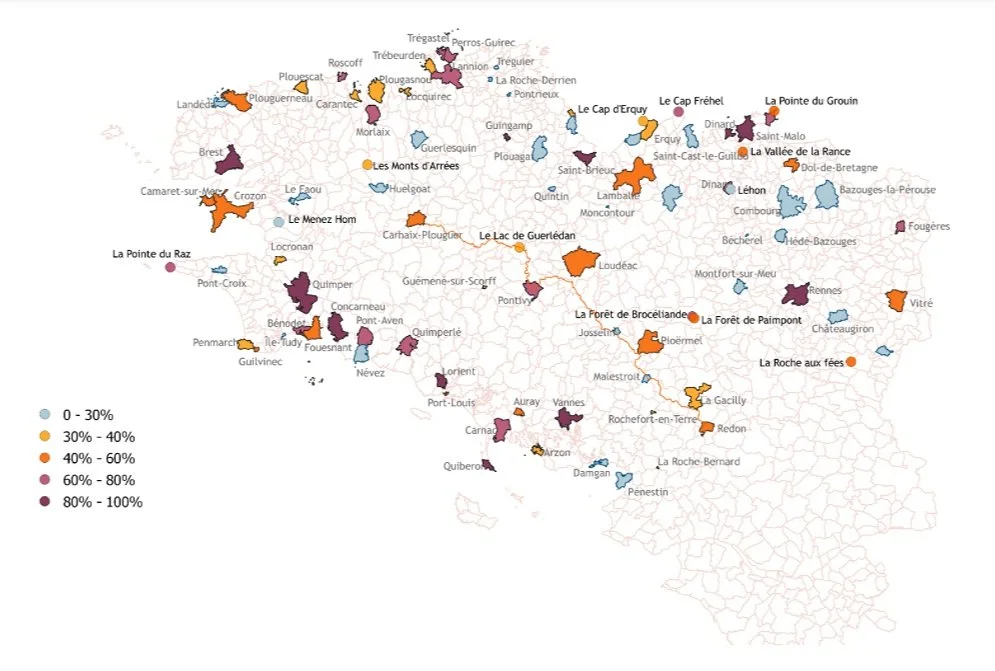
(Courtesy of Tourisme Bretagne) Here is a map showing the various tourist destinations that were included in a recent Brittany Tourism study and the percentage of respondents who indicated familiarity with them:

Study coordinator: Julie Leveau

Tourisme Bretagne conducted a survey in June 2021 to assess the reputations of 64 popular Breton tourist destinations/attractions. This survey was intended to give the destinations a better idea of their name recognition among French holidaymakers and to see how various options on the peninsula rank against each other in visibility.

Fifteen iconic sites, 22 towns, and 27 inland municipalities were assessed by 4,800 French “panelists” (including 1,000 Bretons) in order to measure their “familiarity quotient” within France.

It’s not surprising that he highest notoriety had been achieved by large cities served by main roads and autoroutes as well as by some popular coastal vacation spots. If you’re going to be visiting our neck of the woods, you might want to look up some of the places mentioned to see which ones you might want to discover.

St-Malo is highlighted in deep purple, meaning just about everybody in France has heard of it. So are Quimper and Rennes. We were a bit surprised that Carnac, with all its imposing megalithic stones (France’s Stonehenge), wasn’t a deeper shade of purple. We can’t tell how purple Brocéliande is (see our blog post from last week), because it’s obscured by the orange Fôret de Paimpont.

The potential impact of a new idea or experience

« ”Le pouvoir d'un livre” : retour sur cette très belle idée de l'artiste mexicain Jorge Méndez Blake pour présenter l'effet de la culture » 📕 (—From the Instagram feed of “Creapills,” a francophone marketing company that showcases innovative ideas, products, and projects on several social media platforms.)

Loosely translated—“‘The Power of a Book” [even just one book]: revisiting the very beautiful/ingenious idea of Mexican artist Jorge Méndez Blake to illustrate the effect of culture.”

We immediately connected the dots and noted the same artistic metaphor is apt for adventure travel, and perhaps particularly in the case of teenagers, youngsters whose minds are more malleable and open to new ideas and experiences.

The difference quality instruction can make

Will Sutherland showing a crew member how it’s done.

You never know what you’ll find when you scroll through a Twitter feed. Recently, your scribe stumbled across a 2008 article in The New Yorker written by public intellectual Malcolm Gladwell; the title of his piece was MOST LIKELY TO SUCCEED, How do we hire when we don’t know who’s right for the job? He proceeds to compare great American football quarterbacks to school teachers. (For those of you not familiar with American football, the quarterback is the player who distributes the football to other players on a team’s offensive unit, i.e., he’s the key offensive player. Good quarterbacks are the sine qua nons of championship-caliber teams.) In his article, Gladwell uses anecdotes to illustrate how hard it is for scouts to divine who will develop into a great professional quarterback and who won’t. (Most great university quarterbacks wind up being disappointments when they turn pro.)

Then he moves on to teachers. Just like quarterbacks, they are absolutely essential for [educational] success and apparently just as difficult to assess when freshly minted. You have to see them in action over time to see if you have a winner.

“One of the most important tools in contemporary educational research,” Gladwell writes, “is ‘value added’ analysis. It uses standardized test scores to look at how much the academic performance of students in a given teacher’s classroom changes between the beginning and the end of the school year…. [A change in] the students’ rankings [expressed as a percentile on math and reading tests] , value-added theory says, is a meaningful indicator of how much more effective [one teacher is than another].”

He then goes on to write,

“…the difference between good teachers and poor teachers turns out to be vast.

Eric Hanushek, an economist at Stanford, estimates that the students of a very bad teacher will learn, on average, half a year’s worth of material in one school year. The students in the class of a very good teacher will learn a year and a half’s worth of material. That difference amounts to a year’s worth of learning in a single year. Teacher effects dwarf school effects: your child is actually better off in a ‘bad’ school with an excellent teacher than in an excellent school with a bad teacher. Teacher effects are also much stronger than class-size effects. You’d have to cut the average class almost in half to get the same boost that you’d get if you switched from an average teacher to a teacher in the eighty-fifth percentile. And remember that a good teacher costs as much as an average one, whereas halving class size would require that you build twice as many classrooms and hire twice as many teachers.

Hanushek recently did a back-of-the-envelope calculation about what even a rudimentary focus on teacher quality could mean for the United States. If you rank the countries of the world in terms of the academic performance of their schoolchildren, the U.S. is just below average, half a standard deviation below a clump of relatively high-performing countries like Canada and Belgium. According to Hanushek, the U.S. could close that gap simply by replacing the bottom six per cent to ten per cent of public-school teachers with teachers of average quality. After years of worrying about issues like school funding levels, class size, and curriculum design, many reformers have come to the conclusion that nothing matters more than finding people with the potential to be great teachers. But there’s a hitch: no one knows what a person with the potential to be a great teacher looks like. The school system has a quarterback problem.”

QBE doesn’t have a quarterback problem. In fact, our “quarterback” is probably our greatest asset. We have truly fabulous boats. We go to amazing places. We have all the assets anyone could want to provide an exceptional expeditionary education experience. Of course, other programs have some great assets, too. But what precious few have is a gifted quarterback like ours. Teaching is as much—if not more—an art than a science. Once again, Gladwell:

“A group of researchers—Thomas J. Kane, an economist at Harvard’s school of education; Douglas Staiger, an economist at Dartmouth; and Robert Gordon, a policy analyst at the Center for American Progress—have investigated whether it helps to have a teacher who has earned a teaching certification or a master’s degree. Both are expensive, time-consuming credentials that almost every district expects teachers to acquire; neither makes a difference in the classroom. Test scores, graduate degrees, and certifications—as much as they appear related to teaching prowess—turn out to be about as useful in predicting success as having a[n aspiring professional] quarterback throw footballs into a bunch of garbage cans.”

Will Sutherland has been teaching outdoor and life skills (as well as mathematics) his entire life. One of his former students once told your scribe he was the best teacher she ever had. Here’s another believer:

“…under Will’s impeccable guidance and mentorship, we felt safe yet consistently challenged as we learned the many important skills needed to sail a boat and compete effectively in a large race [Cowes Week]. My best memories of the experience were bonding with my fellow boat mates as we pursued a common goal and learned to work together and communicate effectively under pressure and in a highly compressed period of time. Will is a tremendous organizer and inspiring leader who is highly adept at facilitating this type of endeavor. I would wholeheartedly and enthusiastically recommend any program that he is involved with….and would sign up in a heartbeat if I were 18 again!”

—Dariane H., Concord, MA, USA

Many of us can point to one or two teachers we had in school who made a profound impact on us. Will is that kind of difference maker. And (along with the opportunity to go sailing on his jaw-dropping pilot cutters) he’s the reason many of us volunteer our time to help out with the project. When it comes to teaching gaff-rig sailing and mentoring youngsters, he’s proven over time that he’s the real deal—an all-pro quarterback. You can read a short bio HERE.

Brocéliande

Brocéliande is a legendary forest situated around the village of Paimpont in the department of Ille-et-Vilaine, about 17 miles west of Rennes and not too far from Saint-Malo. The forest’s ancient canopy consists largely of oak and beech trees, some of them impressively gnarled. Covering almost 35 square miles, it long has been associated with Arthurian legend and ancient schools of sorcery. Druids used to perform rites there (and maybe still do); the magician Merlin is rumored to have been buried there.

For centuries, Brocéliande has been a place where nature and supernature are said to mingle. English writer and poet Charles Williams noted that forests obscure the horizon—that distinct line where the earth and the heavens definably meet—and so ambiguity can dance in the shadows. Perhaps that’s why, in the imagination, enchanted forests are home to “unknown modes of being,” places of faerie, magic, and the black arts. It follows then that such places are believed to present immense possibilities as well as immense dangers. There are walking paths through Brocéliande. Maybe you’ll want to bring your hiking boots.

(Of course, if by chance you’re a fan of the long-running British TV crime show “Midsomer Murders,” you won’t want to go near a forest or copse; once you go in, you never come back out! That’s part of the “immense danger.”)

Book your place(s) now for our summer 2022 expeditions

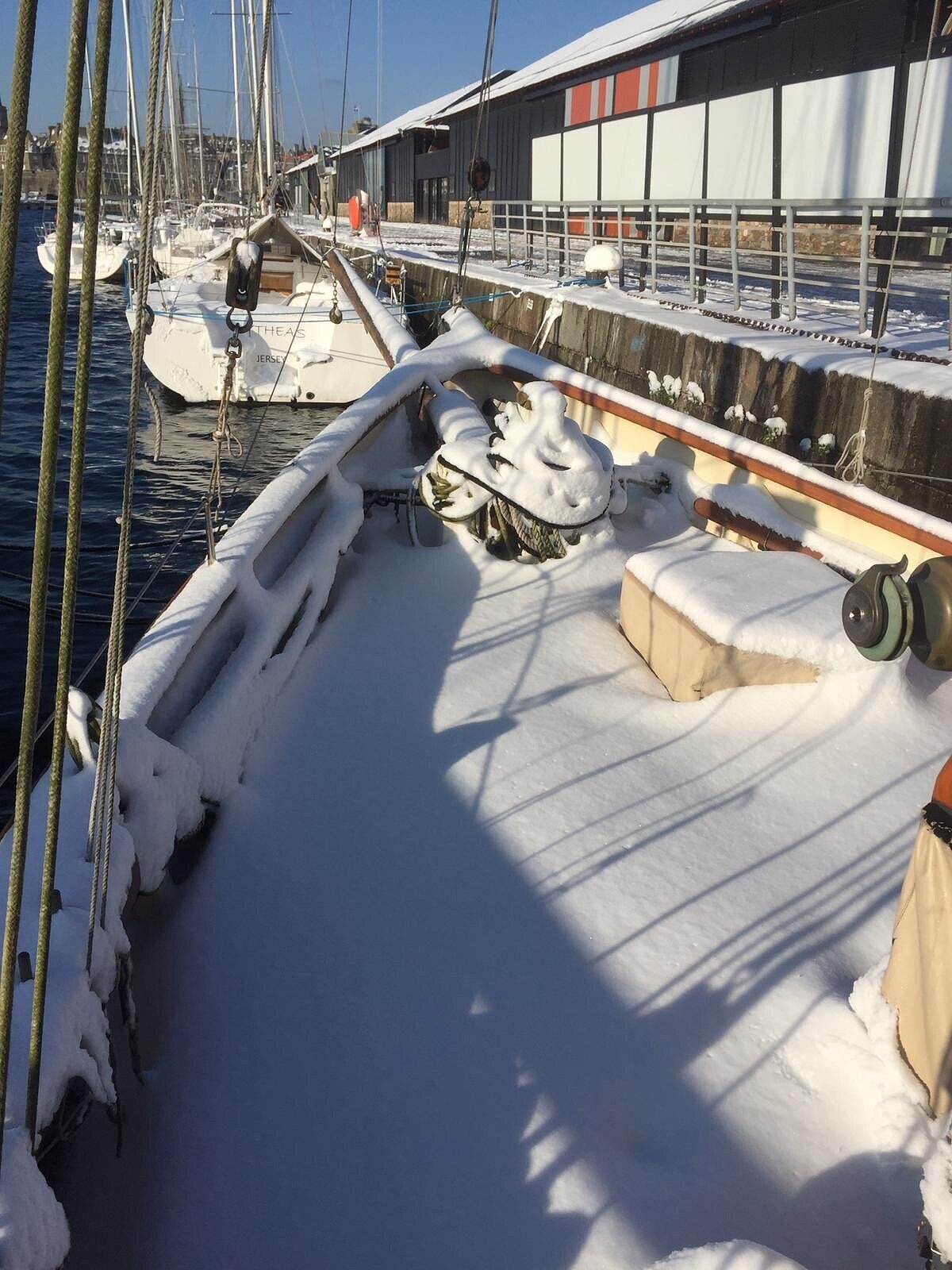
After two years serving as a quayside tourist attraction in St-Malo, our boats are now being refitted to sail next summer. Come join us—we only have 12 available places per expedition.


So, who sets the summer agenda these days?

cutter 7 copy.jpg

Since we bought our boats a number of years ago, we’ve been trying to figure out how best to spread the word about our special expeditionary education courses. Among other things, we keep wondering, “Who really is our market, teens or their parents?” Just a few years ago the answer would have been “parents.” When your scribe went off to interview at a small Swiss boarding school years ago, the admissions director called my parents afterwards to inquire whether I would be enrolling. My mother responded by saying she would want to talk to me before making a decision. The admissions director then explained sternly that children DID NOT make school decisions. Parents did. Well!

But that was then and this is now. When we look through the marketing collateral of some other summer sailing options, we see ripped young men alongside attractive, bikini-clad young women having a grand time on the decks of sleek, modern boats. The only thing missing is a cooler full of beer. It looks to us like the collateral is meant to appeal to young participants more than their parents. After all, what 17-year-old wouldn’t want to crash that kind of fantasy island party?

But back to that boarding school—it turned out to be a wonderful place in a spectacular Alpine setting. A few students hated it, but most of us loved it. It was what you might call stylishly shabby, housed mostly in a few old converted hotels that oozed charm. It was reasonably comfortable, and it was warm in cold weather. We skied almost every day during the season, went on challenging hiking expeditions through the mountains, cycled around Lake Geneva in warm weather, and visited a number of European cultural capitals to see the sights and explore the museums. Will Sutherland, the QBE director, was our young sailing coach back in the day (we competed at Cowes Week). Most of us learned a lot on our mountain, became a family, and went on to lead interesting, fulfilling lives. Today that modest little school has a campus like a four-star hotel and costs a small fortune to attend. In fact, it is said to be one of the most expensive schools in the world. It certainly appears to be an entirely different place than the modest school my classmates and I attended.

Recently, I asked an advancement officer whether all the new bells and whistles were necessary; what did they bring to the table? I was informed that the school had to be competitive. Stylishly shabby would no longer cut it. The entire campus had to exude luxury to attract an extremely affluent, international clientele. There apparently is a fast-and-furious facilities arms-race going on worldwide, and especially in Switzerland. If you don’t keep up, you lose.

There is a group of us who think that’s a shame (nothing against a great computer or chemistry lab.) But there was something to be said for slightly dilapidated digs and students trekking through the mountains with a compass, a map, and a pair of old hiking boots. Roughing it a bit helps develop character, which is—or should be—one of the objectives of a good secondary education. “Old school” isn’t necessarily old hat. In fact, old school was, and still can be, transformative, not to mention useful in helping polish the æsthetic sensibilities of young adults—if that still matters.

Sean Connery as James Bond beside his Aston Martin DB5 on location in Switzerland.

Sean Connery as James Bond beside his Aston Martin DB5 on location in Switzerland.

QBE purposely uses classic boats with, for example, manually cranked winches. Our yachts don’t sail themselves like some modern boats (practically) do. Our cutters certainly aren’t shabby, au contraire. But they aren’t modern va-va voom. We’d call them old-school chic, much like James Bond’s iconic Aston Martin DB5. Anybody who liked that car will probably love our boats. And teens feel pretty special sailing them, not to mention a bit more special when they get home. In fact, it was the pilot cutters’ WOW! factor (along with QBE founder Will Sutherland’s rare teaching gifts) that helped persuade several of us to get involved in the project as investors and volunteers.

The question is, if teens are indeed making their own summer enrichment decisions, how do you convince them that, at least when it comes to small-yacht sailing, old school can be a spectacularly desirable thing?

Maybe Paris’s best summer job. And QBE doing its part for St-Malo tourism

another-cutter-quayside.jpg

A reliable source once told us that the Paris Tourist Board pays (or used to pay) young couples to make out on city benches every summer to provide some romantic ambiance for the throngs of visitors that relentlessly descend on the city, a great job if you can get it. (We can't verify that our information is true, but it sounds like something the “Office Tourism And Convention De Paris [sic]” might do. After all, Disney pays youngsters to dress up as various characters in their theme parks. It seems to work for them, so why not?)
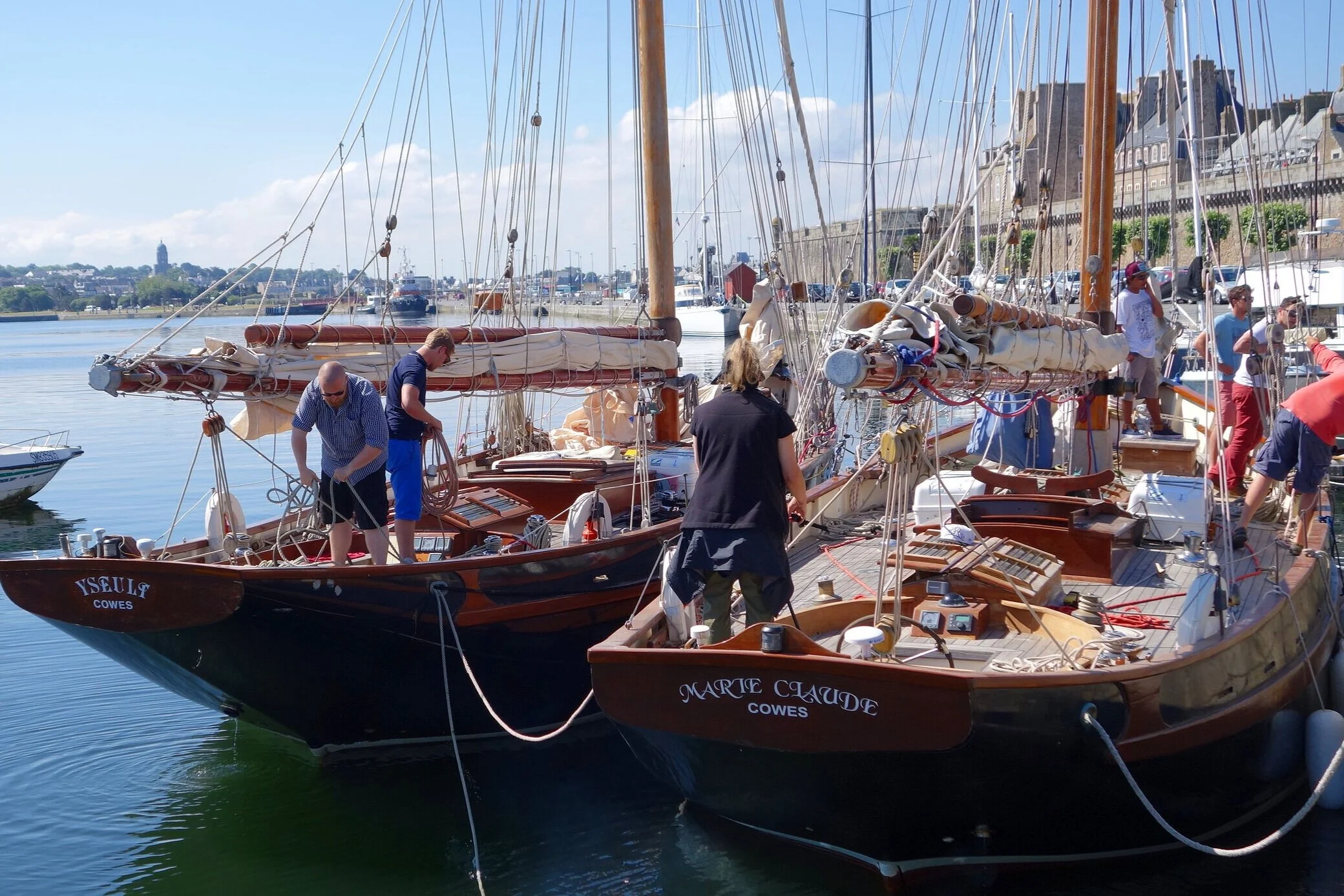
Well, being the civic-minded Malouin denizens we are, we try to provide a similar public service. When people think of St-Malo, they often think of sailing. So we park our eye-popping pilot cutters right alongside the quay for passers-by to gawk at. And they do. Constantly. We wish we had a euro for every time somebody has stood beside one of our boats, smart phone in hand, to pose for for a selfie.

“Do you see it now?”

rafael-rex-felisilda-U_Kz2RnfFAk-unsplash.jpg

Many of you will have seen the Netflix mini-series The Queen’s Gambit. It’s the fictional story of an orphaned chess prodigy named Beth Harmon who battles personal demons to claw herself to the top of her sport. In one scene, she challenges her opponent, a friend, with a question about the end game: “Do you see it now?” she asks. He admits he doesn’t. She does.

The same question can be posed to parents looking to give their children the best possible chance to succeed in school and life: Do you see the things that can really make a difference? Of course, no two children are exactly alike. A child who is, say, musically or athletically gifted will (understandably) be brought up differently than a child who is not. But for most teens, a great adventure can be a life changer—because impressive accomplishment brings self-esteem, and self-esteem is transformative, in our personal lives AND in the classroom (see the post on St. Benedict’s school in Newark, NJ.) Moreover, a great adventure can help teens see a more imaginative end game for themselves. Suddenly, new possibilities present themselves, possibilities that may not on the radar screens of most of their friends.

Good classroom instruction should never be discounted. But sometimes it’s what kids learn—or don’t learn—outside of the classroom that makes the teachers look good. Or not. Leading Swiss boarding schools are now charging over USD100,000 per year in tuition. What on earth is that paying for? No doubt different parents will give different answers. But surely one of the most common answers would be “experiences.” Switzerland sits a short train or coach ride away from several European cultural capitals. And opportunities for outdoor adventure are everywhere. It’s an “experience bonanza.” We, too, offer an exceptional European adventure and cultural-exposure opportunity—at a much more reasonable price. You have our coordinates.

Joyeuses Pâques / Happy Easter

gabe-pierce-2w46Lv6EYT4-unsplash.jpg

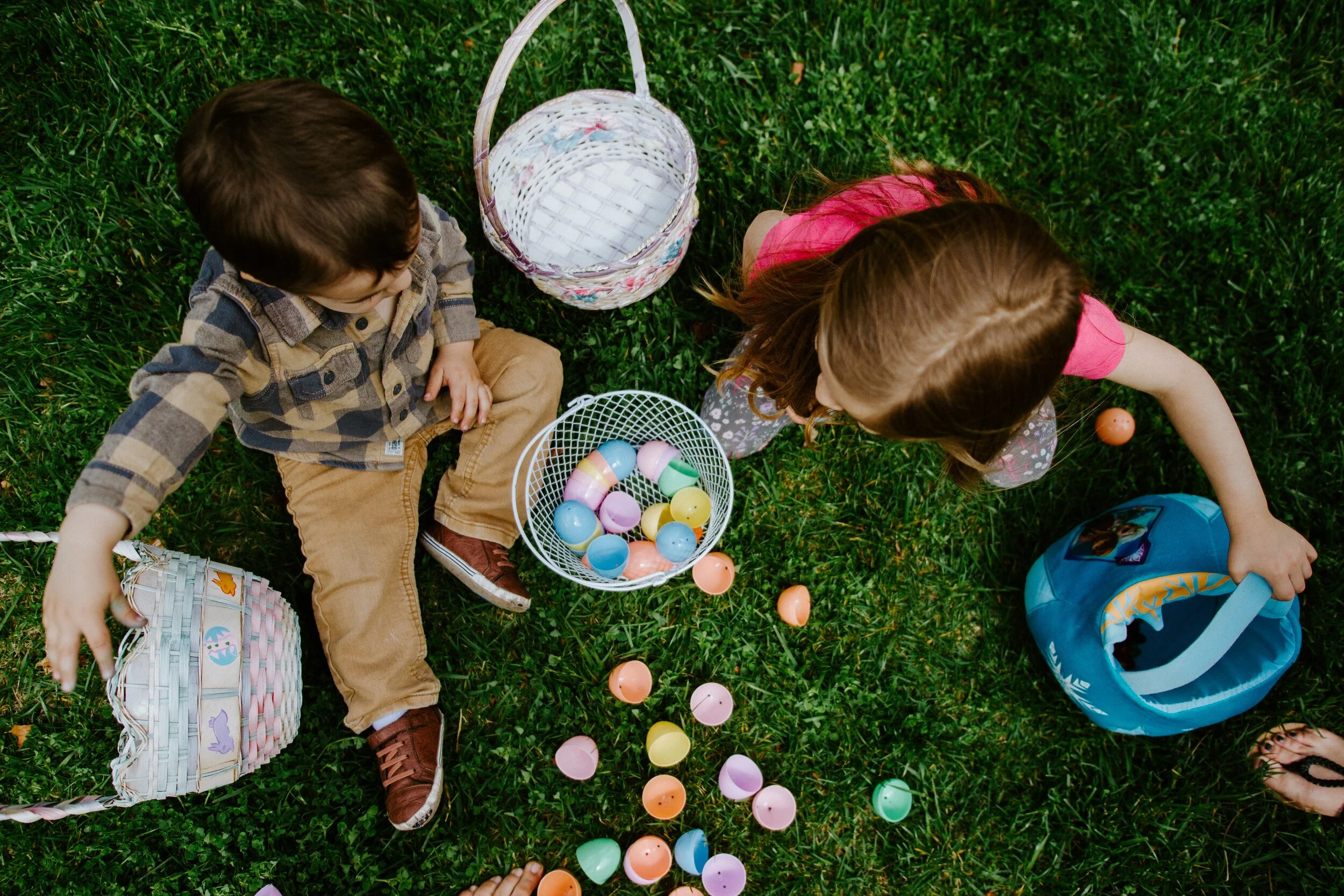
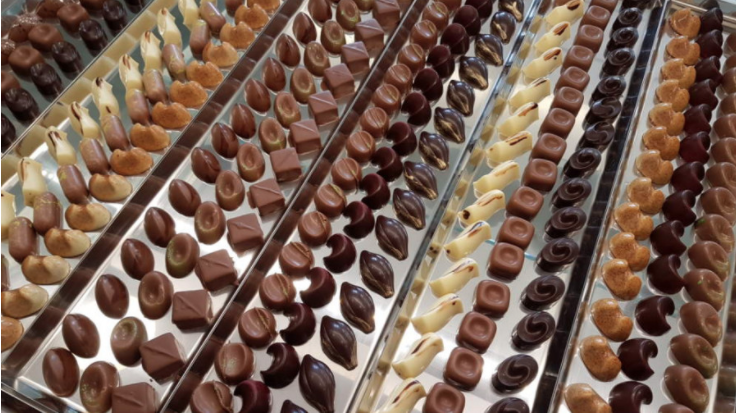
Nous vous souhaite une très joyeuse fête de Pâques ! Bonne chasse aux oeufs et bonne dégustation chocolatée.

Happy Easter everybody! Have fun hunting eggs and scarfing chocolate.

And for your Easter enjoyment, check out this famous French ditty: Pierre Perret singing “Quoi de plus sympa qu'un Oeuf.” (What could be nicer than an egg.)


If they made boats in Santa's workshop, they'd make boats like ours.

We don’t normally make endorsements, and never for money. There is a link on our home page to a guy who offers ultralight flights over Mont Saint-Michel (which we think are cool) and a post from a few years back about Saint-Malo crêpes (which we think are delicious). Not much else. But the following Instagram post caught our eye, so we’re going to share it. It’s about exquisite Italian chocolate, but more importantly, it’s about old school vs “new school,” artisanal craftsmanship vs. assembly-line production. We’re in the adventure business, and we’re great proponents of old-school personal development on beautiful traditional sailboats. Readers can connect the dots.

Screen Shot 2021-01-23 at 1.44.20 PM.png

… You may know that great food and well made things and heritage, tradition and preserving craftsmanship are very dear to me. When we first settled here in Torino I heard about this legendary chocolate maker called Peyrano not far from where we live. Supposedly the finest of them all. I looked it up but the store was closed. Some financial difficulties it seemed. I was a little saddened but I also know this is the way of the world, nothing lasts forever, on top today, gone tomorrow. But I never forgot the idea of Peyrano, providers of chocolates to the Kings of Italy (don't forget that the Piedmontese unified Italy in the 19th century and Torino was the very first capital of this magnificent country).

Fast forward to last year, just before Christmas, Oddur and I were seated next to a very agreeable young man who was born in Torino but had studied in New York and worked there for years. It turned out we had many friends in common. It turned out we had many passions in common. It turned out he had decided to come home to Torino and rescue Peyrano - talk about a boy and his chocolates.

He rejuvenated the place, kept all the old staff, even kept all the old machines at a much greater cost than renewing them. Simply because, as it turns out, old school is still the best way to make chocolates [emphasis ours] and Torino is really the capital of Italian chocolate.

Peyrano is a project I really believe in, it's special. It's a a very small company, revived, people doing everything it takes to make the most beautiful pieces of chocolates. It's distinctively "Torinese".

We are working with @peyrano_torino in a small way, a little help with Instagram and such. But this is not a sponsored post. This is as heartfelt an endorsement as I will ever make.
I can't think of anything more special, more Italian, obscure, delicious and unique than a box of Peyrano chocolates this Christmas. It's the opposite of the chocolate you get at the duty free, it's the stuff from Santa's workshop! They ship worldwide :) #PeyranoTorino #italianchocolate #thebest

—Mimi Thorisson @mimithor

Postcard European, somewhat obscure, proudly traditional, and certainly special. That would be us.

*Disclaimer: We have never tasted Peyrano chocolates, so we cannot personally endorse them. But they get rave reviews online and we know from experience that artisanal products are frequently superior to factory-made products.

Self Care During a Lockdown while Dreaming of Travel

lockdown_self_care.jpg

The other day we stumbled upon an Instagram post by a London-based character with the handle @slightly_worn. He claims to be a lover “of all things tried and tested” and writes that his lockdown self care includes more drinking and smoking during the pandemic. Ha ha. But his other self-care prescription was a resolution to listen to more 1980s Euro pop. Well! While we’re not terribly excited about the smoking and excessive drinking bit, we thought the Euro pop binge was a great idea. If you’re not familiar with European pop music from that era, you don’t know what you’re missing. Well, OK, maybe you do. But, on the off chance you don’t spend all your time listening to Mozart, Beethoven, or John Cage, you might want to expand your musical horizons. So, as our boats sit bobbing up and down in the St-Malo harbor, we thought we’d make a few introductions. We’ll start with a hit by Princess Stéphanie of Monaco (You can call her Steph de Monac’ if you want to sound ‘80s branché.) and proceed from there. Here we go (all links are to YouTube music videos and as of January 2021 they were all up and working):

Stéphanie de Monaco Irresistible (Recorded originally as Ouragan (Hurricane), in French

Jakie Quartz Mise Au Point

Jean-Jacques Goldman (with Michael Jones) Je te donne and a more recent cover by Génération Goldman

Pierre Bachelet Ecris-moi (N.B. You have to wait over a minute for the hook. So a little patience required.)

Rose Laurens Africa

Céline Dion Ne Partez Pas Sans Moi This song won the Eurovision Song contest in 1988.

Yves Duteil (the French James Taylor. Sort of.) Les Choses qu’on ne dit pas (Duteil is known for the poetry of his lyrics. Admittedly, his songs are not pop, but anybody who listened to French radio in the ‘80s would be familiar with him. Most young women had his albums in their record collections. And for those of you who use music to teach French, here’s one more; It’s the story of a clockmaker/seller who goes off to war and, one day, shows back up at the workshop door. It’s a charming little story with a catchy melody. And it features a tuba! Clémentine et Léon.

Dorothée Pour Faire Une Chanson (this is a song for children, but it’s got a great pop bounce.

Fiorella Mannoia Ascolta l’infinito

Münchener Freiheit Bis wir uns wiedersehen 

Nicki Mit Dir des wär mei Leben

And this bonus track: License IV singing the raucous Viens boire un p’tit coup à la maison (Come over and have a little drink at the house)

You’re welcome.

When it’s safe to leave the house again, come see us in France! And bring your deck shoes. We’ll go sailing.

Self-esteem: the catalyst for classroom and life success

What’s the difference between an exciting international trip and a challenging international adventure? Short answer: the latter provides a real sense of accomplishment—and the resulting self-esteem that accomplishment delivers. We understand that some people now conflate self-esteem with a narcissistic “self-terrificness” and view it as an undesirable privileged attitude. But we would argue that self-terrificness is, in fact, a symptom of low self-esteem. We use it in the sense or “self-worth,” of confidence in your ability to be able to reach ambitious goals if you put forth the effort. Several years ago, the famous American TV newsmagazine “60 Minutes” ran a piece on St. Benedict’s, an inner-city school in Newark, New Jersey. (For those of you not familiar with American geography, Newark is located just outside of New York City. It struggles with a high poverty rate [almost thirty percent] and underperforming public [city-run] schools.)

 
Screen Shot 2020-09-22 at 12.48.39 PM.png

St. Benedict’s is a remarkable outlier. It graduates ninety-eight percent of its students, and eighty-five percent go on to earn undergraduate degrees. Wow! Two things jump out about the school’s unique educational program: 1) Students actually “run” the school (frequently making and learning from mistakes in the process) and 2) upperclassmen (the upper school admits boys only) lead all new students on an ambitious expedition along the Appalachian Trail every spring.

So how important is that strenuous outdoor adventure? Here’s one teacher’s assessment:

“It is probably THE most important thing we do…above and beyond the academics…. Every school in the country should find some way to get their kids out in nature to realize there’s something bigger than you.”

From the “60 Minutes” transcript:

“60 Minutes” correspondent Scott Pelley: … Street smarts won't carry you far on the Appalachian Trail.
Headmaster Edwin Leahy: It's the only class in school that a 98 is a failing grade ‘cause if you only get 98 percent of the way down the trail, you didn't get to the bus to bring you back home.
Scott Pelley: In [second-year student] Devionne's group, one classmate decided "98 percent" was all he had.
—"You gotta keep pushing bro."
St. Benedict’s upperclassman Devionne Johnson: So I said, You're not gonna quit in front of the camera. These are—this is “60 Minutes.” Don't quit, keep going. So eventually we finally make it up this mountain. And I was so relieved.
Scott Pelley: At the summit, they caught a breathtaking view of character. [Emphasis ours]”

You can read the complete transcript, here. And you can watch a short documentary on St. Benedict’s annual five-day expedition along the AT, below.

“A Breathtaking View of Character “

St. Benedict’s outdoor expeditions involve small-group hiking along the Appalachian Trail. And practically everything you’ll hear about their wilderness program could be said of our small-group sailing expeditions. Everybody with teenagers should watch this. It’s only 14 minutes long.

At the ELS, we also let our crew members take practically all the decisions; they effectively run the courses, including the navigating. We constantly stress teamwork and shared responsibility to other crew mates. And when we sail back into port at the end of a course, we, too, see character breaking through. The satisfaction of impressive accomplishment coupled with a new-found personal agency works wonders just about every time.

So it turns out there’s quite a difference between taking an educational trip and embarking on an epic outdoor challenge, whether hiking or sailing or something else. In fact, there’s really little comparison when it comes to a transformative experience.

Distance Learning vs. a Classroom Experience. Is There Really a Debate?

online v. real-world learning.jpg

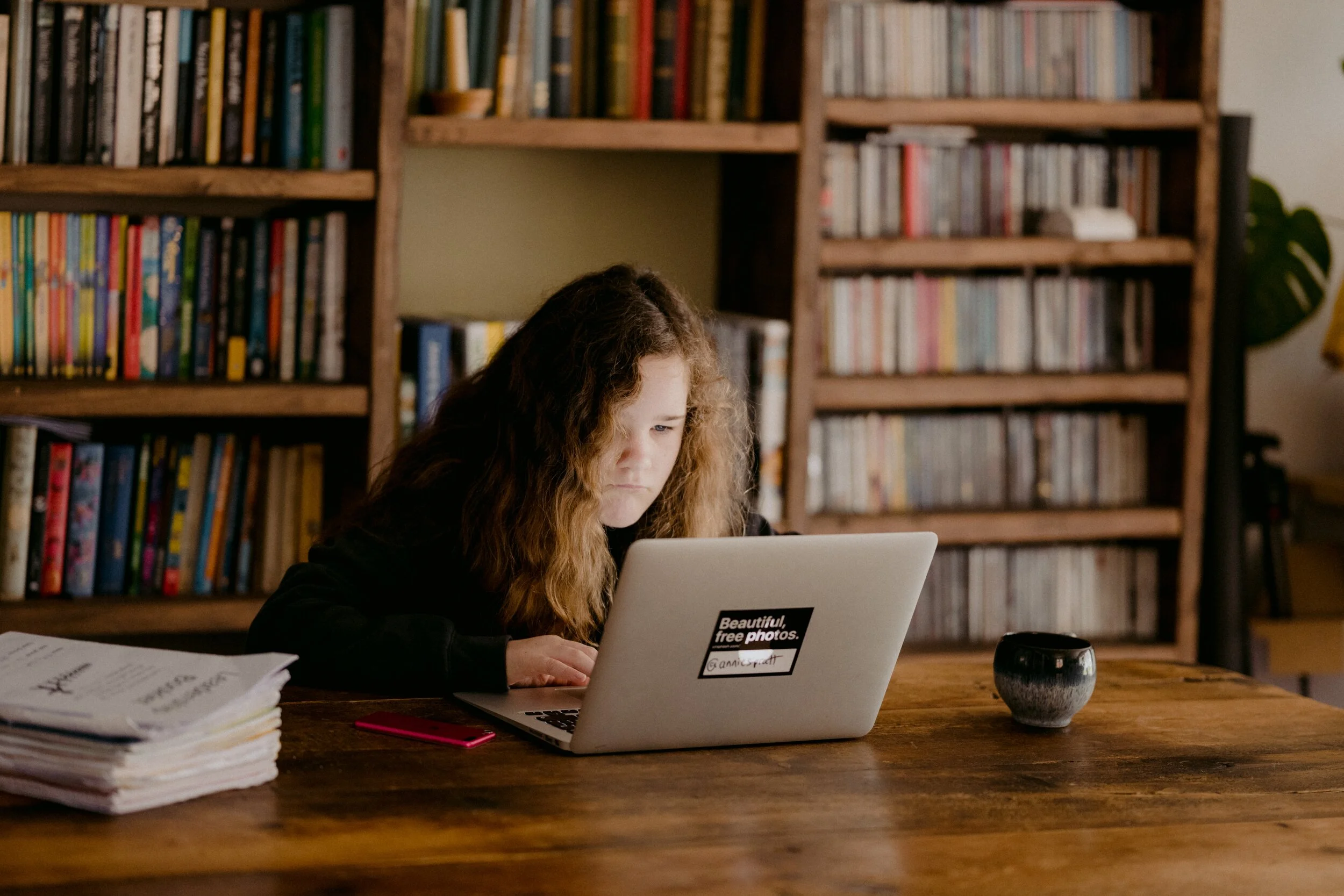
Increasingly, we read that our lives will be changed forever in the wake of the COVID-19 pandemic. Almost certainly, in some respects, that’s true. But what about our schools? Is online instruction really going to be an important part of the new normal? Let’s stipulate that there are some advantages to online instruction. Students can take advantage of lectures by some the world’s best teachers and professors. They can take classes in subjects not offered at their own schools. But think about what is lost in a world of distance learning: Peer learning and camaraderie—an extremely important component of a student’s education—practically disappears. And as learning becomes increasingly a one-on-one proposition (a student sitting alone in front of his/her computer screen) student body diversity becomes largely irrelevant from a pedagogical perspective. Gone will be the serendipitous discoveries in the library stacks. No more school clubs. Yearbooks will become largely superfluous. Sports? Student-teacher mentoring? Time spent in science labs? Countless school rituals? All the out-of-classroom experiences like field trips and expeditions to capital cities, cultural sites, and outdoor discovery centers? Gone. And the list goes on.

Distance learning may be necessary right now. It’s certainly better than nothing. But as Ross Baker, a distinguished professor of political science at Rutgers University (New Jersey, U.S.A.), recently wrote in an opinion piece in USA Today on the subject,

“I have found that lecturing on Zoom or Webex is like lecturing through an N-95 face mask. Perhaps if I taught seminars with fewer than a dozen students the task might be manageable, but you can’t effectively teach to a screen with 88 faces on it. At least I can’t. I draw my energy from being in the presence of live students — even the ones barricaded behind their laptops taking notes or, more likely, doodling with Instagram or TikTok…. Distance learning is an inferior pedagogy. It is disembodied, soulless, and quirky.”

Many other teaching professionals would no doubt nod their heads in agreement. And so would a lot of students. Let’s hope that when it’s safe to gather again on campuses, get back on jetliners, take class trips to museums, and go back on the water in small boats, people will realize how important it is to learn and do things together, side by side, in the real world. With that in mind, teens who are considering an online university education ought seriously to consider packing their high-school years with enrichment experiences. It could be their last chance before they head out into the workplace.

https://www.usatoday.com/story/opinion/2020/04/26/coronavirus-distance-teaching-learning-big-change-online-professor-column/3019149001/

UPDATE: And then there’s this from The New York Times (Monday, June 8, 2020):

Distance learning isn’t working

Education experts believe that distance learning in most school districts is not working and that students are falling behind at alarming rates. “We know this isn’t a good way to teach,” a seventh-grade teacher in Colorado said. Black, Hispanic and low-income students are falling behind the fastest, research suggests.

Is your financial success more a function of your IQ? Or something else?

From an article in Inc. Magazine by Jeff Hayden:

Nobel Prize-winning economist James Heckman likes to ask people how great a role innate intelligence plays in financial success. Like how much the difference between my income and yours, for example, is based on our relative IQs.

Most people say about 25 percent. Some go as high as 50 percent. (For a long time, I would gave guessed even more.)

But Heckman's research reveals something else entirely. Innate intelligence plays, at best, a 1 to 2 percent role in a child's future success.

Instead, financial success is correlated with conscientiousness: Self-discipline, perseverance, and diligence. [emphasis ours]

The Case for Early International Exposure

The case for early international exposure.jpg

In July 2018, Condé Nast Traveler published a piece entitled “How to Raise a Little Traveler.” They asked their young editors what they loved (and hated) about their childhood adventures: favorite memories, regrets, and rearview-mirror advice for their parents. Here’s what one wrote:

Start us young

I can clearly remember my first vacation abroad: I was five, and my parents and I were exploring the Irish countryside, driving through Co. Tipperary to see where my father’s family came from. We ate in pubs, hiked to castles, and saw a spectacularly large pig on a farm that made me question reality (seriously, this was the pig to end all pigs). Sure, I only ate chicken fingers and fries in said pubs, but I credit that trip with prompting little me to ask, constantly: Where am I going next? Curiosity was born [emphasis ours].
—Bridget Hallinan

We don’t take small children on our expeditions, but the point is well taken.

Four Biggest Travel Trends for 2020

travel trends 2020.jpg

Forbes Magazine recently published its Four Biggest Travel Trends for 2020. Two of them stood out to us; so we thought we’d pass them along.

People are talking about green travel and with the rise of carbon offsets for flying or hotels eschewing miniature bottles, it seems like the corporations have caught on. We’re seeing social media influencers post non-descript locations in an effort to decrease over-tourism to beautiful places.

So which of these trends are here to stay for 2020? With the help of experts and data crunchers, here are my predictions for the biggest trends in travel for 2020.

[…]

2. Traveling off-the-beaten-path.

With overtourism, traveling off-the-beaten-path will be the goal in 2020.

As some destinations continue to dominate our social media feeds—Bali, I’m looking at you—there will be rise in so-called second-city travel.

Motivated in part to avoid crowds as well as higher prices, vacationers are beginning to see the benefit of checking out places that are a bit off the typical path.

And the numbers support this. According to Booking.com, 54% of global travelers want to play a part in reducing over-tourism and 51% interested in swapping destinations for a lesser known but similar alternative.

Either way, travelers are more likely to be taking the road less traveled in the year ahead.

3. Big interest in ‘new’ ways of transport.

Call if the Greta Thunberg effect. As flight shame increases consumers are looking to more and different ways to travel.

In Europe domestic flights are reportedly down in a bid by people to decrease climate change. France has proposed a ban on most internal flights.

According to Booking.com, over half of travelers don’t mind taking time to reaching their destinations if they’re traveling by a unique form of transport. As more consumers think about their environmental impact, there will be an increase in interest in older, most sustainable forms of transport like trains or boats.

So there ya go. QBE seems to be right on trend.

https://www.forbes.com/sites/alexandratalty/2020/12/31/the-four-biggest-travel-trends-for-2020

The case for acting first and then thinking

Conventional wisdom holds that parents should make several early life decisions for their children. Kids should start taking violin lessons at age three, tennis lessons at four. The earlier children start doing whatever it is their parent/s want them to do, the bigger head start they’ll have and therefore a more robust competitive advantage down the road. David Epstein, author of Range, dissents. Range is a book about the value of being a generalist rather than a lifelong specialist and points out that many of the most successful people in elite professional fields (sports, the arts, scientific research, etc.) succeed not despite the fact but because they were late to the party.

“For too long, we’ve believed in a single path to excellence. Start early, specialize soon, narrow your focus, aim for efficiency. But in this groundbreaking book, David Epstein shows that in most domains, the way to excel is something altogether different. Sample widely, gain a breadth of experiences, take detours, and experiment relentlessly. ‘Range' is an urgent and important book, an essential read for bosses, parents, coaches, and anyone who cares about improving performance.”

— Daniel H. Pink, author of the bestselling “When” and “Drive”

Epstein argues that parents should encourage their kids to try as many different things as possible—fill children’s lives with a wide variety of experiences. Then let them find their own way. Most of the time, big head starts don’t turn out to be difference makers. A wealth of diverse experiences can be.